Am I Burnt Out or Just Tired? The Key Differences Irish Workers Miss

Burnout and tiredness are not the same thing. Learn the five key differences Irish workers miss, why Ireland's work culture makes burnout harder to spot, and what to do if you think you're burnt out.
Ciara woke up at 6:47 AM, three minutes before her alarm. She had slept eight hours, maybe nine, but her body felt like she'd been carrying something heavy up a hill all night. She made the coffee. She sat at her desk in the spare room that had become her office during the pandemic and never stopped being her office. She opened her laptop. And she felt... nothing.
Not energised. Not focused. Just the dull thud of getting through another day.
If this sounds familiar, you've probably asked yourself the same question thousands of Irish workers are asking right now: am I burnt out, or am I just tired?
It's a fair question. Ireland has one of the longest average working weeks in Europe. Remote work blurred the line between home and office so completely that for many people, the kitchen table is still the desk and the laptop still closes at 10 PM. The cost of living means you're working harder than ever just to stay in the same place. Feeling exhausted isn't unusual.
But there's a real difference between being tired and being burnt out. Knowing which one you're dealing with changes everything about what you do next.
This article will help you tell the difference. It's not a diagnosis, and it's not a substitute for speaking to a professional. But it will give you the clarity to understand what your body and mind are actually telling you.

What Tiredness Actually Looks Like
Tiredness is a signal. It's your body's way of saying it's used up its available energy and needs rest to replenish.
When you're tired, rest works. A good night's sleep, a quiet weekend, a few early nights in a row, and you feel like yourself again.
Tiredness tends to be physical. Your legs feel heavy. Your eyes sting. You yawn more than usual. You might feel irritable or a bit low, but the mood passes once you've rested. Tiredness is also usually linked to something specific. You stayed up late. You had a physically demanding day. You're fighting off a cold. There is a cause, and the cause is temporary.
Importantly, tired people still care. You might be exhausted after a long week, but you're still looking forward to that dinner with friends on Saturday. You're still interested in your hobbies. You still feel like yourself, just a worn-out version.
What Burnout Actually Looks Like
Burnout is not tiredness. It's the state that comes after prolonged exposure to stress without adequate recovery.
The World Health Organisation defines it as a syndrome resulting from chronic workplace stress that has not been successfully managed. But in practice, it affects every part of your life, not just your job.
Burnout has three core symptoms, according to research published by the Health Service Executive (HSE):
- Exhaustion that doesn't go away with rest. You sleep ten hours and wake up feeling like you haven't slept at all.
- Cynicism or detachment. Things you used to care about feel pointless. You stop engaging with colleagues, friends, or family. You feel emotionally numb.
- A reduced sense of accomplishment. No matter what you achieve, it feels like nothing. You start to believe you're bad at your job, even if you're not.
As psychologist Christina Maslach, who developed the leading framework for understanding burnout, notes: "Burnout is not a problem of the person. It is a problem of the place." This insight matters because it shifts the question from "what's wrong with me?" to "what's wrong with my situation?"
The Five Key Differences
Here is how to tell them apart in practical terms.
1. Rest helps tiredness. It doesn't help burnout.
If you take a week off and come back feeling refreshed, you were tired. If you take a week off and still feel hollow and dread returning, you're likely dealing with burnout.
2. Tiredness is physical. Burnout is emotional and mental.
Tiredness lives in your body. Burnout lives in your motivation, your sense of meaning, and your ability to feel joy. A tired person might say "my legs are sore." A burnt-out person might say "I don't see the point of any of this anymore."
3. Tiredness has a clear cause. Burnout builds silently.
You know why you're tired. Burnout sneaks up on you. You might blame it on a few bad weeks, then realise those bad weeks have been going on for a year.
4. Tired people disconnect to recharge. Burnt-out people disconnect because they've nothing left to give.
Taking a break from work to recharge is healthy. Avoiding work because the thought of it makes you feel sick is not.
5. Tiredness is temporary. Burnout persists.
Everyone gets tired. It's part of being human. Burnout is a persistent state that doesn't shift without intentional intervention.
Why Irish Workers Are Especially at Risk
Ireland has a particular set of conditions that make burnout more likely, and harder to recognise.
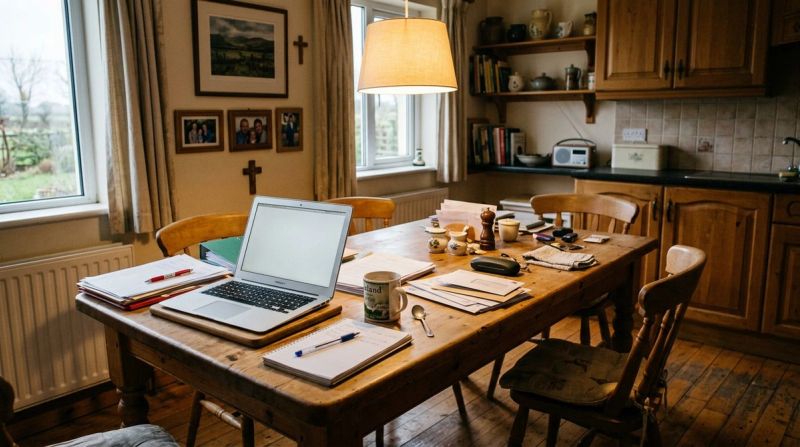
The average Irish worker puts in longer hours than most of their European counterparts. Remote work, which became the norm for many during the pandemic, never fully went away. For a lot of people, the commute from bedroom to kitchen is still the commute, and the boundaries that used to exist between work and home have simply dissolved.
Then there is the cultural layer. The Irish work ethic is real, and it is admirable, but it can tip into something less healthy. There is an unspoken pressure to be agreeable, to not make a fuss, to just get on with it. Many Irish workers, particularly in smaller companies or family businesses, feel they cannot push back on workload without seeming difficult or ungrateful.
Add in the housing crisis, the cost of living, and the fact that many people are commuting longer distances or working second jobs, and you have a recipe for chronic stress that goes unnamed and untreated.
Research from the Irish Congress of Trade Unions (ICTU) has found that over a third of Irish employees regularly work beyond their contracted hours, with many feeling unable to switch off even during annual leave. When rest becomes a luxury rather than a baseline, burnout is almost inevitable.
What to Do If You Think You're Burnt Out
If you recognise yourself in the burnout description, the first thing to know is that it is not a personal failing. It is a sign that your current situation is asking more of you than you can sustainably give. That is a systems problem, not a character problem.
Here are the practical first steps.
Name it. Simply acknowledging that you might be burnt out, rather than just tired, is a powerful shift. It moves the problem from "I need to try harder" to "I need to change something."
Audit your recovery. Look at your actual week. How many hours of genuine rest do you get? Not scrolling on your phone. Not half-watching Netflix while answering emails. Actual rest. If the answer is close to zero, that is your starting point.
Set boundaries. This is easier said than done, especially in Irish workplaces where being "sound" is a currency. But boundaries are not about being difficult. They are about being sustainable. Start small. No emails after 7 PM. A full lunch break away from your desk. One weekend day with the laptop closed.
Talk to someone. This might be your GP, a therapist, or even a trusted colleague or friend. Burnout thrives in isolation. Speaking it out loud makes it real, and making it real is the first step toward changing it.
Consider professional support. If you have tried resting and nothing changes, or if the thought of work makes you feel physically unwell, that is a sign you need more than a weekend off. online therapy can be a useful starting point, particularly if you are not sure whether you need formal treatment or just structured support.
You do not have to figure it out alone.
Frequently Asked Questions
Can you be burnt out if you love your job?
Yes. Burnout is not about hating your work. It is about the gap between what your work demands and what you have left to give. You can be deeply passionate about your job and still be burnt out if the workload, environment, or expectations are unsustainable.
How long does it take to recover from burnout?
It depends on severity and what changes you make. Mild burnout might improve noticeably within a few weeks of better boundaries and more rest. Severe burnout can take months. The key factor is whether the source of the stress changes. Rest without addressing the cause is like bailing water from a boat with a hole in it.
Is burnout the same as depression?
Not exactly, though they can overlap. Burnout is typically linked to a specific context, usually work, and tends to improve when that context changes. depression is a broader clinical condition that affects all areas of life regardless of circumstances. If you are unsure which you are experiencing, speak to a GP or mental health professional.
---
Burnout and tiredness are not the same thing, and treating one like the other will not work. If rest is not working, if the exhaustion is not shifting, if you feel like you are going through the motions instead of actually living, that is worth paying attention to.
*The information in this article is for educational purposes and should not replace professional medical advice. If you are experiencing severe burnout symptoms, please consult with a qualified healthcare provider or contact your GP.*