Free and Low-Cost Online Therapy Options in Ireland

Discover free and affordable online therapy options in Ireland. Learn about HSE services, charitable organisations, trainee programmes, and community resources for mental health support.
The cost of therapy stops many Irish people from seeking help. When you're already struggling with anxiety, depression, or overwhelming stress, finding €60-€100 per week for sessions can feel impossible. This financial barrier hits hardest those who need support most—young people starting careers, families managing tight budgets, or anyone experiencing financial hardship.
But cost doesn't have to be the barrier that prevents you from getting help. Ireland offers several pathways to free or reduced-cost mental health support, many of which have expanded their online services since 2020. Knowing what's available—and how to access it—can connect you with quality care regardless of your financial situation.
This guide explores the legitimate options for free and low-cost online therapy in Ireland, from HSE-funded services to charitable organisations, trainee programmes, and community resources.
Understanding Your Options: The Landscape of Affordable Care
Free and low-cost therapy isn't a single category—it encompasses several distinct pathways with different eligibility criteria, service models, and availability. Understanding these differences helps you target your applications effectively.
HSE-funded services represent the state's provision of mental health care. These services are genuinely free at point of use, funded through general taxation. However, they're typically limited to specific populations or severity levels, and waiting lists can stretch to months or even years for non-urgent cases.
Charitable organisations provide free or heavily subsidised therapy through fundraising, donations, and sometimes HSE grants. Organisations like MyMind, Turn2Me, and various local charities fall into this category. Services may have session limits or specific target populations, but they generally offer faster access than pure public services.
Trainee therapist programmes connect you with counsellors in training who offer reduced rates in exchange for supervised practice hours. These aren't "free"—trainees typically charge €30-€40—but they represent substantial savings on standard rates while still providing quality care under professional supervision.
Community and voluntary services vary enormously by location. Some areas have active mental health charities, support groups, or community-based counselling services that charge little or nothing. These are often the least visible options but can be excellent resources.
Sliding scale private practice involves accredited therapists who voluntarily reduce their fees for clients experiencing financial hardship. This isn't advertised widely—therapists often discuss it only during initial contact—but it can make private therapy accessible even on tight budgets.
HSE-Funded Online Services: Public Mental Health Support
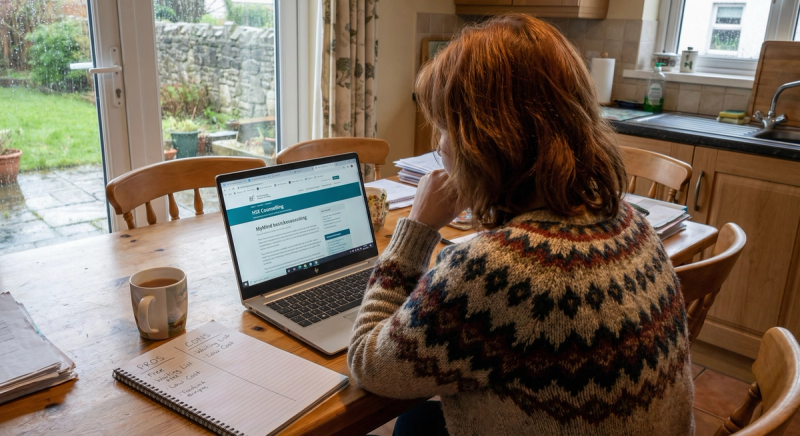
The HSE provides several pathways to free mental health support, though navigating them requires patience and persistence.
Your GP remains the gateway to most HSE mental health services. Discussing your mental health with your doctor opens referrals to counselling, psychology, or psychiatry services depending on your needs. GPs can also provide medical certs for work if mental health affects your employment, and they should discuss medication options where appropriate.
Primary Care Psychology offers free short-term therapy through your local health centre. These services typically provide 6-10 sessions of counselling or CBT for mild to moderate conditions. Access varies by location—some areas have extensive services, others minimal provision. Your GP makes the referral, and waiting lists range from weeks to several months.
HSE-funded online counselling expanded significantly during the pandemic. Turn2Me, funded by the HSE, offers free online counselling to Irish residents over 18. Their platform provides text-based, video, and phone sessions with accredited counsellors. Services are free but may have session limits or waiting periods during high demand.
Specialist HSE services exist for specific populations. The National Counselling Service provides free therapy for survivors of institutional abuse. Jigsaw offers free services specifically for young people aged 12-25. Aware provides free support for depression and bipolar disorder. These targeted services often have shorter waiting lists than general provision.
Waiting list reality must be acknowledged. HSE mental health services are under significant pressure. While the care is free and generally high quality, you may wait months for your first appointment. If your situation is urgent—if you're experiencing suicidal thoughts, unable to function, or in crisis—your GP can expedite referral or direct you to crisis services.
Charitable Organisations: Free Support with Faster Access
Several Irish charities provide free or heavily subsidised online therapy, often with shorter waiting lists than HSE services.
Turn2Me operates Ireland's most established free online counselling service. Funded by the HSE and philanthropy, they offer scheduled online counselling sessions with accredited therapists. Services are entirely free for Irish residents, with no means testing. Sessions are typically 45 minutes, and while they may limit the total number available to each client, the service provides genuine therapeutic support rather than just crisis intervention.
MyMind operates on a unique social enterprise model, offering both full-fee and low-cost services subsidised by their charitable arm. Their low-cost option (€25-€35 per session) makes therapy accessible to many who couldn't afford standard rates. MyMind employs therapists with various specialisations, and their online platform has been refined over years of delivery.
Pieta House provides free crisis intervention and suicide prevention services, including online counselling for those experiencing suicidal ideation or self-harm. Their services are specifically targeted at crisis and high-risk situations rather than ongoing therapy, but they represent a vital resource for those in immediate distress.
Aware focuses specifically on depression and bipolar disorder, offering free online support groups, educational programmes, and a support line. While not individual therapy, their structured programmes provide evidence-based support for mood disorders at no cost.
Local and regional charities vary by area. organisations like Cork Counselling Services, Dublin Counselling Centre, and similar bodies in other counties often provide low-cost counselling on a sliding scale. These local services may not advertise nationally but can be excellent resources if you research what's available in your specific area.
Trainee Therapist Programmes: Quality Care at Reduced Cost
Training to become an accredited therapist requires hundreds of hours of supervised clinical practice. Trainee programmes connect you with these developing professionals at substantially reduced rates.
How trainee therapy works: Counselling and psychotherapy trainees must complete supervised practice before graduation. They offer sessions at reduced rates—typically €30-€40—while working under the guidance of experienced supervisors. The supervisor reviews cases, provides guidance, and ensures quality of care. You're receiving treatment from someone near the end of their training, not a complete novice.
IACP, ICP, and PSI college clinics often operate low-cost services. Training institutions like the Irish College of Humanities and Applied Sciences, PCI College, and various university counselling programmes run clinics where trainees see clients under supervision. These services are particularly valuable because the supervision is often intensive—the supervisor may observe sessions or review recordings to support the trainee's development.
What to expect from trainee therapy: Trainees are enthusiastic, recently educated in current best practices, and highly motivated to help. They may be less experienced at handling complex cases or entrenched difficulties, but for many common concerns—anxiety, depression, life transitions—they provide effective care. The main limitation is that sessions may feel more structured or less fluid than with highly experienced practitioners.
Finding trainee therapists: IACP-accredited training programmes typically advertise their low-cost clinics on their websites. You can also contact training institutions directly to ask about availability. Some private practices employ trainees alongside accredited therapists and will discuss this option if you mention budget constraints during initial inquiry.

Community and Voluntary Services: Local Resources
Beyond national services, local communities often maintain mental health resources that receive less publicity but provide valuable support.
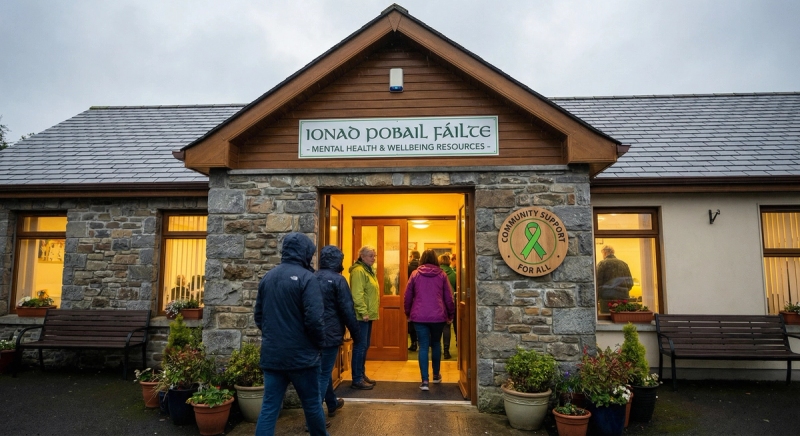
Community Mental Health Services operate in many counties, funded through a mix of HSE grants, local fundraising, and charitable support. These services typically offer low-cost counselling with accredited therapists who may work part-time or voluntarily. Availability varies enormously—you might find excellent provision in one county and minimal services in another.
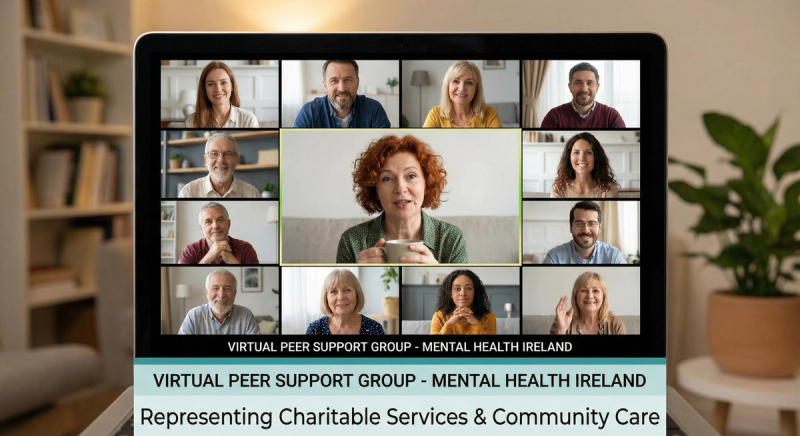
Support groups provide peer connection and shared experience rather than professional therapy, but for many people, this community support proves transformative. Depression support groups, anxiety management groups, and condition-specific communities (bereavement, addiction recovery, post-natal support) exist throughout Ireland, increasingly offering online attendance options.
Faith-based counselling may suit those comfortable with religiously affiliated services. Organisations like ACCORD provide relationship counselling with nominal fees, while various church and community groups offer pastoral care and support. These services typically integrate spiritual perspectives with therapeutic approaches.
Employer Assistance Programmes (EAPs) are often overlooked. If you're employed, check whether your workplace offers EAP benefits. These programmes typically provide 6-8 free counselling sessions, completely confidential from your employer. Many Irish employers added or expanded EAPs following the pandemic, but employees often don't know these benefits exist.
Navigating the System: Practical Tips for Accessing Affordable Care
Finding and accessing these services requires persistence. Here's how to navigate effectively.
Start with your GP even if you want non-medical support. GPs know local resources, can make referrals that speed up access, and may identify medical factors affecting your mental health. The consultation is free with a medical card or reasonably priced (€50-€60) without—worthwhile given the information and connections you gain.
Contact multiple services simultaneously. Don't wait for one organisation to respond before trying others. Put yourself on several waiting lists. Services vary enormously in response times—some reply within days, others take weeks. Casting a wide net improves your chances of timely support.
Be specific about your needs. When contacting services, clearly state what you're seeking. "I'm looking for low-cost online therapy for anxiety" gets better results than vague enquiries. If you have specific requirements—female therapist, evening appointments, CBT approach—mention these upfront to avoid mismatches.
Prepare for initial assessments. Most services conduct brief assessments before allocating therapy. Be honest about your symptoms, circumstances, and what you're hoping to achieve. This isn't about proving you deserve help—it's about matching you with appropriate support.
Follow up persistently. If you don't hear back within stated timeframes, contact again. Charitable services are often overstretched, and polite persistence pays off. Don't interpret delays as rejection—these organisations want to help but may lack capacity to respond quickly.
Consider private sliding scale if charitable waiting lists are too long. Many accredited therapists reserve some capacity for reduced-fee clients. Contact several practices, explain your financial situation, and ask about sliding scale availability. You might find private therapy at €50-€60 is accessible with careful budgeting.
When Free Isn't Enough: Recognising Limitations
Free and low-cost services provide vital support, but they have limitations you should understand.
Session limits are common. Charitable services may offer 6-12 sessions, enough to address specific issues but potentially insufficient for complex or long-standing difficulties. Understanding this limitation helps you use available sessions effectively.
Waiting times remain the biggest barrier. Even excellent free services may have waiting lists of weeks or months. If you need immediate help, crisis services (Samaritans at 116 123, Pieta House at 1800 247 247) provide immediate support while you wait for ongoing therapy.
Geographic restrictions apply to some services. HSE-funded support typically requires Irish residency. Some charitable services prioritise specific counties or regions. Online delivery has expanded access, but eligibility rules still apply.
Complex cases may need specialist care that free services cannot provide. Severe trauma, eating disorders, addiction, or personality disorders often require specialist treatment beyond what general low-cost services offer. Your GP or a private assessment may be necessary to access appropriate care.
Quality varies more than in established private practice. While many free services are excellent, the charitable sector includes organisations with varying standards. If something feels wrong—unprofessional behaviour, boundary violations, approaches that don't suit you—you have the right to seek alternative support.
Your Mental Health Matters: Taking the First Step
Financial constraints shouldn't prevent anyone from accessing mental health support. Ireland's system, while imperfect, offers genuine pathways to free and affordable care for those who seek them out.
The first step—acknowledging you need help and reaching out—is often the hardest. Pride, stigma, or past negative experiences may make asking difficult. Remember that seeking support is a sign of strength, not weakness. Thousands of Irish people use these services every year.
Start by contacting your GP to discuss options and get local referrals. Simultaneously, reach out to national services like Turn2Me or MyMind. Research what's available in your specific area. Be persistent, be specific about your needs, and don't give up if the first contact doesn't work out.
Your mental health is worth the effort. The support you need exists—you simply need to connect with it.
Related Guides:
This article is part of The Ultimate Guide to Online Therapy in Ireland — our comprehensive hub covering everything you need to know about virtual mental health support.
- How Much Does Online Therapy Cost in Ireland? A 2026 Price Guide — Understanding pricing, insurance, and budgeting for therapy
- CBT Online: Why It's the Gold Standard for Irish Anxiety Support — Learn about the most effective therapy approach for anxiety
- Is Online Therapy Covered by VHI, Laya, and Irish Life? — Navigate insurance coverage and tax relief for therapy costs
- The Best Online Therapy for ADHD: Navigating Neurodivergence in Ireland — ADHD-specific support and online strategies
- IACP vs. PSI: Choosing an Accredited Online Therapist in the Digital Age — Understanding Irish therapy accreditation
- Online Couples Therapy: Strengthening Irish Relationships from Home — Relationship support in the digital age
- From Burnout to Balance: Online Therapy for Irish Workplace Stress — Managing professional overwhelm
- Is Online Therapy Private? GDPR and Confidentiality in Irish Telehealth — Understanding your data protection
- Choosing Between Online and In-Person Therapy in Ireland — [PENDING] Finding your best format