IACP vs. PSI: Choosing an Accredited Online Therapist in the Digital Age

Understand the differences between IACP and PSI accreditation in Ireland — and how ICP and IAHIP fit alongside them. Learn how to verify credentials and choose the right accredited Irish therapist.
When searching for an online therapist in Ireland, you'll encounter various credentials and professional bodies. Two acronyms appear repeatedly: IACP and PSI. Understanding what these mean—and how they differ—helps you make informed decisions about who to trust with your mental health.
The Irish Association for Counselling and Psychotherapy (IACP) and the Psychological Society of Ireland (PSI) represent different professional pathways, training approaches, and regulatory frameworks. Neither is inherently superior, but they indicate different specialisations, qualifications, and areas of expertise. Choosing between them depends on your specific needs, the issues you're addressing, and the type of therapeutic relationship you prefer.
A note before we begin: this article focuses on the two credentials clients most commonly encounter when choosing a therapist in Ireland — IACP and PSI. Two other recognised Irish bodies, ICP (the Irish Council for Psychotherapy) and IAHIP (the Irish Association of Humanistic and Integrative Psychotherapy), also accredit psychotherapists, and Feel Better Therapy works with therapists accredited by all four. We compare IACP and PSI specifically here because they represent two genuinely different training pathways — counselling and psychotherapy on one side, psychology on the other. ICP and IAHIP sit alongside IACP within the psychotherapy pathway. With that context in mind, this guide explains both bodies, their training requirements, what their accreditation actually means, and how to choose the right type of professional for your online therapy journey.
Understanding IACP: Counselling and Psychotherapy
The IACP is the largest professional body for counselling and psychotherapy in Ireland, representing over 4,500 members. Founded in 1981, it sets standards for training, practice, and continuing professional development for counsellors and psychotherapists working in Ireland.
What IACP membership signifies is that a therapist has completed recognised training in counselling or psychotherapy, typically involving three to four years of academic study combined with supervised clinical practice. IACP-accredited therapists have demonstrated competence in therapeutic skills, ethical practice, and ongoing professional development.
Training pathways vary within the IACP framework. Counselling generally involves shorter training (minimum three years) and focuses on supporting clients through life challenges, transitions, and emotional difficulties. Psychotherapy involves more extensive training (minimum four years) and often includes deeper work on personality patterns, early life experiences, and long-standing psychological difficulties.
IACP online therapy standards have evolved significantly since 2020. The organisation now provides specific guidelines for online practice, including requirements for secure platforms, informed consent for digital therapy, and competencies for working via video. IACP-accredited therapists offering online services should demonstrate training in digital therapy delivery.
The scope of practice for IACP therapists typically includes anxiety, depression, relationship difficulties, grief, trauma, and general life challenges. They do not prescribe medication or provide formal psychiatric diagnoses—that falls under medical and psychology scopes.
Understanding PSI: Psychology and Clinical Practice
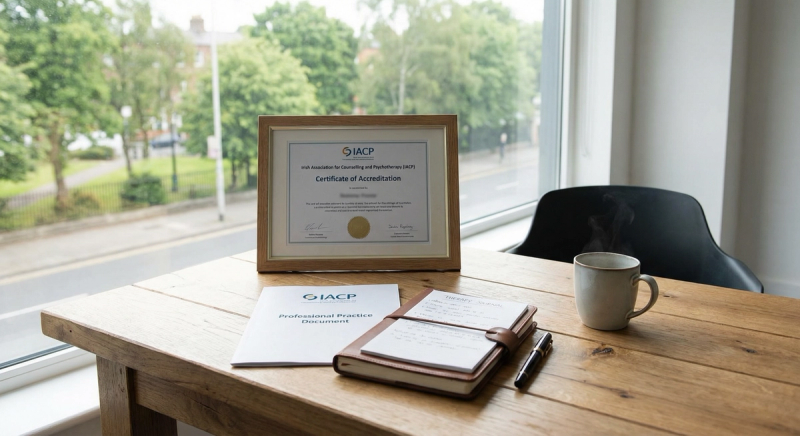
The Psychological Society of Ireland is the learned and professional body for psychology in Ireland, representing psychologists across various specialisations including clinical, counselling, educational, and occupational psychology.
What PSI membership indicates depends on the grade of membership. Graduate membership means someone has completed an undergraduate degree in psychology. Chartered membership requires postgraduate training (typically doctoral level for clinical psychology) and supervised practice. The "Chartered Psychologist" designation represents the highest level of psychological training in Ireland.
Clinical psychologists, specifically, undergo extensive training—typically seven to eight years including doctoral study. They're trained in assessment, diagnosis, and evidence-based psychological interventions. Many work within the HSE or health services, though increasing numbers offer private online practice.
Counselling psychologists bridge the gap between the IACP and PSI approaches. They typically hold doctoral-level psychology qualifications (PSI) but work in counselling/psychotherapy modalities similar to IACP therapists. This group often offers the longest training pathway—combining psychological science with therapeutic practice.
PSI online therapy standards require that psychologists adhere to the same ethical and professional standards regardless of delivery mode. The PSI provides guidelines for digital psychological services, emphasising confidentiality, competence in technology, and appropriate boundaries in virtual settings.
The scope of practice for PSI psychologists includes formal psychological assessment, diagnosis of mental health conditions, and specific evidence-based interventions. Clinical psychologists often work with more complex presentations and can provide diagnostic clarification when needed.
Key Differences: Training, Approach, and Expertise

Understanding the fundamental differences helps you choose appropriately for your needs.
Training duration and depth varies significantly. IACP counselling requires minimum three years; IACP psychotherapy requires minimum four. PSI chartered psychology requires a primary degree plus postgraduate training (often 2-3 years) and supervised practice. Clinical psychology specifically requires doctoral training (3-4 years beyond undergraduate). The depth of training reflects different professional scopes.
Theoretical orientation differs between the bodies. IACP training typically emphasises humanistic, psychodynamic, or integrative approaches—modalities focused on the therapeutic relationship, unconscious processes, and personal growth. PSI training emphasises evidence-based practice, cognitive-behavioural approaches, and scientific methodology. These aren't mutually exclusive, but represent different starting points.
Assessment capabilities separate the professions clearly. PSI psychologists can conduct formal psychological assessments, including cognitive testing, personality assessment, and diagnostic evaluations. IACP therapists do not conduct these formal assessments—though they're skilled at understanding clients' difficulties within therapeutic conversations.
Diagnosis authority similarly differs. Chartered psychologists (particularly clinical psychologists) can provide formal diagnoses of mental health conditions. IACP therapists work with clients' experiences and difficulties without formal diagnostic authority—though they may suspect particular conditions and recommend assessment.
Research and evidence base represents another distinction. PSI training emphasises research literacy and evidence-based practice throughout. IACP training includes research awareness but focuses more on clinical skills and therapeutic presence. Both approaches have merit, but reflect different professional identities.
Choosing Based on Your Needs
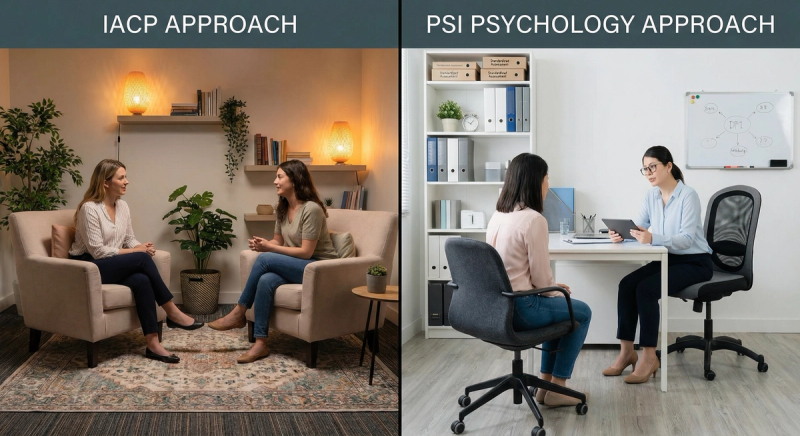
The right choice depends entirely on what you're seeking from therapy.
Choose an IACP therapist when: you're dealing with life transitions, relationship difficulties, grief, anxiety, depression, or general personal development. You want to explore your feelings, understand patterns, and develop insight. You value the therapeutic relationship as the primary vehicle for change. You don't need formal assessment or diagnosis. This describes the majority of people seeking therapy.
Choose a PSI psychologist when: you need formal psychological assessment, suspect you may have a specific condition requiring diagnosis, or want explicitly evidence-based interventions with measurable outcomes. You have complex mental health difficulties that may require coordination with psychiatric services. You want someone trained in specific protocols like CBT, EMDR, or DBT at an advanced level.
Consider counselling psychologists if you want the depth of therapeutic relationship that characterises IACP work combined with the research background and assessment capabilities of psychology. They offer perhaps the broadest skill set but may be harder to find and more expensive.
For online therapy specifically, both IACP and PSI professionals can provide excellent care. The medium suits both approaches, though the specific competencies for digital delivery may vary. Ask prospective therapists about their online training and experience regardless of professional body.
Verifying Credentials: Red Flags and Due Diligence
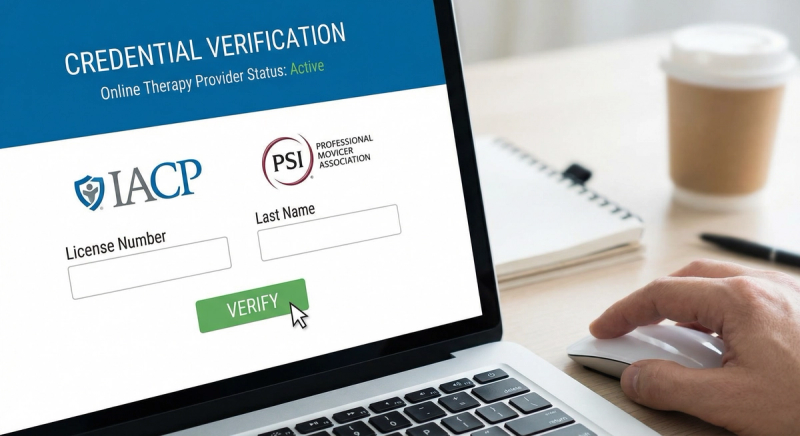
Unfortunately, not everyone offering "therapy" online has appropriate qualifications. Here's how to verify credentials and spot warning signs.
Checking IACP registration is straightforward. The IACP maintains a public register of accredited members on their website. You can search by name to confirm someone holds current accreditation. IACP members should provide their membership number willingly—this allows verification.
Checking PSI registration similarly involves the PSI's public directory of chartered psychologists. Note that graduate membership alone doesn't indicate therapeutic qualifications—look specifically for chartered status or the "Reg. Psychol." designation.
Red flags to watch for include reluctance to provide credentials, claims of membership without verification numbers, training from unrecognised institutions, or pressure to book immediately without proper assessment. Be particularly wary of terms like "life coach" or "wellness practitioner" when seeking therapy for mental health difficulties—these are unregulated titles requiring no qualifications.
International credentials require careful evaluation. A UK BACP or BACP-accredited training is generally equivalent to IACP standards. American qualifications vary widely—state licensing means more than membership in voluntary organisations. Ask specifically about Irish recognition of international training.
Supervision requirements differ between bodies but both require ongoing supervision. IACP therapists must have regular supervision throughout their career. PSI psychologists similarly maintain supervision arrangements. This isn't optional—it's a core professional requirement.
Online-Specific Considerations

The digital context adds factors beyond basic credentials.
Online therapy training should be explicit. Ask prospective therapists what specific training they've completed in online delivery. Since 2020, most reputable training programmes have incorporated digital practice, but some older practitioners may lack this preparation.
Technology competence matters more than many realise. Your therapist should understand platform security, confidentiality features, and what to do if technical issues arise during sensitive disclosures. This is part of online professional competence.
Data protection requirements apply to both IACP and PSI professionals under GDPR. However, psychologists may have additional requirements through their regulatory framework. Both should use secure platforms and have clear privacy policies.
Cross-border practice raises complex issues. An Irish IACP or PSI professional can typically work with clients in Ireland online. Working with clients outside Ireland may involve regulatory complications—ask if this applies to your situation.
Insurance coverage may differ. Some Irish health insurance plans specify IACP or PSI registration for counselling/psychology benefits. Check your specific policy requirements before committing to a therapist.
Cost Considerations: What Accreditation Means for Pricing
Professional credentials correlate with fees, though the relationship isn't absolute.
IACP counsellors typically charge €60-€80 per session. Psychotherapists (more extensive training) may charge €80-€100. Senior practitioners or those with additional specialisations may charge more.
PSI psychologists generally command higher fees. Chartered psychologists typically charge €100-€150 per session. Clinical psychologists, with their extensive training, may charge €120-€180. These higher fees reflect longer training, broader scope, and often shorter-term, focused work.
Value considerations matter more than absolute cost. A highly trained professional you don't connect with provides less value than a less credentialed therapist with whom you have excellent rapport. The research consistently shows therapeutic relationship matters more than specific credentials.
Sliding scale options exist across both professional bodies. Many IACP and PSI professionals offer reduced rates for those experiencing financial hardship. Don't assume cost barriers without asking.
Insurance and tax relief apply similarly to both IACP and PSI professionals, provided they meet the specific requirements of your policy or Revenue's medical expenses scheme. Both are recognised as legitimate mental health service providers.
The Bottom Line: Competence Over Credentials
While credentials matter, they're not the whole story. The most important factors in successful therapy are the quality of the therapeutic relationship and the therapist's specific competence in addressing your particular difficulties.
Both IACP and PSI maintain standards that protect the public and ensure minimum competence. A therapist accredited by either body has demonstrated substantial training and commitment to ethical practice. The same is true of therapists accredited by ICP and IAHIP, which sit within the psychotherapy pathway alongside IACP — Feel Better Therapy works with therapists accredited by all four bodies. Neither pathway is inherently better than the others; they simply represent different professional training routes.
When choosing an online therapist, consider credentials as one factor among several. The therapist's experience with your specific concerns, their comfort with online delivery, their availability, and most importantly, your sense of connection during initial contact all matter as much as the letters after their name.
The ultimate goal is finding someone qualified, competent, and capable of building a trusting therapeutic relationship with you. Whether they reached that capability through the IACP pathway or the PSI pathway matters far less than whether they can genuinely help you.
Related Guides:
Related Guides:
This article is part of The Ultimate Guide to Online Therapy in Ireland — our comprehensive hub covering everything you need to know about virtual mental health support.
- **How Much Does Online Therapy Cost in Ireland?** — Understanding pricing and budgeting
- **Is Online Therapy Covered by VHI, Laya, and Irish Life?** — Navigate insurance coverage
- **Choosing Between Online and In-Person Therapy** — Finding your best format