Is Online Therapy Covered by VHI, Laya, and Irish Life? What You Need to Know

Navigate health insurance coverage for online therapy in Ireland. Learn about VHI, Laya Healthcare, and Irish Life mental health benefits, pre-authorisation, and tax relief.
One of the most common questions we hear at Feel Better Therapy is straightforward: "Will my health insurance cover this?" The answer, frustratingly, is "it depends." While private health insurance in Ireland has evolved to increasingly include mental health benefits, the specifics vary dramatically between providers, plans, and even individual circumstances.
Understanding your coverage before starting therapy can save you hundreds of euros and prevent disappointment later. This guide breaks down exactly what VHI, Laya Healthcare, and Irish Life offer for online therapy, how to claim your entitlements, and what documentation you'll need to keep Revenue happy come tax time.
Whether you're already insured or considering a plan switch during renewal season, here's everything you need to know about getting your online therapy costs covered.
Understanding Your Policy: The Mental Health Small Print
Before booking your first session, you need to understand what your specific policy covers. This requires digging deeper than the marketing materials—insurers love to advertise "mental health benefits" while burying significant limitations in the policy details.
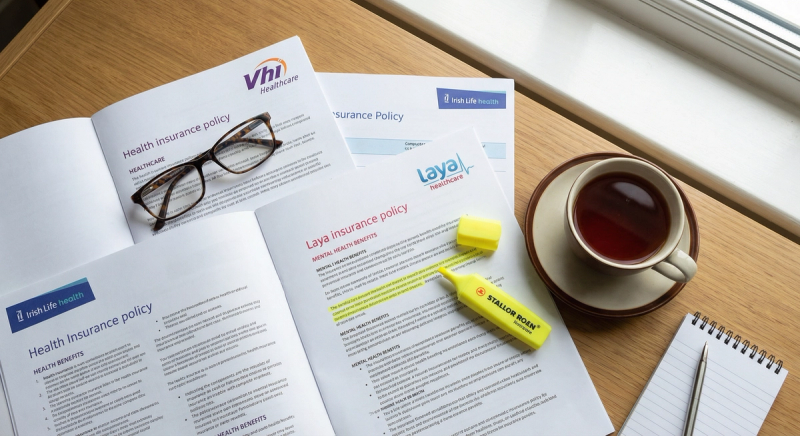
VHI offers mental health coverage across most of its plans, but the details matter enormously. Their "Psychiatry and Psychology" benefit typically requires you to see a consultant psychiatrist first for a referral. Some plans limit coverage to diagnosed mental health conditions only, meaning preventive or wellness-focused therapy may not qualify. Annual limits usually range from €250 to €500, with higher-tier plans offering more generous coverage.
Laya Healthcare structures its mental health benefits differently depending on your plan level. Their "Health and Wellbeing" benefits sometimes include counselling without requiring a psychiatric referral, which can be advantageous if you want to start therapy quickly. However, Laya often requires practitioners to be registered with specific Irish bodies—IACP or ICP registration is typically mandatory, with UK-registered therapists sometimes excluded depending on your plan.
Irish Life has expanded its mental health coverage significantly in recent years, partly in response to consumer demand following the pandemic. Their "Mental Health Support" benefit varies by plan tier, with premium plans offering up to €1,000 annual coverage. Irish Life generally requires pre-authorisation for ongoing therapy, meaning you'll need to contact them before starting treatment to ensure coverage.
The Pre-Authorisation Process: Getting Approval Before You Start
Many insurers now require pre-authorisation for mental health treatment. This process, while bureaucratic, protects both you and the insurer from unexpected costs.
Step 1: Contact your insurer's mental health team. Each major insurer has a dedicated department for mental health claims. VHI's Mental Health Support line, Laya's Health and Wellbeing team, and Irish Life's Care team handle these queries. Have your policy number ready and be prepared to explain why you're seeking therapy.
Step 2: Understand the approval conditions. Your insurer will specify exactly what they cover—number of sessions, session cost limits, practitioner requirements, and any diagnostic prerequisites. Get this in writing, either via email or through your online member portal.
Step 3: Choose a qualifying practitioner. Your insurer will provide a list of requirements—typically IACP or ICP registration, location in Ireland, and specific qualifications. Not all online therapists meet these criteria, so verify before booking.
Step 4: Submit ongoing claims promptly. Most insurers require claims within specific timeframes, often 3-6 months from the session date. Keep all receipts and submit claims promptly to avoid losing your entitlement.
Online Therapy Specifics: Does Virtual Count?
Here's where many policyholders get caught out. Just because your plan covers "counselling" or "psychotherapy" doesn't automatically mean online sessions qualify.
VHI's position on online therapy has evolved. Most current plans explicitly cover "telehealth" or "video consultation" sessions, but some older or basic plans may exclude them. The key is whether your specific plan lists "online" or "telehealth" in the covered services. If uncertain, request written confirmation from VHI before starting treatment.
Laya Healthcare generally covers online therapy provided the practitioner meets their registration requirements and is based in Ireland. However, Laya has specific rules about session documentation—practitioners must provide detailed receipts showing the session was conducted via video (not telephone only) and include their IACP/ICP registration numbers.
Irish Life is arguably the most progressive on online therapy coverage, explicitly including "video therapy sessions" in most current plans. Their digital-first approach means they're more comfortable with virtual treatment, though they still require the same practitioner credentials as in-person care.
The geographic catch: All three major insurers generally require your therapist to be physically located in Ireland, even for virtual sessions. This excludes popular UK-based online therapy platforms unless they employ therapists specifically registered and located in Ireland.
Tax Relief: Claiming Back 20% or 40% on Therapy Costs

Even with insurance, you'll likely have out-of-pocket expenses. Ireland's tax relief system helps recover some of these costs through the Medical Expenses Tax Credit scheme.
How it works: You can claim tax relief at your marginal rate—20% if you're a standard rate taxpayer, 40% if you're in the higher bracket. This applies to therapy costs not covered by insurance, including co-payments, excess amounts, and fully private sessions.
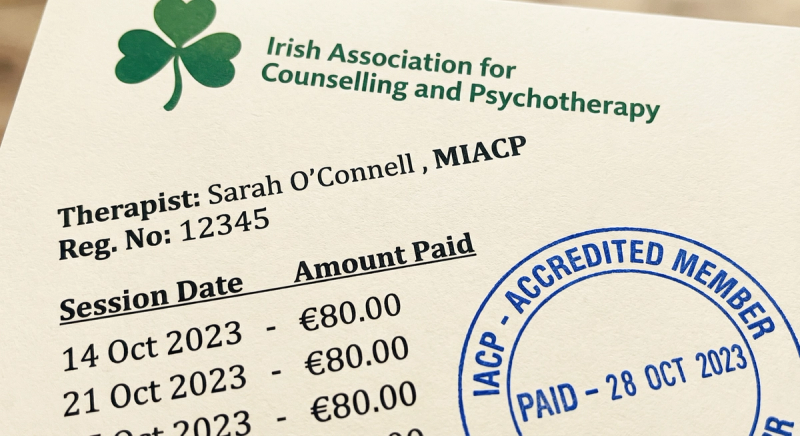
What qualifies: Counselling and psychotherapy from registered practitioners qualifies for tax relief. The key is ensuring your therapist provides proper receipts with their name, registration number, your name, dates, and amounts paid. Vague invoices or cash payments without documentation won't suffice.
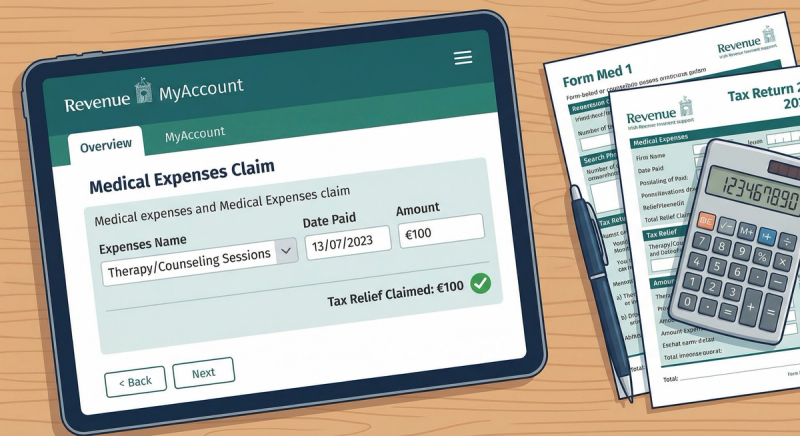
The claiming process: Revenue's MyAccount system handles medical expense claims. You can claim for expenses from the past four years, meaning if you've been paying for therapy without claiming relief, you may be due a significant refund. The process involves uploading receipts and completing a simple online form—no accountant required for straightforward claims.
Documentation essentials: Keep every receipt. Revenue may request proof of payment and practitioner registration up to six years after the claim. Create a dedicated folder (physical or digital) for therapy receipts and related insurance correspondence.
What Your Therapist Needs to Know
For your therapy to qualify for insurance and tax relief, your therapist must provide specific documentation. Understanding these requirements helps you choose appropriately qualified practitioners from the start.
Registration requirements: All three insurers require therapists to be registered with either the Irish Association for Counselling and Psychotherapy (IACP) or the Irish Council for Psychotherapy (ICP). Some plans also accept Irish Association of Humanistic and Integrative Psychotherapy (IAHIP) registration. Ask your therapist for their registration number and verify it on the relevant body's website.
Receipt specifications: Insurers and Revenue require specific information on receipts: therapist's full name and registration number, their business address, your name, session dates, session duration, amount paid, and payment method. Generic receipts lacking these details may be rejected.
Treatment plans: Some insurers require practitioners to submit treatment plans for ongoing therapy, particularly beyond 6-8 sessions. This involves the therapist briefly outlining your presenting issues, treatment approach, and expected session number. While this feels intrusive, it's standard practice and shouldn't affect your therapeutic relationship.
Clinical notes: Your therapist keeps clinical notes as standard practice. Insurers rarely request these, but they may occasionally ask for confirmation that sessions occurred and were clinically appropriate. Your therapist should explain their confidentiality policies, including any limits related to insurance requirements.
When Insurance Says No: Alternative Funding Options
Not everyone has private health insurance, and even those who do often face coverage gaps. Here's how to access therapy when insurance won't cover the full cost—or any cost.
Sliding scale options: Many therapists offer reduced rates for clients experiencing financial hardship. These arrangements are typically discussed during initial consultation and may reduce fees from €80-€100 to €50-€60. Don't be embarrassed to ask—therapists understand that cost is a genuine barrier and most want to help where possible.
Trainee therapists: Therapy training programmes require students to complete hundreds of hours of supervised practice. Trainee counsellors offer sessions at substantially reduced rates—often €30-€40—while working under experienced supervisors. The quality can be excellent, though sessions may be more structured as trainees develop their skills.
Employee Assistance Programmes: If you're employed, check whether your workplace offers an EAP. These programmes typically provide 6-8 free counselling sessions, completely confidential from your employer. Many Irish companies added or expanded EAPs following the pandemic, but employees often don't know these benefits exist.
Charitable organisations: Organisations like MyMind, Turn2Me, and various local charities offer low-cost or free counselling, though waiting lists can be lengthy. These services are particularly valuable for those without any insurance coverage, but be prepared for several weeks or months before your first appointment.
Making Your Decision: Insurance, Cost, and Value
Ultimately, therapy is an investment in your mental health and overall quality of life. While insurance and tax relief reduce costs, they shouldn't be the only factors in your decision.
Consider the total cost of not seeking help. Untreated mental health conditions often lead to reduced work performance, relationship difficulties, physical health problems, and in severe cases, inability to work at all. The financial cost of untreated depression or anxiety frequently exceeds therapy costs many times over.
Balance insurance constraints with therapeutic fit. While staying within your insurance network saves money, the "best" therapist for you might be outside these constraints. Consider paying privately for a therapist with specific expertise in your issues, particularly for complex or persistent conditions.
Track your expenses meticulously. Whether claiming insurance, tax relief, or both, proper documentation ensures you receive every euro you're entitled to. Create a simple spreadsheet tracking dates, costs, insurance reimbursements, and tax relief claimed.
Review annually. Insurance plans change, and your coverage may improve (or deteriorate) at renewal. Similarly, your income may move you between tax brackets, affecting your relief entitlements. An annual review ensures you're maximising your benefits.
Understanding insurance coverage for online therapy requires patience and attention to detail, but the potential savings make the effort worthwhile. With proper planning, you can access quality mental health support while managing costs effectively—ensuring that financial concerns never prevent you from getting the help you deserve.
Related Guides:
Related Guides:
This article is part of The Ultimate Guide to Online Therapy in Ireland — our comprehensive hub covering everything you need to know about virtual mental health support.
- **How Much Does Online Therapy Cost in Ireland?** — Understanding session rates and savings
- **Free and Low-Cost Online Therapy Options** — Accessing support on a budget
- **IACP vs. PSI: Choosing an Accredited Online Therapist** — Understanding Irish therapy accreditation