From Burnout to Balance: Online Therapy for Irish Workplace Stress

Learn how online therapy helps Irish professionals recover from workplace burnout. Discover symptoms, treatment approaches, and strategies for achieving work-life balance.
Ireland has a productivity problem masquerading as a work ethic. We pride ourselves on being hardworking, but the statistics paint a troubling picture: Irish employees work longer hours than most of their European counterparts while reporting higher stress levels. The "always on" culture, intensified by remote work blurring boundaries, has created an epidemic of workplace burnout.
Burnout isn't just feeling tired after a busy week. It's a state of chronic physical and emotional depletion characterised by cynicism, reduced professional efficacy, and a sense of futility. Once dismissed as weakness, burnout is now recognised by the WHO as an occupational phenomenon requiring intervention.
Online therapy has emerged as a crucial resource for Irish workers experiencing burnout. The same technology that enables constant connectivity can deliver support without adding commute stress or requiring time away from already overloaded schedules. This guide explores how online therapy addresses workplace burnout specifically for Irish professionals.
Understanding Burnout: Beyond Ordinary Stress
The term "burnout" gets thrown around casually, but clinical burnout has specific characteristics that distinguish it from normal work pressure.
The three dimensions of burnout were identified by researchers Maslach and Leiter: exhaustion (physical and emotional depletion), cynicism (detachment and negative attitudes toward work), and inefficacy (reduced sense of accomplishment and capability). You can experience stress without burnout, but burnout represents a more systemic breakdown in your relationship with work.
Physical symptoms include persistent fatigue that sleep doesn't resolve, frequent illness as immune function suffers, headaches, digestive problems, and disrupted sleep patterns. Many Irish workers dismiss these as merely needing a holiday, but burnout doesn't resolve with a week off—it's a signal that something fundamental needs changing.
Emotional and cognitive symptoms involve difficulty concentrating, irritability, anxiety, and feelings of emptiness. The enthusiasm you once had for your work disappears. You may find yourself going through motions mechanically while feeling detached from outcomes.
Behavioural changes include withdrawing from colleagues, procrastinating on tasks, increased cynicism about organisational goals, and using alcohol or other substances to cope. These changes damage both performance and relationships.
The Irish context adds specific factors. Our culture often equates busyness with virtue and rest with laziness. The "sure it'll be grand" attitude means we minimise our struggles until they become crises. The small size of many Irish workplaces creates intense pressure—there's often no anonymity, and everyone knows everyone's business.
Why Irish Workplaces Create Burnout Risk
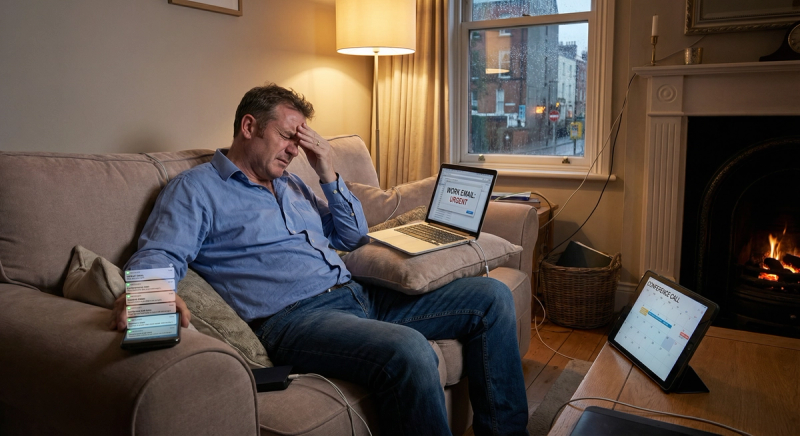
Understanding the systemic factors helps distinguish between personal failing and systemic problems requiring systemic solutions.
The long-hours culture persists despite evidence that excessive hours reduce productivity. Irish full-time employees work more hours annually than the EU average, yet this doesn't translate to better outcomes—just exhaustion. The visibility of hours worked often matters more than actual output.
Boundary dissolution from remote and hybrid work means many Irish workers never truly leave work. The commute that once provided transition time has disappeared. Kitchen tables become desks. Email pings at 10 PM feel impossible to ignore. The boundary between work and rest has evaporated.
The always-on expectation intensified during the pandemic and never receded. Irish workers report checking work communications outside hours more than European counterparts. The smartphone makes work constantly accessible, and many feel implicit pressure to respond immediately regardless of time.
Sector-specific pressures vary enormously. Healthcare workers face moral distress and impossible workloads. Tech workers experience intense delivery pressure and constant upskilling demands. Financial services navigate high-stakes decisions with regulatory complexity. Teachers juggle administrative burden with emotional labour. Each sector has unique burnout risks.
The promotion of self-care as solution can actually worsen burnout by making individuals responsible for systemic problems. When organisations suggest mindfulness apps while maintaining unsustainable workloads, they individualise what requires structural change. Therapy helps navigate this tension.
How Online Therapy Addresses Burnout

Traditional therapy for burnout faced barriers—stressed workers couldn't spare the time to attend appointments. Online therapy removes these obstacles while offering specific advantages.
Accessibility during crisis matters when you're already overwhelmed. Online sessions eliminate travel time, parking stress, and the cognitive load of navigating to a new location. You can attend from home, perhaps during a lunch break or after children sleep, fitting therapy around existing demands rather than adding another appointment to juggle.
Processing in the actual environment where burnout occurs provides therapeutic advantages. Your therapist can see your workspace, understand your constraints, and help you implement boundaries in your real setting rather than discussing hypotheticals in a clinical office.
Flexibility for shift workers and those with irregular hours enables access that traditional therapy cannot offer. Online therapists often offer early morning, evening, or weekend appointments that accommodate unpredictable schedules.
Privacy without stigma addresses the reality that many Irish workers fear being seen attending therapy. Online sessions happen discreetly at home, removing the visibility that might affect workplace relationships or career advancement.
Continuity during work travel or location changes maintains therapeutic relationships even when work demands mobility. For Irish workers in multinational companies or those who travel for business, online therapy provides consistent support regardless of geography.
What Burnout Therapy Involves

Effective therapy for burnout goes beyond venting about a difficult job. It addresses multiple dimensions of the problem.
Assessment and differentiation comes first. Is this burnout, depression, anxiety, or a combination? Are there medical factors contributing to fatigue? Good therapy begins with understanding what we're actually treating. Sometimes what presents as burnout is actually clinical depression requiring different intervention.
Stress management skills provide immediate relief while deeper work proceeds. These include relaxation techniques, time management strategies, and boundary-setting skills. CBT approaches help identify and challenge the thought patterns that drive overwork and perfectionism.
Boundary work addresses the specific difficulties of saying no, delegating, and creating separation between work and personal life. For many Irish workers, this involves unlearning cultural messages about the virtue of self-sacrifice and availability.
Values clarification helps distinguish between what you genuinely care about and what you've been conditioned to pursue. Burnout often signals a misalignment between your values and your work. Therapy explores what meaningful work looks like for you specifically.
Decision-making about work may involve considering job changes, role modifications, or career transitions. Therapy doesn't push you toward any specific decision but helps you make choices from clarity rather than desperation.
Recovery planning for those taking sick leave or career breaks provides structure and support during this vulnerable period. Returning to the same environment without change often leads to recurrent burnout.
When Burnout Requires Additional Support

Therapy helps many cases of burnout, but severe presentations need coordinated care.
Medical evaluation should accompany severe burnout. Chronic stress affects physical health in ways that need monitoring. Your GP can check for anaemia, thyroid dysfunction, vitamin deficiencies, and other conditions that exacerbate or mimic burnout symptoms. Some GPs will issue sick certificates for burnout specifically.
Psychiatric consultation becomes necessary when burnout co-occurs with clinical depression, severe anxiety, or when symptoms impair functioning significantly. Medication sometimes supports recovery, particularly when sleep disruption or depression complicates the picture.
Occupational health involvement can facilitate workplace accommodations. Irish employers have legal obligations under the Safety, Health and Welfare at Work Act to protect employees from stress. Occupational health assessment may identify specific workplace factors requiring modification.
Coaching versus therapy represents a useful distinction. Coaches help with career decisions, job search, and professional development. Therapists address the emotional, psychological, and sometimes psychiatric dimensions of burnout. Many people benefit from both.
Support groups specifically for workplace stress provide validation and peer wisdom. Knowing others face similar challenges reduces the isolation that burnout creates. Online support groups accommodate busy schedules and geographic spread.
Recovery Is Possible: The Path Forward

Burnout feels permanent when you're in it, but recovery happens—with time, appropriate support, and often environmental changes.
The timeline of recovery varies enormously. Mild burnout may resolve in weeks with boundary changes and stress management. Severe burnout with depression can require months. Recovery isn't linear; expect setbacks alongside progress.
Environmental change is often necessary. Returning to the same workplace, with the same demands, and the same culture typically leads to recurrent burnout. This doesn't necessarily mean leaving your field—sometimes role changes, team moves, or organisational shifts suffice. But something must change.
Learning from burnout prevents recurrence. What warning signs did you miss? What beliefs drove your overwork? How did you ignore your own needs? Therapy helps integrate these lessons so future stress doesn't automatically trigger the same patterns.
Rebuilding identity beyond work addresses the common pattern of defining oneself exclusively through career. Who are you when not working? What gives life meaning outside professional achievement? These questions become central in burnout recovery.
Advocating for systemic change extends individual recovery to collective benefit. Irish workers experiencing burnout can contribute to cultural shifts by modelling healthy boundaries, supporting colleagues, and advocating for workplace wellbeing policies.
The epidemic of workplace burnout in Ireland reflects systemic problems requiring systemic solutions. Online therapy cannot fix overwork culture, impossible workloads, or boundaryless technology. But it can support individuals through recovery, help them make informed decisions about their working lives, and develop resilience against future burnout.
For Irish professionals running on empty, online therapy offers accessible, flexible support that fits into lives already stretched thin. The investment in addressing burnout pays dividends across every domain of life—because work shouldn't cost you your health.
Related Guides:
Related Guides:
This article is part of The Ultimate Guide to Online Therapy in Ireland — our comprehensive hub covering everything you need to know about virtual mental health support.
- **CBT Online: Why It's the Gold Standard** — Effective approaches for anxiety
- **Depression Treatment Online** — Understanding online therapy for depression
- **Free and Low-Cost Online Therapy Options** — Accessing support on a budget