Social Anxiety & The Irish 'Fear of Judgement': How Online Therapy Helps

Understanding how social anxiety manifests in Irish culture and how online therapy provides a safe starting point for treatment.
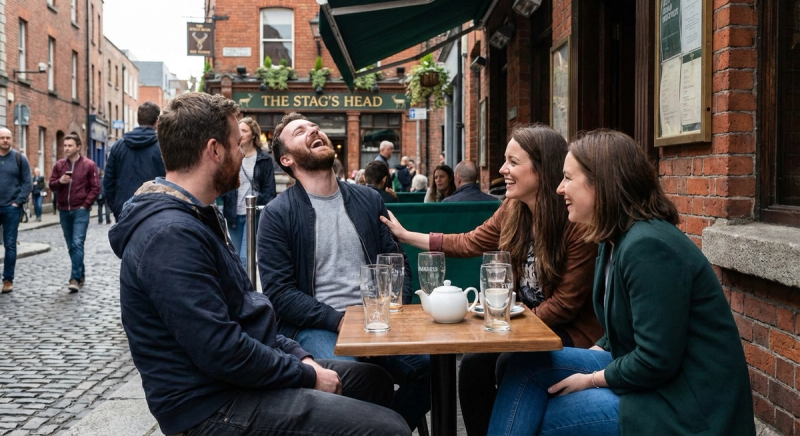
The Irish pub conversation flows easily around you—stories told, laughter shared, pints raised in comfortable companionship. Meanwhile, you rehearse what you might say if someone asked you a direct question, calculating whether your accent marks you as different, wondering if anyone notices how rarely you actually speak. This is the invisible weight of social anxiety in Ireland, where the cultural premium placed on sociability makes social fear particularly isolating.
Online therapy offers a unique solution for this specific presentation of anxiety. The safety of home-based sessions creates a therapeutic starting point that in-person therapy sometimes cannot provide, particularly when the fear of judgment extends to the therapy room itself.
The Irish Context: When Sociability Becomes Pressure
Irish culture prizes conversation, storytelling, and social connection. The "gift of the gab" represents a celebrated trait, and social situations—pubs, GAA gatherings, community events—form the backbone of community life. For those with social anxiety, this cultural landscape creates particular challenges.
The fear of being "too quiet" or "odd" compounds the baseline anxiety of social interaction. You might worry about being perceived as aloof or superior when you're simply terrified. The pressure to participate in expected social rituals—buying rounds, making small talk, sharing personal stories—can feel overwhelming rather than enjoyable.
Social anxiety in Ireland often manifests around specific cultural touchstones. The pub represents a particular challenge when alcohol reduces inhibitions for everyone except you, making your anxiety more visible by contrast. Workplaces with after-hours socialising expectations create professional anxiety about being seen as not "fitting in." Family gatherings with their complex dynamics and expectation of participation trigger anticipatory anxiety for days beforehand.
Why Social Anxiety Feels Different From Other Anxieties
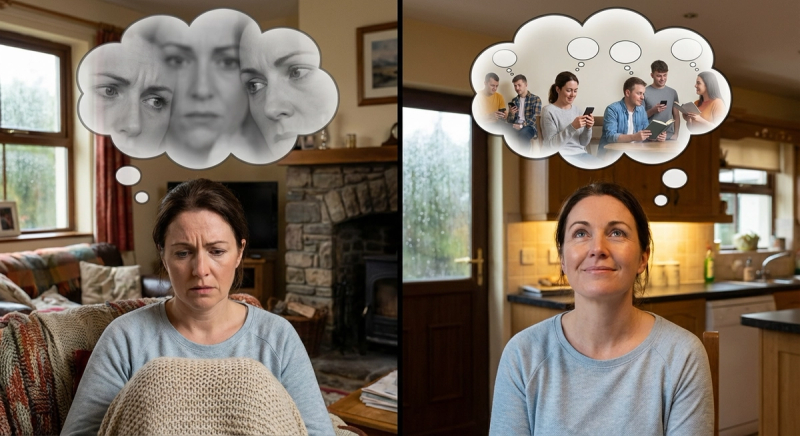
While all anxiety involves threat detection and avoidance, social anxiety carries particular characteristics that make it especially persistent and particularly responsive to specific therapeutic approaches.
Fear of evaluation dominates: At its core, social anxiety centres on the belief that others will judge you negatively. This isn't necessarily a fear of physical danger but a fear of social rejection, embarrassment, or being seen as inadequate. The anticipated negative evaluation often feels more catastrophic than the actual consequences would warrant.
Safety behaviours maintain symptoms: Socially anxious people develop subtle avoidance strategies that provide short-term relief but long-term maintenance of anxiety. These might include rehearsing conversation topics obsessively before social events, sticking to familiar people at gatherings, using alcohol to manage anxiety, or constantly checking your phone to avoid interaction.
Self-focused attention perpetuates anxiety: During social situations, your attention turns inward—monitoring your physical symptoms, analysing your performance, comparing yourself to others. This self-focus actually impairs social performance (you miss social cues, respond oddly, seem distant) which then confirms your belief that you're socially incompetent, creating a self-fulfilling cycle.
Post-event processing reinforces beliefs: After social situations, socially anxious people engage in extensive rumination—replaying conversations, analysing perceived mistakes, criticising their performance. This post-event processing rarely involves balanced evaluation; it selectively remembers negative moments and interprets ambiguous interactions as negative.
How Online Therapy Addresses Social Anxiety
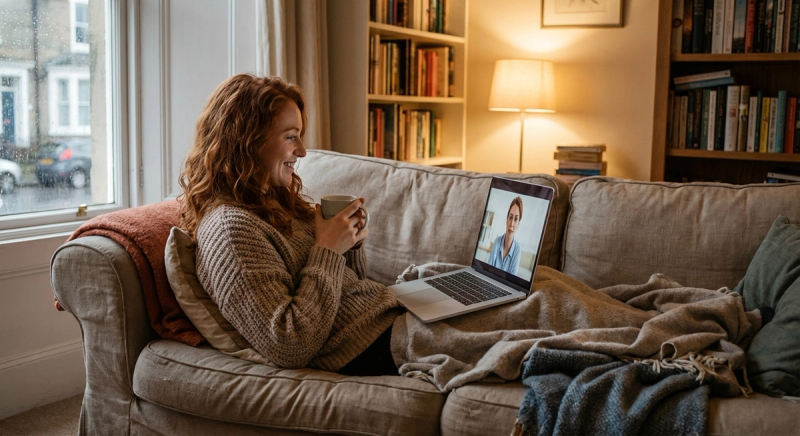
Online therapy at Feel Better Therapy offers particular advantages for treating social anxiety, advantages that leverage the very nature of the condition to facilitate treatment.
The therapy room comes to you: When social anxiety makes leaving home difficult, online therapy removes that initial barrier. You can begin treatment without the social exposure of travelling to appointments, sitting in waiting rooms, or navigating unfamiliar buildings. This accessibility means treatment begins sooner and maintains more consistently.
Exposure within safe parameters: Your home environment, where you conduct online sessions, represents a safety zone. This safety allows you to discuss socially anxious experiences without the additional anxiety of being in a social space while doing so. As treatment progresses, this base of safety expands to include increasingly challenging social situations.
Gradual exposure through the screen: Video therapy itself provides a form of social exposure—interacting with another person, being seen, speaking spontaneously—but within controlled parameters. The relative distance of the screen often feels manageable for those who find in-person interaction overwhelming, providing a stepping stone toward fuller social engagement.
Practical homework in real contexts: Between-session work involves actual social situations in your daily life—workplace interactions, family gatherings, community events—rather than artificial scenarios. Your therapist helps you design behavioural experiments targeting your specific feared situations, then processes these experiences in subsequent sessions.
What Treatment Actually Looks Like

Social anxiety treatment at Feel Better Therapy follows established protocols while adapting to your specific feared situations and maintaining patterns.
Cognitive work addresses evaluation fears: You learn to identify and challenge thoughts like "Everyone will think I'm boring" or "I'll make a fool of myself." Through examining evidence and considering alternative perspectives, you develop more balanced beliefs about social situations and your place within them.
Attention training reduces self-focus: Specific exercises help you shift attention from internal monitoring to external engagement—focusing on conversation content rather than your performance, noticing others rather than yourself, participating rather than observing.
Behavioural experiments test predictions: Rather than avoiding feared situations, you approach them with specific predictions that get tested. "If I speak up in the meeting, everyone will think my idea is stupid" becomes a hypothesis you test—and usually discover was inaccurate.
Social skills development where needed: Sometimes social anxiety has genuinely limited social experience, creating skills gaps. Your therapist can teach conversation skills, assertiveness techniques, or non-verbal communication strategies that increase social confidence alongside anxiety reduction.
The Online Format's Unique Benefits
While in-person therapy certainly helps social anxiety, the online format offers specific advantages worth considering.
Controlled visibility: You control what the therapist sees—your camera angle, your environment, even whether you use video at all initially. This control provides safety that gradually expands as confidence builds.
No travel exposure: For those whose social anxiety includes fear of public spaces, strangers, or getting lost, removing travel requirements eliminates significant anticipatory anxiety.
Easier between-session practice: Being already at home makes it easier to practice skills immediately after sessions, when motivation is highest, rather than losing momentum during travel.
Consistent attendance: Social anxiety causes high dropout rates from traditional therapy—the very condition being treated interferes with treatment attendance. Online therapy's accessibility improves completion rates.
Realistic Expectations for Treatment

Social anxiety treatment produces genuine, lasting change—but not instant transformation. Understanding realistic timelines helps maintain motivation through the therapeutic process.
Early sessions (1-3) focus on understanding your specific social anxiety patterns, identifying feared situations and safety behaviours, and establishing the therapeutic relationship. Initial homework involves relatively easy social observations rather than challenging exposures.
Middle sessions (4-10) emphasise behavioural experiments in increasingly challenging social situations. You begin approaching rather than avoiding feared scenarios, testing anxious predictions, and building evidence of social competence. This phase often feels most demanding as you're actively challenging established patterns.
Later sessions (11-16) consolidate gains, address any remaining feared situations, and develop relapse prevention strategies. You learn to maintain progress independently and manage future social challenges without returning to anxious avoidance.
Most clients experience significant improvement within 12-16 sessions, though individual variation exists. Some need fewer sessions when social anxiety is mild and circumscribed; others need additional sessions when social anxiety is severe or comorbid with other conditions.
When Social Anxiety Requires Additional Support
Standard CBT for social anxiety helps most people substantially. However, certain factors suggest benefit from additional or alternative approaches.
Avoidant personality patterns sometimes underlie social anxiety, requiring longer-term work addressing core beliefs about self-worth and relating to others. These patterns respond to therapy but need more extended treatment than circumscribed social anxiety.
Trauma histories can create social anxiety through specific learning experiences—bullying, humiliation, rejection that was genuinely severe. Processing these experiences may be necessary before standard social anxiety protocols become effective.
Comorbid conditions like depression or generalised anxiety disorder often accompany social anxiety. While social anxiety treatment typically improves these as well, sometimes parallel treatment addressing multiple conditions produces better outcomes.
Medication considerations help some individuals, particularly when social anxiety is severe or when physiological symptoms (racing heart, trembling, sweating) are prominent. Your therapist can discuss whether psychiatric consultation might supplement therapy.
Taking the First Step
The paradox of social anxiety treatment is that social anxiety itself makes seeking help difficult. Calling a therapist, scheduling an appointment, attending that first session—all involve the very social interaction fears you're seeking treatment for.
Online therapy reduces these barriers significantly. The initial contact happens through a form rather than a phone call. The first session occurs in your own space rather than an unfamiliar office. The therapeutic relationship develops through a medium that feels safer than face-to-face interaction.
Your Feel Better Therapy therapist understands this paradox intimately. They know that simply completing the consultation form represents significant courage when social anxiety makes every interpersonal contact feel threatening. They won't judge your anxiety as weakness or your social struggles as character flaws—they'll recognise them as the painful but treatable symptoms they are.
Social anxiety convinces you that you're uniquely socially incompetent, that others judge you harshly, that things will only get worse. Treatment proves these beliefs wrong—not through telling you to "be more confident," but through systematically testing whether your feared predictions actually come true.
The socially confident people you envy aren't better than you—they're just less afraid. Therapy can help you join them.
Related Resources
Treating social anxiety represents one aspect of Feel Better Therapy's anxiety services. You might also find helpful:
- How Feel Better Therapy Matches You with the Right Anxiety Specialist — Our process for connecting you with a therapist experienced in treating social anxiety specifically
- Panic Attack Relief: Rapid Tools Provided by Feel Better Therapy Experts — For those whose social anxiety includes panic symptoms in social situations
- The Privacy Guarantee: How We Secure Your Online Therapy Sessions — Understanding the confidentiality protections that make discussing sensitive social fears safe
Social anxiety isolates you in plain sight, surrounded by people but disconnected by fear. Treatment doesn't necessarily make you the life of the party—it frees you to participate in social life on your own terms, without the exhausting burden of constant self-monitoring and anticipated judgment.