Am I Bipolar? Why an Assessment Is the Only Answer

Online bipolar tests can't diagnose you. What actually happens in an assessment in Ireland, why diagnosis takes years, and how to prepare for your GP.
It's two in the morning and you're on the fourth website. Each one had a questionnaire, and each one gave you a number that could mean something or nothing. You've scored in the "possible bipolar spectrum" range twice and somewhere harmless once. You've read the symptom lists so many times that you've started matching your own life to them, and now you can't tell whether you're recognising something real or talking yourself into it.
That confusion isn't a sign that you're being dramatic. It's what happens when you take a diagnostic question to a tool that can't answer it. There's no quiz, no score and no symptom checklist that can tell you whether you have bipolar disorder. There's an assessment, done by a person, and understanding how it works takes most of the fear out of asking for it.

Why "Am I Bipolar?" Is the Right Question and the Wrong Test
The question is worth asking. If you've had periods of unusual energy and periods of crushing low mood, you're not imagining the pattern, and you're not the first person to spend a night trying to name it.
What doesn't work is the test. Bipolar disorder is diagnosed from a history: the length of episodes, what changed in your sleep, how your behaviour looked to other people, what happened when you were treated for depression. No questionnaire captures that. The HSE's own guidance describes bipolar disorder as periods of deep depression and periods of extreme elation, and "periods" is the word that does all the work. A ten-minute quiz can't measure duration, and duration is often the whole diagnosis.
There's a real risk in the online route, too. A false sense of certainty cuts both ways. Some people walk away convinced they have an illness they don't, and others walk away reassured when they shouldn't be. Either way, the next step is the same, so you may as well skip to it.

What Actually Happens in an Assessment
It starts with your GP, and it's a conversation rather than a procedure. Expect questions about how you've been sleeping, how your mood has moved over months and years, whether anyone in your family has had a psychiatric diagnosis, and what medication you've taken and how you responded.
If your GP thinks bipolar disorder is possible, they'll refer you to a psychiatrist, usually through a Community Mental Health Team. The psychiatrist's job is to build a timeline. They'll ask about the first time something changed, how long each episode lasted, whether you were hospitalised or lost a job or a relationship during one, and whether the pattern has shifted over time.
Dr Rebecca Lowe, then a registrar in psychiatry at St Patrick's Hospital in Dublin, writing in the Hospital Doctor of Ireland, is blunt about what makes this hard. The illness, she says, "can be almost chameleon like in its presentation," and a proper assessment is "essentially incomplete" without information from family or friends. That's not because your account is doubted. It's because mania is famously invisible from the inside, and the people around you often notice it first.
You'll also be asked about alcohol and drugs. Not as a judgement, and not because anyone assumes your difficulties are self-inflicted, but because stimulants, cannabis and heavy alcohol use can produce episodes that look like bipolar disorder and need different treatment.
The Questions That Matter Most
Two questions do more diagnostic work than the rest.
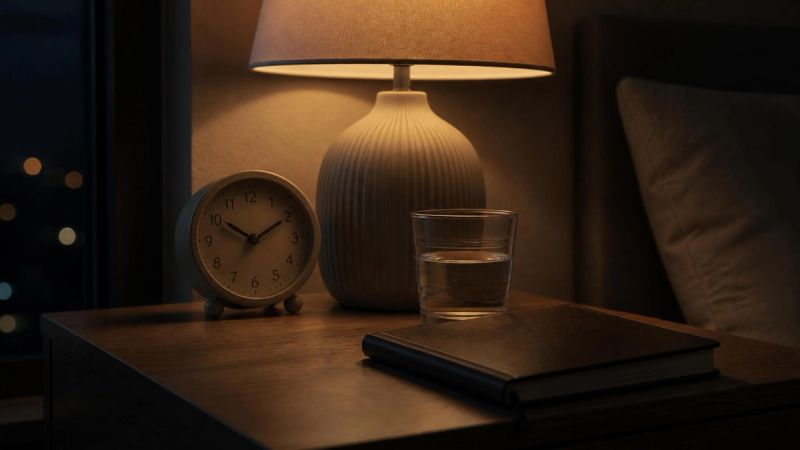
The first is about sleep. Not whether you sleep badly when you're anxious, but whether there were stretches when you needed almost none and felt fine, or better than fine. Reduced need for sleep is one of the core features of mania the HSE lists, and it's one of the few signs that's hard to explain any other way.
The second is about antidepressants. If you were treated for depression and became wired, agitated, unable to sleep, or unusually expansive rather than settling, that's significant. The HSE notes that antidepressants taken alone can trigger a manic episode in someone with bipolar disorder. Some psychiatrists describe bipolar disorder that only appears after antidepressant treatment as its own pattern. The point isn't to alarm you. It's that this single detail can change a diagnosis from unipolar depression to bipolar disorder, and change the treatment with it.
Why Diagnosis Takes So Long in Ireland
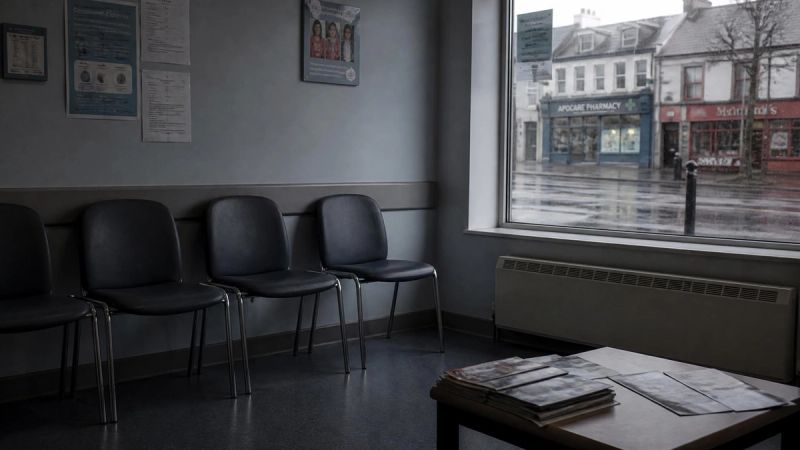
If you feel like you've been going in circles for years, the data backs you up. Dr Susan Brannick, Clinical Director at Aware, told RTÉ in March 2026 that "getting a clear diagnosis can be challenging, taking on average up to 10 years." She added that a correct diagnosis of bipolar disorder, and of the specific type, "is essential for successful intervention."
The reason is built into the illness. People seek help when they're low, and the low looks like depression. The high, especially hypomania, often feels good and doesn't look like a problem until the aftermath. So the appointment happens in the depressed phase, the hypomanic history never comes up, and the diagnosis waits.
There's a second wrinkle worth knowing. The HSE's carer guide states that about one in a hundred people are diagnosed as having bipolar disorder. Aware, working with people who've been through the system, puts it at around one person in 50 in Ireland. The two figures aren't a contradiction so much as a measure of the gap: one counts diagnoses, the other estimates how many people are actually living with it.

What Bipolar Disorder Gets Mistaken For
Assessment is as much about ruling things out as ruling them in. The usual confusions are worth knowing, because they explain why a psychiatrist asks so many questions that seem off-topic.
Depression is the most common. Someone in a depressive episode with a history of energetic periods gets treated for depression alone, sometimes for years, sometimes with medication that makes things worse.
Emotionally unstable personality disorder, also called borderline personality disorder, is the next. It also involves rapid mood shifts, and the difference is in the pattern: mood changes in EUPD tend to be triggered by events and swing within hours, while bipolar episodes last days or weeks and don't need a trigger.
Substance use, thyroid problems and the effects of prescribed steroids can all produce mania-like states. So can schizophrenia, where the picture overlaps enough that some people are diagnosed with schizoaffective disorder instead.
None of this means the assessment is guesswork. It means a good psychiatrist takes a long history before writing anything down, and you're entitled to ask them to explain their reasoning.

What to Bring to the Appointment
You can make the assessment faster and more accurate by preparing for it. This isn't about presenting well; it's about giving the psychiatrist the raw material they need.
Write down a rough timeline of episodes, even if the dates are approximate. Note what happened to your sleep in each one. List every medication you've taken for mood, the dose if you know it, and what happened next. Ask someone who knows you well to describe what they noticed, and bring that with you or invite them along. And bring any hospital letters or GP notes you have.
If you've been keeping a mood diary, bring it. If you haven't, don't start one this week and treat it as evidence. A fortnight of notes says very little about a condition measured in seasons.

What to Do While You Wait
Waiting lists are real, and being told you need an assessment doesn't come with a date. Contact Aware on 1800 80 48 48, seven days a week from 10am to 10pm, for their support line and their peer groups, including support specific to bipolar disorder. Shine, on 01 860 1610, Monday to Friday, 9am to 5pm, supports people with bipolar disorder and their families, and doesn't require a referral.
Therapy is worth starting now rather than after the diagnosis. Not as a substitute for assessment, and not as a way to get a diagnosis by the back door, but because the things that help are the same either way: protecting your sleep, understanding your patterns, and having someone to talk to about the fear that you're making it up.
If you're having thoughts of harming yourself, don't wait for any of this. Samaritans is on 116 123, free, 24 hours a day. Text About It is on 50808, also free and 24/7. If you're in immediate danger, call 112 or 999.
Frequently Asked Questions
Is there a blood test for bipolar disorder?
No. There's no blood test, scan or physical marker that confirms bipolar disorder. Blood tests are used to rule out other causes, such as thyroid problems, and to monitor medication like lithium once treatment starts.
Can my GP diagnose bipolar disorder?
A GP can recognise the possibility and refer you, but diagnosis is made by a psychiatrist. In practice, GPs play a large part in spotting it, especially when a patient hasn't responded to repeated courses of antidepressants.
Should I use an online bipolar test?
It can prompt a useful conversation, but it can't diagnose you, and a score isn't evidence. Bring the questions it raised to your GP rather than the result.
How long does an assessment take?
It varies. A first psychiatric appointment might last 45 to 90 minutes, and a full assessment often spans more than one appointment because a timeline has to be built and other conditions ruled out.
You don't have to work out what's going on by yourself, and you don't have to arrive at the appointment with an answer. If you'd like support while you wait, or alongside treatment, you can get matched with a therapist and talk to someone who'll take the pattern seriously without pretending to diagnose it.
Related Articles
- Bipolar Disorder in Ireland: What It Actually Is
- Antidepressants vs Therapy: What Works for What
- Depression Therapy
This article is for informational purposes only and does not constitute medical advice. It is not a substitute for assessment by a GP or psychiatrist. If you are in crisis, contact Samaritans on 116 123 (free, 24/7), Text About It on 50808 (free, 24/7), or emergency services on 112 or 999. Aware's support line is 1800 80 48 48, seven days a week, 10am to 10pm. Shine can be reached on 01 860 1610, Monday to Friday, 9am to 5pm.