How Divorce Affects Children in Ireland: What the Research Says and What Helps

How divorce affects children in Ireland, what the research actually shows, and the practical things that help them adjust. Advice from Irish clinicians.
You're watching them more closely than usual. A nine-year-old comes home from school, puts the bag down, says nothing about their day, and goes to their room. Nothing has happened. Or nothing you can point to. And you find yourself doing the calculation every separated parent does at some point: is this normal, or is this because of us?
That question is a hard one to live with, partly because the honest answer is that you can't always tell. Children are not transparent. They process things slowly, in play, in moods, in a sudden reluctance to go somewhere, long after the adults think the subject has been dealt with.
What the evidence does offer is more reassuring than the internet would suggest, and more specific than "children are resilient." Most children adjust. The things that make adjustment harder are largely within a parent's control.
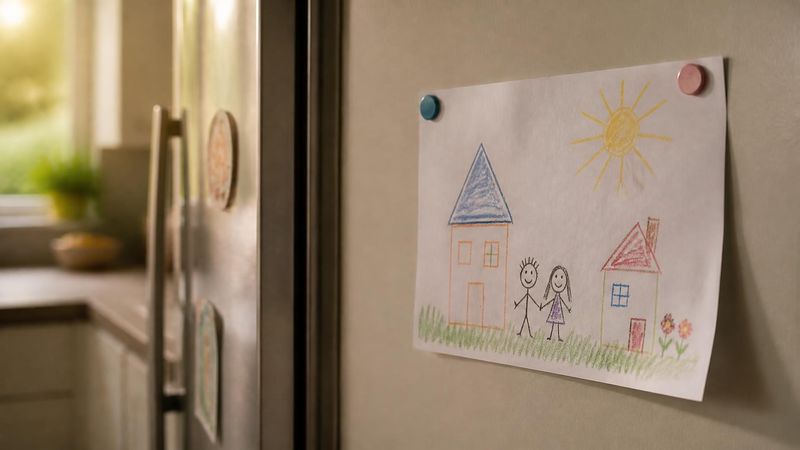
How Divorce Actually Affects Children
The first thing worth knowing is that separation itself is not a sentence. Children growing up in separated families go on to live full, ordinary lives, and the research picture is much less dramatic than the folk version.
What varies is the circumstances around the separation. Children tend to do better when:
- They keep a steady, predictable routine across both homes.
- They aren't caught in the middle of adult conflict.
- They keep a relationship with both parents, where it's safe for them to do so.
- The adults around them are coping well enough to be emotionally available.
- Money and housing aren't in crisis, because financial strain lands on children too.
Children tend to do worse when conflict is ongoing and they're used as messengers, when a parent leans on them for emotional support, when contact with a parent stops abruptly, and when they're told things they can't do anything about.
Notice that this list isn't about whether the parents are married. It's about what the child is living inside afterwards. That distinction matters, because it gives you things you can actually change.
What the Irish Research Shows
There are good Irish numbers on family change, and they're worth knowing if only to counter the sense that your family is unusual.
Research published by the ESRI in 2025, using data from the Growing Up in Ireland study, found that 14% of children aged between nine months and five years were not living with their fathers full-time. By the age of nine, that figure had risen to 18%. The same research found that households affected by parental separation were more disadvantaged in practical terms than households where parents lived together.
That gives you two things at once. First, a reminder of scale: roughly one child in six or seven in the age groups studied isn't living with both parents, which means schools, GPs and sports clubs deal with this every week. Second, a reminder that the financial side of separation is part of how children experience it. Maintenance, housing and the cost of running two homes aren't administrative details. They're part of the child's week.

Telling Them: What to Say and When
Most parents worry more about this conversation than any other, and the guidance is more practical than people expect.
Bethan O'Riordan, a psychotherapist and founder of the Calm Parenting Club, told the Irish Times that "parents should tell children the relationship is breaking up when they know for definite that it is" — after counselling or mediation has clarified that the relationship is actually ending, not during an argument or in the middle of a bad week. Children who are told too early, and then watch their parents stay together, learn not to trust the information they're given.
Her advice on what to say is equally concrete. Don't overpromise. As she put it, "Parents shouldn't make any false hopes, promises or expectations," because children hold on to those promises and measure the years against them. It's better, in her words, to help children "sit with the unknown," which can sound like: "We don't know exactly what's going to happen yet, and we'll tell you as soon as we do."
There's one more rule that comes up again and again in her work: don't offload. She describes children who found it "a total burden and a huge emotional drain" when a parent talked to them as though they were an equal adult. Children can be told the truth at their level. They cannot hold the adult version of it.
What Children Understand at Different Ages
The same explanation lands differently at four and at fourteen, and it helps to know roughly what a child can take in.
Under fives mostly need reassurance and routine. They understand that someone is gone, not why, and they may regress — thumb-sucking, bedwetting, clinginess, disrupted sleep. Keep language simple and concrete: who will collect them, where they'll sleep, when they'll see the other parent.
Five to eight often believe they caused it, and they may say so in indirect ways. They need explicit reassurance that the separation is not their fault and not something they can fix. Sadness, anger and a wish for the family to reunite are all normal at this age.
Nine to twelve understand more than adults assume and can become fiercely protective of a parent, or angry at both. They may act out at school, withdraw, or become unusually compliant. Watch for a child who has suddenly become very good and very quiet.
Teenagers often understand the adult dynamics clearly and react to them. They may be angry at one parent, refuse contact, take on a caretaking role with a sibling, or start behaving in ways that look like ordinary teenage rebellion and aren't. They also have a legitimate need for information about what happens next, and they're old enough to be given some.
At every age, the same two messages do most of the work: this is not your fault, and both of your parents love you. They need to hear those repeatedly, not once.

Signs a Child Is Struggling
Every child will have bad weeks. What's worth attention is a pattern that lasts.
Watch for sleep changes that persist, appetite changes, a marked drop in school performance, withdrawal from friends, loss of interest in things they used to love, frequent stomach aches or headaches with no medical cause, regression in younger children, aggression, or a child who becomes overly responsible and quiet.
Also watch for the things that are easy to miss: a child who never mentions the other parent, a child who seems to manage everyone's feelings in the house, a child who is suddenly anxious about leaving you. Those are coping strategies, and they cost something.
If any of that has been going on for more than a few weeks, or is getting worse, it's worth raising with your GP, the school, or a child therapist. You don't need a crisis to ask for help.

What Actually Helps Children Adjust
The interventions that help most are unglamorous. None of them require a perfect co-parenting relationship, and none of them undo the separation.
Keep the routine identical in both homes. The same bedtime, the same school run, the same rules about screens. Children settle faster when they don't have to relearn their life every Thursday.
Tell them the plan, not the conflict. They need to know who's collecting them on Friday and where they'll sleep. They don't need to know what the solicitor said.
Answer the question they're actually asking. "Will I still see Dad?" is often "am I still loved and is my world stable." Answer the second one.
Let them love both parents. Even when you can't stand the other adult. Criticising the other parent in front of a child asks them to choose, and children who are asked to choose carry that for years.
Protect their childhood. Let them be children. Don't make them your confidante, your messenger, or your emotional support. That's what friends and therapists are for.
Keep the adults' conflict away from them. Handovers, phone calls, solicitor's letters — none of it should happen in front of a child. If your communication keeps escalating, move it to email and consider mediation.
Get support for yourself. A parent who is coping is the single biggest protective factor a child has. That's not a guilt trip; it's a practical reason to look after your own mental health.

When a Child Needs More Than a Parent Can Give
Some children need professional help, and it's not a failure of parenting to arrange it. A child therapist can help when a child is persistently low, anxious, self-harming, refusing school, unable to talk to either parent, or showing behaviour that's out of character and not shifting.
Start with the GP, who can refer on. School supports and school completion services can help too, and many schools have a guidance counsellor or a pastoral care structure. If money is a barrier, ask the GP or your local Citizens Information office about low-cost options.
Therapy for children isn't about getting them to accept the separation. It's about giving them somewhere that isn't either parent's house to make sense of what's happened, without worrying about who they're being loyal to.

Frequently Asked Questions
Do children of divorce end up worse off?
Not automatically. Most children adjust well, and the research points to the circumstances around a separation — conflict, instability, financial strain, losing contact with a parent — as the things that matter most. A calm, predictable, loving arrangement protects children far more than the marital status of their parents.
Should we stay together for the children?
That's a decision only the two of you can make, and it's worth talking through properly, including in counselling. What the evidence doesn't support is the idea that staying together is automatically better. Children do better in a calm single-parent home than in a home with constant conflict, and they also do well when their parents live apart without fighting.
How do we tell the children?
Together if possible, with a simple, honest explanation, no blame, no adult detail, and clear reassurance that it's not their fault. Tell them once you're certain the relationship is ending. Don't overpromise about the future, and keep telling them what's happening next.
What age is hardest for children?
There's no single answer. Younger children need more reassurance and routine, school-age children often blame themselves, and teenagers are more aware of the adult dynamics. What helps is the same at every age: stability, honesty at their level, and not being put in the middle.
Can a child refuse to see the other parent?
Teenagers sometimes do, and the reasons matter. A refusal is different from ordinary reluctance, and it's worth taking seriously rather than treating as defiance. Speak to a solicitor about your legal position, and to a therapist if the refusal seems driven by distress rather than preference.
Children Need the Adults to Be Okay
The pressure to get everything right can be paralysing, and it isn't necessary. Children don't need a flawless separation. They need the adults around them to be steady enough, honest enough, and calm enough to let them get on with being children.
If you're the one holding it all together, that takes a toll. Support for you isn't separate from support for your children; it's the same thing. You can get matched with a therapist who understands what this looks like in Ireland. If the co-parenting logistics are the sticking point, our guide to co-parenting after separation covers the practical side.
Related Articles
- Co-Parenting After Separation in Ireland: Making It Work When It's Hard
- What Separation Actually Does to You: The Grief, Shock and Loneliness Nobody Warns You About
- Low Mood After Separation: Why It Happens and What Actually Helps
This article is for informational purposes only and does not constitute medical or legal advice. If you're worried about a child's mental health, speak to your GP. If a child is in crisis, contact the Children and Young People's Services (CAMHS) through your GP, or in an emergency go to your nearest emergency department. For legal advice, speak to a solicitor.