Men's Sheds and Health by Stealth

Ireland has more men's sheds per head than any country in the world. What the evidence says they do for men's health, and why the model works when talking doesn't.
Ireland has more men's sheds per head of population than any country in the world. There are around 450 sheds on the island, and over 10,000 men walk into one every week — to make things, fix things, drink tea and, without anyone announcing it, look after their health.
That last part is the interesting bit. Sheds weren't designed as a mental health service and they don't operate like one. They work precisely because they don't.
What a Shed Actually Is
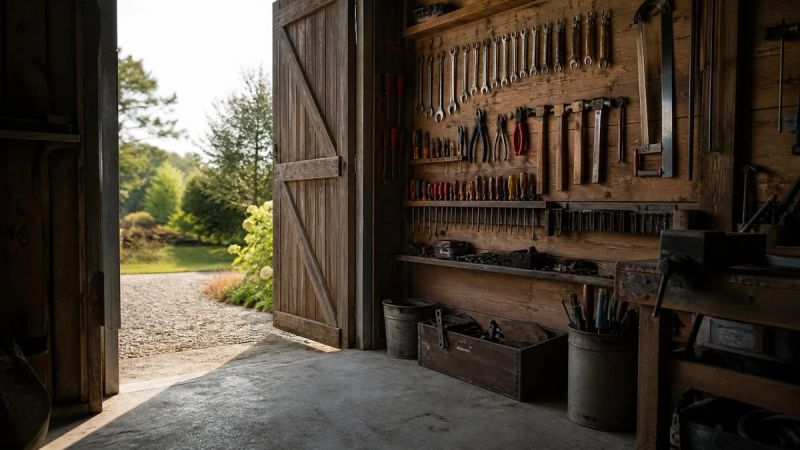
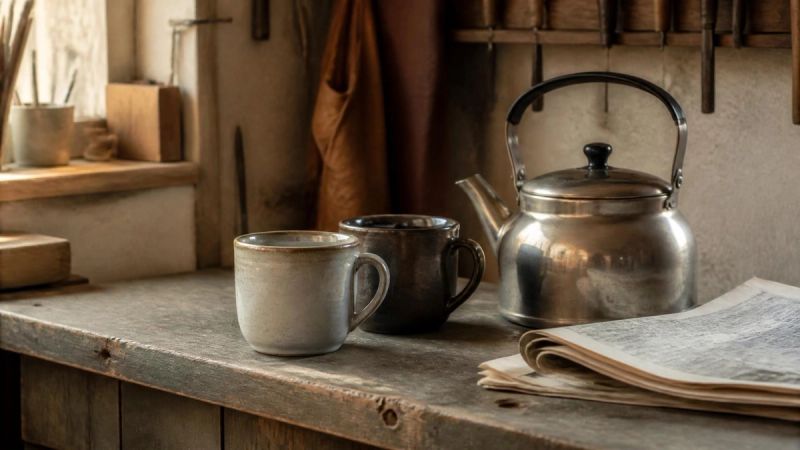
The first men's shed opened in Tipperary in 2009. The model is simple: a shared workshop, a kettle, and a group of men working on projects of their own choosing, at their own pace.
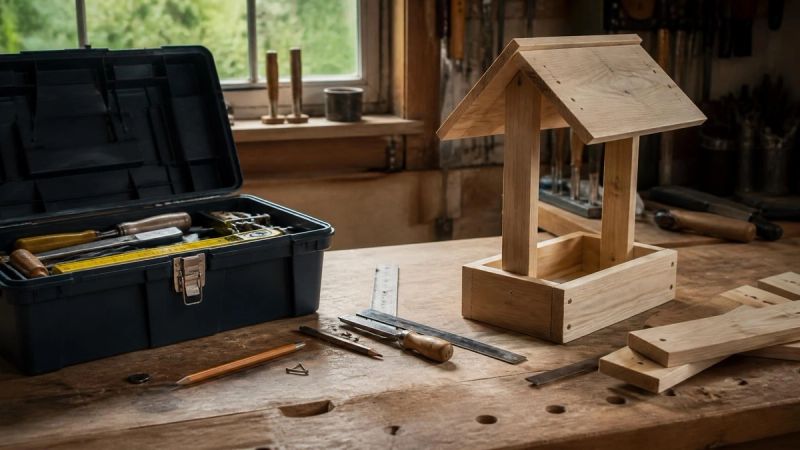
There's no intake assessment, no referral, no group circle and no expectation that anyone discloses anything. A man can join, build a bird table, and say nothing about himself for a year. Nobody will chase him about it, and nobody will think less of him.
That's not a gap in the model. It's the design.
The Evidence: Sheds for Life
The strongest Irish evidence comes from a programme called Sheds for Life, a ten-week health initiative delivered inside the sheds themselves, run with the HSE and Sláintecare and evaluated by Aisling McGrath of Waterford Institute of Technology for the Irish Men's Sheds Association and the Irish Research Council.
It ran across 22 sheds in Kildare, Waterford, Limerick and Louth with 421 men aged between 27 and 90. The findings, launched by Minister for Health Stephen Donnelly in June 2021, were not marginal:
- Reach rate of 73 per cent — men that health services usually can't get near engaged with it.
- Men meeting the physical activity guidelines rose from 31.2 per cent to 51.5 per cent.
- Mental wellbeing improved by an average of 17 per cent, and stayed improved.
- The number of men comfortable having a conversation about their mental health rose by 20 per cent.
- Of the men who took part in the health check, 80 per cent were referred to their GP for something that needed following up.
- Confidence and knowledge improved on suicide prevention, CPR, cancer, diabetes, oral health and getting online.
Read that list again with the earlier guides in mind. The intervention didn't teach men to talk about feelings. It put a health check and a ten-week programme inside a place they already trusted, and the talking followed.
The Natural Experiment: When the Sheds Closed
Then Covid shut them, and the research accidentally captured what sheds are actually holding up.
Before the closures, 1.4 per cent of the men in the study described themselves as lonely. Six months later that figure was 29.7 per cent; at twelve months it was 39.2 per cent (McGrath, Murphy & Richardson, 2020).
Almost two in five men went from not lonely to lonely in the space of a year, purely because a workshop closed. Those in the lonely group also had significantly lower health ratings, fewer active days and lower life satisfaction.
That's about as clean a demonstration as social research produces: the shed wasn't a nice extra in these men's lives. For a significant number, it was the load-bearing wall.
Why It Works: Shoulder to Shoulder
Enda Egan, chief executive of the Irish Men's Sheds Association, is blunt about why the setting matters: "The health outcomes of this group of men remain generally worse than women with higher mortality for almost all leading causes of death. This gender-specific tailored and targeted approach works on health and well-being in a meaningful and effective way, focussing risk factors and prevention through lifestyle changes."
The IMSA's own description of the mechanism is the line to remember: men may not always talk face to face about these issues, but they do talk shoulder to shoulder.
Anyone who has tried to get a man to open up over a table knows this. The same conversation, had while both parties are looking at a piece of timber, lands differently — because there's no eye contact to survive and no sense of being assessed. There's also an exit: you can go back to the job.
What's Actually on Offer
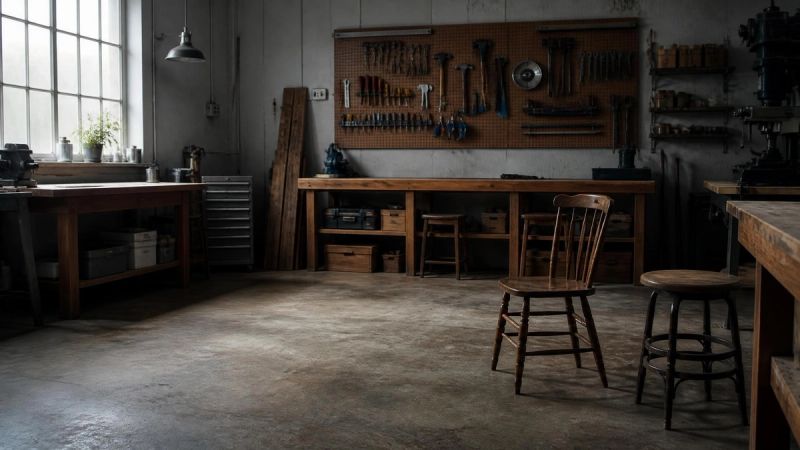
Sheds vary enormously. Most have woodwork, some have metalwork, gardening, model-making, bikes, music or a bit of everything. The Good Bike Project, run through the sheds, refurbishes bicycles.
They've also become a route into conversations that would otherwise never happen. Rebecca McLaughlin, health and wellbeing manager at the IMSA and a clinical psychotherapist, sees older men in sheds "upturning all the traditional negative stereotypes applied to them", such as the idea that men are hard to reach or that men don't talk.
And the grief piece matters here. When the sheds ran a loss programme devised after Covid with the Irish Hospice Foundation, men engaged with it in numbers nobody expected — and some went looking for further support outside the shed. McLaughlin's description of that ripple: "It's like dropping a pebble in the pool. It creates a ripple effect and it opens up a dialogue."
The Limits
Sheds are not therapy, and it does the model no favours to pretend otherwise.
- They can't treat depression. A shed is a social setting, not a clinical one. If a man is unwell, a shed is a good place to be while he gets help; it isn't the help.
- They're not for everyone. Some men don't want a group, don't like workshops, or live nowhere near one.
- Transport is a real barrier in rural Ireland, and sheds vary in how well they manage it.
- They're not a substitute for friendship outside the shed. The men who did best in the research were the ones who used it as a base rather than as their only contact.
- Some sheds are more open than others. A good one has a culture where a man can say he's struggling. That varies.
None of that undermines the evidence. It just means a shed is one good route in, not the only one.
If You're Not a Shed Man
The principle behind sheds — side by side, activity first, no disclosure required — works in plenty of other places:
- Sport and walking groups. Walking football, parkrun, hillwalking clubs and casual five-a-side all produce the same sideways conversation.
- Men's groups. The Men's Development Network runs programmes and local groups around the country.
- Volunteering with a job attached — Tidy Towns, community gardens, or coaching an underage team.
- A class with a skill at the end — welding, woodwork, motorbike maintenance, music.
- Therapy, if the underneath needs working on. Structured, goal-focused work suits many men. Our guide to why men don't talk covers how to start, and men's loneliness covers what happens when the activity stops.
The one thing all of these have in common: you turn up for the thing, and the conversation is a side effect.
If You're Thinking About Going
Sheds don't require an application, a referral or a diagnosis. In practice:
Find your nearest one on the shed map at menssheds.ie.
Ring ahead and ask what day they're open. Most are delighted to hear from someone new, and some will have a member meet you.
Expect tea first. Nobody will ask you what's wrong. They'll ask what you're into, or what you did before you retired.
Give it three visits before deciding. The first one is strange for everyone.
Say if you want to do something specific. A man who arrives with an idea — a repair, a project, a skill he wants to learn — usually settles in fastest.
Egan's own framing of the programme applies to the whole model: "We see this as a cost-effective template to roll out across the country." It's not a charity case and it's not a support group. It's a workshop with a health dividend.
If You Need Help Today
Samaritans — 116 123, free, 24 hours a day. Text About It — 50808, free, 24-hour text support. Pieta — 1800 247 247, free, 24 hours. ALONE — 0818 222 024, 8am–8pm, seven days. Emergency — 112 or 999, or your nearest emergency department.
Frequently Asked Questions
Do I have to talk about my feelings at a men's shed?
No. Sheds are not support groups. The conversation happens because you're working beside someone, not because anyone asked you to share.
Do sheds actually improve health?
The Irish evidence says yes: physical activity, mental wellbeing, life satisfaction and willingness to talk about mental health all improved measurably in the Sheds for Life evaluation.
Is there a cost to join?
It varies by shed. Many ask a small weekly contribution towards materials and running costs; none of them charge for membership in the way a service would.
What if there's no shed near me?
Look at activity-based alternatives — walking groups, clubs, volunteering with a job attached — or ask the IMSA about sheds starting in your area.
Related Articles
- Men's Loneliness: The Friendship Problem Nobody Names
- Why Men Don't Talk: How the Silence Is Learned
- Men's Mental Health in Ireland: Why the Silence Isn't Personal
This article is for informational and emotional support only and does not constitute medical advice. If you are in crisis or having thoughts of suicide, contact Samaritans on 116 123 (free, 24/7), Text About It on 50808 (free, 24/7) or Pieta on 1800 247 247 (free, 24/7), or use 112 or 999 or attend your nearest emergency department.
If the shed is the company you need but there's something underneath it too, you can get matched with a therapist and work on both.