Miscarriage and Pregnancy Loss in Ireland: The Complete Guide

A complete guide to miscarriage and pregnancy loss in Ireland — how common it is, the different kinds of loss, grief, partners, telling people, and where to get help.
Most miscarriages happen quietly, at home, in the first twelve weeks, to people who hadn't told anyone yet.
That's the fact underneath everything else on this page. It shapes what the experience is like: the loss arrives before the announcement, so the grief arrives without witnesses, and the support that should follow has nobody to find you. In Ireland, early pregnancy loss isn't even formally recorded, which means the numbers everyone quotes are estimates.
This guide pulls together everything we've written about miscarriage and pregnancy loss — the physical facts and the HSE's safety thresholds, the different kinds of early loss, recurrent loss and the supports available for it, the partner's grief, the problem of telling people, and what to do when grief stops behaving like grief. It's long because the subject needs to be. Read the sections you need and skip the rest.
One thing before you start: this is an emotional and informational guide, not medical advice. Any physical question — bleeding, pain, what happens next for you — belongs with your GP or your maternity team, and we've put the HSE's warning signs in clear terms where they matter.

How Common Miscarriage Is in Ireland
The Irish figures don't agree with each other, and the disagreement is worth understanding because it explains why so many people feel that their loss was statistically unimportant.
The HSE states that almost 1 in 4 pregnancies end in miscarriage, and that 3 in 4 do not. The Miscarriage Association of Ireland works on roughly one in five, and around 50 miscarriages a day. The Pregnancy Loss Research Group at University College Cork uses a figure of about 14,000 a year.
The true number isn't known, because early pregnancy loss isn't recorded nationally in Ireland — a gap HIQA flagged in 2022. So the counts are estimates built on different methods, and the range is wide.
What doesn't vary is the experience. Miscarriage is common, it's usually early, and it's almost always unannounced. Our full guide to what miscarriage is and how common it is in Ireland explains the definitions, the vocabulary you'll hear in a hospital (early, late, missed, threatened, chemical), the 24-week line where a loss is classified as stillbirth, and the guilt that isn't yours to carry.
If you read only one section of this page, the vocabulary one matters, because the words used about your loss will follow you for years.
One boundary is worth stating here, because it changes which services apply to you. In Ireland, a loss before 24 weeks is classified as a miscarriage; a loss from 24 weeks onwards is a stillbirth. That line isn't about how much the baby was wanted — it's an administrative threshold that decides which supports and leave entitlements exist. If your loss was later than 24 weeks, Féileacáin supports families affected by stillbirth, including fathers, and their support line is 085 249 6464. This guide stays on early loss because that's where most of the silence lives, but you're not in the wrong place if you're reading it for another reason.

The First Twelve Weeks, and When to Call Someone
Most miscarriages happen before the twelfth week, which is why that window carries the weight it does.
The difficulty is that early pregnancy symptoms are ambiguous. Light spotting and light bleeding are common, and don't automatically mean a miscarriage is happening. But because they can be the first sign of one, the HSE's advice is not to wait and see: contact your GP or maternity unit the same day.
Our guide to early miscarriage and the first twelve weeks sets out the thresholds in the HSE's own terms. Heavy bleeding — changing a sanitary towel with clots every 15 minutes for more than an hour. Severe pain that painkillers don't ease. A temperature of 38°C or higher. Feeling very unwell. Out of hours, that means a GP out-of-hours service or an emergency department, and the HSE's instruction is not to wait until the next day.
The article is also honest about the thing that matters most emotionally in those weeks: nobody can tell you from a screen whether you're miscarrying. The waiting — between a bleed and a scan, between one scan and the next — is its own ordeal, and it's covered there in detail, along with what to bring to appointments and how to head off reassurance you didn't ask for.
Losing a Pregnancy Without Symptoms
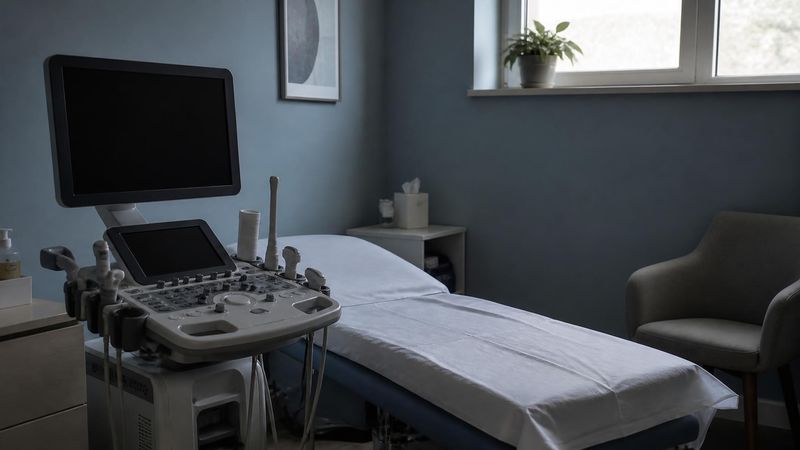
Some losses produce no bleeding, no pain, nothing to notice at all — and are discovered only when someone turns a screen and says there's no heartbeat.
A missed miscarriage is a pregnancy that has stopped developing but hasn't been passed. Physically, nothing has happened yet. Emotionally, everything has.
Our guide to missed miscarriage deals with the particular cruelty of that arrival: you felt fine going in, you were there for a routine appointment, and the day turned without warning. It also covers the part almost nobody prepares anyone for — that you can still feel pregnant afterwards, because your body is running on hormones from a pregnancy that has stopped.
The word "missed" is medical shorthand and can read as an accusation. It isn't. There was nothing to miss.
What the article goes into most carefully is the grief that arrives without evidence: no bump, no announcement, nothing to point at. It's the reason this kind of loss can sit unaddressed for months.

Chemical Pregnancy: The Loss Before Five Weeks
Earlier than a missed miscarriage is a chemical pregnancy — one that ends before the fifth week, too early to be seen on a scan and confirmed only by a test.
The name comes from how it was detected, not from how real it was: a "clinical" pregnancy can be seen on ultrasound, while a "chemical" one is known from the hormone chemistry. That's a laboratory distinction, and it's a poor word for something people had already begun to build a future around.
Our article on chemical pregnancy covers why the word lands badly, what it's like to find out in a bathroom rather than a hospital, and why "at least it was early" is the sentence most likely to be said and least likely to help. It also sets out the Irish context honestly: 58% of women who had miscarried described the dedicated support and counselling available to them as poor, and the funded counselling scheme's two-loss threshold can leave someone with a single chemical pregnancy feeling graded and found wanting.
They aren't. Peer support has no minimum.

Recurrent Miscarriage, and What Ireland Offers
Two consecutive losses is where the Irish system starts treating a pattern as something to investigate.
Until 2023, recurrent miscarriage in Ireland meant three consecutive losses. That changed, and the change is significant: passing the threshold unlocks access to investigation and to funded counselling.
Our guide to recurrent miscarriage and what Ireland offers is the most practical piece in this series, because it's about entitlements almost nobody is told about. Through an HSE-funded pilot, the Irish Family Planning Association provides eight free counselling sessions to people who've had two or more consecutive miscarriages — referred through the local maternity hospital, available at six centres around the country or by phone and video, with counsellors accredited by the Irish Association for Counselling and Psychotherapy or the Irish Association for Humanistic and Integrative Psychotherapy, and partners explicitly included.
The article also gives the exact questions to ask: your GP for referral to a recurrent miscarriage service, and your hospital about IFPA eligibility. And it names what repeat loss does emotionally — hope becoming dangerous, grief accumulating rather than hardening, and the asymmetry that strains couples who want different things.

The Partner's Grief
Partners lose the same future, and are usually handed a job at the same time.
Research on men after recurrent miscarriage in an Irish maternity hospital identified three themes, one of which was simply a sense of feeling unimportant. Lewis King, a lecturer at the Technological University of the Shannon who now researches men's experiences of pregnancy and baby loss, described being in consultations about his own son and thinking: "he was my son, too: 'Why are you not directing some of this information at me?'"
Our article on the partner's grief is written for the partner, and openly also for the woman reading it. It covers the scan room where nobody addresses you, the reason so many men end up functional and silent, the trap of usefulness as a hiding place, and the policy reality: the Government has approved five days' statutory paid pregnancy-loss leave for pregnancies ending before 23 weeks, and as it stands that applies to the mother, not to fathers.
Support is listed there too, including organisations that specifically involve men.

Telling People, or Telling Nobody
Pregnancy loss in Ireland happens inside a silence that was supposed to be protective.
The convention of not saying anything before twelve weeks exists because most losses happen in that window — which means the silence and the loss occupy the same weeks, and when the loss happens there's nobody to tell because nobody knew.
Our guide to telling people, and the 12-week silence deals with the practical side: who to tell (people who can hold it, not people you'd end up comforting), how to tell work in writing without over-explaining, how to un-tell people you'd already told, and what to say to someone who's had a loss — which is mostly "I'm so sorry", and never anything beginning with "at least".
It also covers the proposed Leave for Pregnancy Loss Bill in detail: five days' paid leave per year for a loss before 23 weeks, paid by the employer at 70% of the daily rate capped at €110 a day, requiring medical certification, available as a day-one right with payment after 13 weeks' service, and usable within 56 weeks. That is a General Scheme approved for drafting — not yet law — and the article is careful to say so.

When Grief Needs More Than Time
Grief after miscarriage doesn't follow an order, and it doesn't clear on a schedule. Crying, anger, numbness, exhaustion and a total loss of interest are all within the normal range.
The question worth asking isn't whether you're grieving. It's whether the grief has become something else.
Our guide to grief after miscarriage, and when it should worry you draws the distinction between grief and depression without pretending to diagnose either: grief comes in waves, responds to company, and leaves room for warmth; depression is flatter, more constant, and tends to withdraw. It flags the two signals worth acting on — not sleeping at all, and not being able to function — and covers post-traumatic stress symptoms, which research cited by counsellor Jojo Gosney suggests affect as many as 40% of women three months after an early miscarriage.
It also names the Irish help that exists: GP referral for counselling after a single loss, the IFPA's eight free sessions for recurrent loss, and specialist perinatal mental health services, which are available in all maternity units and hospitals and accept referrals from a GP, midwife, doctor or psychiatrist.

Pregnant Again
A pregnancy after a loss doesn't produce the feeling most people expect. It produces a jolt, then arithmetic on dates, then a decision about how much to let yourself feel.
The National Maternity Hospital's own phrase for it is the most accurate we've found: "Hope and fear often sit side by side."
Our article on pregnancy after loss covers why this pregnancy feels different, the heavier version of the twelve-week silence, how to survive scans (book the first appointment of the day, bring the same person, write your questions down, keep the rest of the day empty), the guilt of not bonding yet, and the collision of dates when a pregnancy runs through the due date of the baby you lost.
It also lists the support built specifically for this, including the National Maternity Hospital's online "Navigating Pregnancy After Loss" group and its bereavement midwives. And it deliberately promises nothing about outcomes — because you've already learned that a pregnancy can end, and being told otherwise doesn't help.

Therapy, and How to Get It in Ireland
Therapy after a loss isn't about recovering a pregnancy or answering a medical question. It's about the thing that follows: grief with nowhere to go, anxiety that won't settle, a body that's braced, and dates that keep arriving.
Our guide to therapy after miscarriage sets the limits first, because unrealistic expectations are how therapy gets abandoned after two sessions: it won't bring the pregnancy back, won't make you forget, and won't supply a reason. What it does help with is more specific — stuck grief, hypervigilance, trauma responses, the guilt that's usually an attempt to make an unpredictable event feel controllable, and the decisions that follow a loss.
It also explains the access routes plainly: GP referral after a single loss, the IFPA's funded sessions for recurrent loss, hospital bereavement midwives and perinatal mental health teams, peer support through the Miscarriage Association, and private therapy with no referral at all. In the IACP's 2025 survey, 8 in 10 people who had attended therapy said they would recommend it, from a base of 354.

If You Need Help Today
You don't have to be in a named crisis to use these.
Samaritans — 116 123, free, 24 hours a day. Text About It — 50808, free, 24-hour text support. Pieta — 1800 247 247, free, 24 hours. The Miscarriage Association of Ireland — 01 873 5702, helpline Monday to Friday, 10am to 12pm and 8pm to 10pm. HSE Live — 1800 700 700, for information about services. Emergency — 112 or 999, or your nearest emergency department.
If you're not sure you qualify for any of these, ring anyway. Every number above is used to people saying "I don't know if I should be calling" — the Miscarriage Association's helpline in particular is staffed by people who've been where you are, and nobody there will ask you to justify it first. If you'd rather write than talk, Text About It is a text service precisely because some people can't speak yet.
For heavy bleeding, severe pain, a temperature of 38°C or higher, or feeling very unwell, the HSE's advice is to contact your GP or maternity unit immediately rather than waiting.

Where This Leaves You
There isn't a tidy ending to any of this, and it would be dishonest to offer one.
What we can say is that the silence around miscarriage in Ireland is not a measure of how much it mattered. One in four pregnancies ends this way; the recording doesn't capture it, the workplace often doesn't acknowledge it, and the social script for it barely exists.
If you take one thing from this page, take the entitlements: two consecutive losses means referral for investigation, and it means eight free counselling sessions through your maternity hospital. Those exist because people kept saying out loud that early loss deserved support. Use them.
And if you'd like to talk to someone without explaining the background first, you can get matched with a therapist and start there.
Related Articles
- Complicated Grief: When Loss Doesn't Get Easier
- Antidepressants vs Therapy: What the Evidence Says
- CBT for Insomnia: How It Works
This guide is for informational and emotional support only and does not constitute medical advice. Physical care after pregnancy loss is a matter for your GP and maternity team. If you have heavy bleeding, severe pain, a temperature of 38°C or higher, or feel very unwell, contact your GP, maternity unit or emergency department immediately, and use 112 or 999 in an emergency. If you are in crisis, contact Samaritans on 116 123 (free, 24/7), Text About It on 50808 (free, 24/7) or Pieta on 1800 247 247 (free, 24/7). The Miscarriage Association of Ireland can be reached on 01 873 5702.