CBT for Insomnia (CBT-I): How It Works in Ireland

CBT-I is the gold-standard treatment for chronic insomnia. Discover how it works, what sessions involve, and how to access it in Ireland.
Niamh from Limerick had not slept through the night in almost two years. She had tried herbal teas, magnesium, a weighted blanket, and three different sleep apps. Some things helped for a few nights, then the waking returned. She began to dread bedtime. By 9 p.m. she was already calculating how many hours she might get if she fell asleep right now, and by 3 a.m. she was wide awake, watching the numbers on the alarm clock climb.
If Niamh's story resonates, you have probably already worked harder at sleep than anyone should have to. The good news is that there is a treatment specifically designed for persistent insomnia, and it does not rely on willpower or gadgets. Cognitive behavioural therapy for insomnia, usually called CBT-I, is recommended as the first-line treatment for chronic insomnia by health authorities around the world, including the HSE in Ireland. It works by changing the thoughts and behaviours that keep insomnia going.

What CBT-I Actually Is
CBT-I is a structured, short-term therapy that targets the patterns that maintain chronic insomnia. Unlike general sleep advice, it is tailored to the individual. It looks at how long you spend in bed, what you do when you cannot sleep, the thoughts that race through your mind at night, and the daytime habits that may be undermining your sleep drive.
The therapy usually runs for four to eight sessions, though some people notice improvements sooner. It is delivered by clinical psychologists, CBT therapists, and other accredited mental health professionals who have training in sleep disorders. In Ireland, you can access CBT-I through HSE psychology services, some GP referrals, private practitioners, and online therapy platforms.
According to the Health Service Executive (HSE), insomnia is one of the most commonly reported sleep problems among adults in Ireland, with around one in three people affected by disrupted sleep at some point in their lives. For those whose insomnia becomes chronic, CBT-I offers a path that addresses the root causes rather than just masking symptoms.
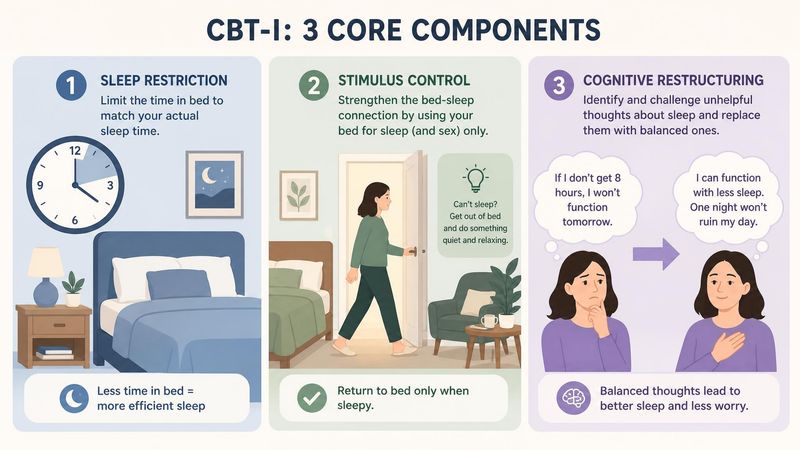
The Three Parts of CBT-I
1. Sleep Restriction
This is often the most effective and the most challenging component. Sleep restriction means matching your time in bed more closely to the amount of sleep you are actually getting. If you are only sleeping five hours but lying in bed for nine, your therapist will help you reduce your time in bed to around five and a half hours, then gradually increase it as sleep becomes more efficient.
The goal is not to deprive you of sleep. It is to build stronger sleep pressure so that when you do get into bed, your body is ready to sleep. The first week or two can feel difficult, which is why guidance from a trained therapist matters. They will adjust the schedule based on your sleep diary rather than using a one-size-fits-all formula.
2. Stimulus Control
Stimulus control rebuilds the connection between bed and sleep. The rule is simple: bed is for sleep and intimacy only. If you have been awake in bed for about twenty minutes, you get up and do something calm in dim light until you feel sleepy.
This can feel counterintuitive, especially when you are exhausted. Many people believe they should stay in bed and rest. But lying awake in bed trains your brain to associate bed with wakefulness. Stimulus control breaks that association and helps your mind learn that bed means sleep.
3. Cognitive Restructuring
Cognitive restructuring deals with the thoughts that keep insomnia alive. These might include catastrophic predictions like "If I do not sleep tonight, I will lose my job," or rigid beliefs like "I must get eight hours or I cannot function." Over time, these thoughts trigger anxiety, which floods the body with adrenaline and makes sleep even harder.
A CBT-I therapist helps you examine these thoughts and replace them with more accurate, balanced ones. That does not mean positive thinking. It means recognising that one bad night is survivable, that your body has some capacity to compensate, and that trying to force sleep usually backfires.
What the Research Says
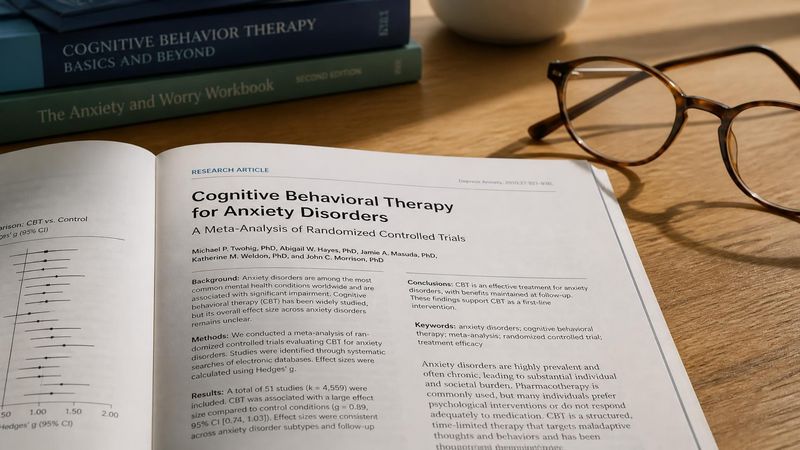
Research consistently shows that CBT-I is more effective than sleeping pills for chronic insomnia in the long term. It improves sleep onset, reduces night-time waking, and increases total sleep time. Perhaps more importantly, the benefits tend to last after therapy ends because the person has learned skills they can continue to use.
Sleeping medication can be useful in the short term, such as during a crisis or while waiting for therapy. However, it does not address the underlying patterns that cause insomnia. Many people also find that the effect of medication wears off over time, leading to higher doses or dependence. CBT-I offers a sustainable alternative.
Dr Breege Leddy, founder of the Insomnia Clinic, notes: "CBT-I gives people lifelong tools to manage and treat their insomnia." That is why it is considered the gold-standard treatment and why more Irish clinicians are being trained to deliver it.

What to Expect in a Session
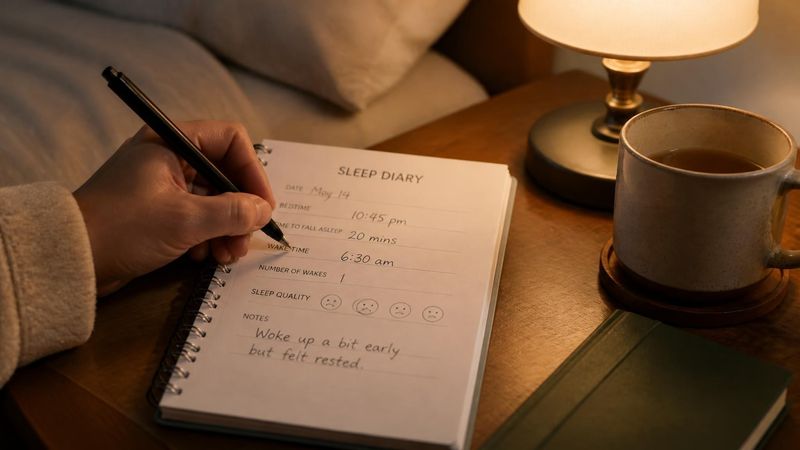
Your first CBT-I session will usually involve a detailed sleep assessment. The therapist will ask about your sleep history, your daytime schedule, your bedroom habits, your mood, and any medical conditions or medications that might affect sleep. They may ask you to keep a sleep diary for one to two weeks.
From there, you and your therapist agree on a treatment plan. Each session reviews your progress, troubleshoots difficulties, and adjusts the plan as needed. Homework is a big part of CBT-I. You will be asked to follow specific sleep and wake times, to get out of bed when you cannot sleep, and to practise challenging unhelpful thoughts.
Therapy can be delivered in person or online. Online CBT-I has been shown to be effective for many people and can be especially helpful in Ireland if you live outside Dublin, Cork, or Galway, where face-to-face sleep specialists may be limited.

Accessing CBT-I in Ireland
You can start by speaking to your GP, who may refer you to a HSE psychology service. Waiting times vary by region. If you want faster access, you can seek a private clinical psychologist or CBT therapist who lists sleep or insomnia as a specialism. The IACP and PSI websites allow you to search for accredited therapists by location and specialty.
Online therapy is another option. At Feel Better Therapy, you can get matched with a therapist who has experience in CBT-based approaches, including sleep difficulties. This can be a practical route if local waiting lists are long or if you prefer the flexibility of remote sessions.
CBT-I and the Irish Healthcare System
Public access to CBT-I in Ireland depends on where you live and whether you have a medical card. Some HSE primary care psychology services offer CBT for sleep problems, though availability is patchy and waiting lists can be long. Your GP is the usual entry point and can advise on local options.
If you have health insurance, check whether your policy covers clinical psychology or CBT sessions. Some insurers require a GP referral, while others accept self-referral. If you are paying privately, session costs vary but typically range from €80 to €150 per session. Some therapists offer reduced rates or shorter assessment sessions to help you decide if CBT-I is right for you.
The important thing is to choose a therapist with specific training in CBT-I rather than general CBT. Sleep disorders have their own assessment tools and treatment protocols. A therapist who understands sleep architecture, circadian rhythms, and the behavioural mechanisms of insomnia will be better placed to help you get lasting results.
Frequently Asked Questions
Is CBT-I the same as regular CBT?
CBT-I is a specialised form of CBT focused specifically on sleep. While it shares the same principles, the techniques are tailored to insomnia. A general CBT therapist can help with anxiety or depression, but CBT-I requires specific training in sleep science and behavioural sleep medicine.
How long does CBT-I take to work?
Many people notice some improvement within two to four weeks, though full treatment usually takes six to eight sessions. The early stages can feel harder because sleep restriction temporarily reduces time in bed. Most people find the effort worthwhile once their sleep begins to consolidate.
Can I do CBT-I on my own?
Self-help CBT-I programmes and apps exist and can help people with mild insomnia. However, chronic or complex insomnia is usually best treated with a trained therapist who can personalise the programme and support you through the difficult early weeks. If you have been struggling for more than three months, professional support is recommended.

When CBT-I Might Not Be Enough
CBT-I is highly effective, but it is not the right fit for everyone. If your insomnia is caused by an untreated medical condition, severe depression, post-traumatic stress, or another sleep disorder such as sleep apnoea, those issues may need to be addressed first. Your therapist will usually screen for these during assessment and may recommend a medical review if needed.
It is also normal to have setbacks. A stressful event, illness, or travel can temporarily disturb sleep even after CBT-I. The difference is that you will have the tools to recover more quickly rather than falling back into months of sleeplessness.
Taking the Next Step
Insomnia can make you feel isolated, especially when everyone else seems to sleep without effort. But chronic insomnia is a recognised, treatable condition. CBT-I has helped thousands of people in Ireland and abroad reclaim their nights.
If you are tired of trying to fix sleep on your own, professional support can make a real difference. You can learn more about CBT and how it applies to insomnia, or get matched with a therapist who can guide you through a structured plan.
Related Articles
- Sleep & Insomnia in Ireland: A Complete Guide
- What Is Insomnia? Signs, Symptoms and Causes in Ireland
- Chronic Insomnia: When Sleeplessness Won't Go Away
- Sleep Hygiene: Habits That Actually Help
This article is for informational purposes only and does not replace medical advice. If you are in crisis, please contact Samaritans Ireland at 116 123 or your GP out-of-hours service.