OCD Medication in Ireland: What to Know

Medication can be an effective part of OCD treatment. Learn which medications are used in Ireland, how they work, and what to discuss with your doctor.
Sinead's therapist suggested she consider medication for her OCD. The recommendation caught her off guard. She had spent months building up to therapy, and now it felt like another layer of complexity. Would medication change her personality? Would she be on it forever? Could she not just do the therapy work and skip the tablets?
She sat in her car outside the pharmacy in Limerick and googled "SSRIs for OCD" before going in. The results were a mix of medical facts, forum posts, and frightening side-effect lists. She closed the app and drove home, prescription still unfilled.
A few weeks later, her psychiatrist explained it more clearly. Medication is not a replacement for therapy, but it can reduce the intensity of obsessions enough to make ERP possible. For some people, it is a short-term bridge. For others, it is a longer-term support. The decision is personal, and it should be made with accurate information rather than fear.
If you are wondering whether medication might help your OCD, this article covers what is commonly prescribed in Ireland, how it works, and what questions to ask your prescriber.

What Medication Is Actually Used for OCD
The most commonly prescribed medications for OCD are selective serotonin reuptake inhibitors, or SSRIs. These are antidepressants that also work well for obsessive-compulsive symptoms. In Ireland, the HSE and NICE guidelines recognise SSRIs as a first-line medication option for OCD.
Commonly prescribed SSRIs for OCD include:
- Fluoxetine
- Sertraline
- Fluvoxamine
- Paroxetine
- Citalopram
- Escitalopram
Not every SSRI works the same way for every person. One person may respond well to sertraline but not fluoxetine, while another has the opposite experience. Finding the right medication can take time, and the first choice is not always the final one.
A different type of antidepressant called clomipramine, a tricyclic antidepressant, is also used for OCD. It can be effective when SSRIs have not worked, but it tends to have more side effects and requires closer monitoring.
In some cases, particularly when symptoms are severe or resistant to standard treatment, a psychiatrist may add a second medication to augment the main one. This should only be done under specialist supervision.
"SSRIs are the cornerstone of medication treatment for OCD. They are not a quick fix, but when used at the right dose and for long enough, they can significantly reduce obsessive thoughts and compulsive urges." — Dr. David Veale, consultant psychiatrist and professor of psychiatry

How OCD Medication Works
SSRIs work by increasing the availability of serotonin in the brain. Serotonin is a neurotransmitter involved in mood regulation, impulse control, and repetitive thinking. In OCD, the brain's serotonin signalling may be less efficient, and SSRIs help correct that imbalance over time.
The effect is not immediate. Most people notice some improvement after four to six weeks, but the full benefit can take eight to twelve weeks or longer. This can feel frustrating if you are struggling, but it is normal. The brain needs time to adapt.
It is also important to understand that medication does not cure OCD. It reduces symptom intensity. Many people find that medication makes therapy more effective because they can engage with exposures without being overwhelmed by anxiety. For others, medication alone brings enough relief to function better day to day.

What to Expect When Starting
Your GP or psychiatrist will usually start you on a low dose and increase it gradually. This reduces side effects and helps your body adjust. You may be asked to complete questionnaires to track your symptoms over time. These questionnaires are not tests you pass or fail. They are simply tools to help your prescriber see whether the medication is making a difference.
It is also worth planning for the first few weeks. Some people feel a little worse before they feel better. This does not mean the medication has failed. It often reflects the body adjusting. Having a follow-up appointment already booked can help you get through that window without making sudden decisions.
Common early side effects of SSRIs include:
- Nausea or stomach upset
- Headache
- Difficulty sleeping or feeling more tired than usual
- Mild agitation or restlessness
- Changes in appetite or weight
- Reduced sex drive or delayed orgasm
Most side effects settle within the first two weeks. Some, like sexual side effects, may persist and need to be discussed with your prescriber. Do not stop taking the medication suddenly without medical advice, as this can cause withdrawal symptoms and a sudden return of obsessive thoughts.
If you have been on a medication for ten to twelve weeks at a reasonable dose and have not noticed any benefit, your prescriber may suggest switching to a different SSRI or trying clomipramine. There is no one-size-fits-all answer.

Medication and Therapy Together
For many adults with OCD, the best outcomes come from combining medication with therapy, particularly CBT with ERP. The HSE recommends CBT as the first-line psychological treatment, and NICE guidelines support using SSRIs alongside therapy when symptoms are moderate to severe.
Medication can lower the volume of obsessions, making it easier to resist compulsions during ERP. Therapy, in turn, helps you build skills that last beyond the course of medication. Together, they address both the biological and behavioural sides of OCD.
Some people worry that taking medication means they are not doing the "real" work of recovery. That is not true. Medication is a legitimate and evidence-based part of treatment. Using it does not mean you are taking a shortcut.
If you would like to understand how ERP works, our article on ERP therapy for OCD in Ireland explains the approach in detail.

Getting a Prescription in Ireland
In Ireland, OCD medication is prescribed by GPs and psychiatrists. For a first prescription, many people start with their GP. If symptoms are complex, severe, or not responding to initial treatment, the GP may refer you to a psychiatrist.
If you are already working with a psychologist or psychotherapist, they cannot prescribe medication, but they can communicate with your GP or psychiatrist about your treatment. A coordinated approach tends to work best.
Medication costs vary. Some SSRIs are available under the Drugs Payment Scheme or medical card, while others may require a private prescription. Your pharmacist can explain the options and whether a generic version is available.
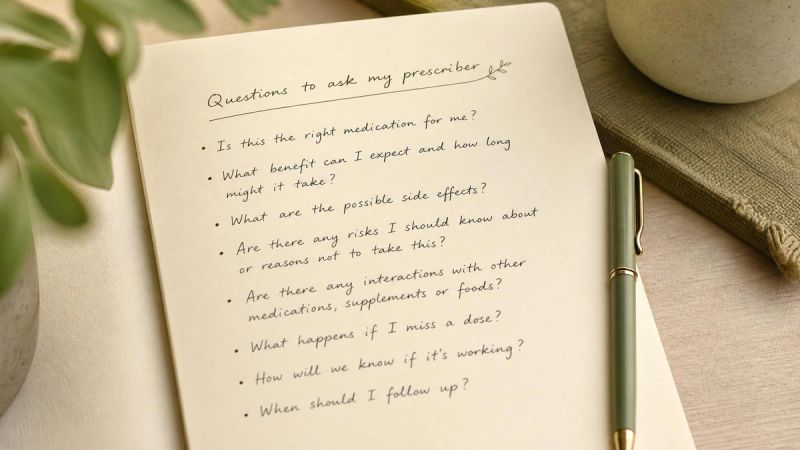
Questions to Ask Your Prescriber
Before starting medication, it is worth having a clear conversation. Useful questions include:
- Why do you recommend this particular medication?
- What dose will I start on, and how will it be increased?
- What side effects should I watch for?
- How long will it take to know if it is working?
- How long might I need to stay on it?
- What should I do if I want to stop?
- Will it interact with anything else I am taking?
- Can I drink alcohol while taking it?
A good prescriber will welcome these questions. They should explain the plan, monitor your progress, and adjust the approach based on how you respond.

Frequently Asked Questions
Is medication effective for OCD?
Yes, medication can be effective for many people with OCD. SSRIs are the most commonly prescribed and have strong evidence behind them. They tend to work best when combined with therapy, especially ERP.
How long does OCD medication take to work?
Most people notice some improvement within four to six weeks, with fuller benefits at eight to twelve weeks or longer. It is important to give the medication enough time before deciding whether it is helping.
Will I need to take medication forever?
Not necessarily. Some people take medication for six to twelve months after their symptoms improve and then taper off slowly under medical supervision. Others stay on medication longer if it helps prevent relapse. The decision is individual.
Can I stop taking it if I do not like the side effects?
You should not stop suddenly. Talk to your prescriber about the side effects. They may adjust the dose, switch medications, or recommend a gradual reduction. Stopping abruptly can cause withdrawal effects and a return of symptoms.
Can my GP prescribe OCD medication, or do I need a psychiatrist?
Many GPs are comfortable prescribing SSRIs for OCD. Psychiatrists are usually involved for more complex cases, treatment-resistant OCD, or when multiple medications are needed.

You Have Options
Deciding whether to take medication for OCD is a personal choice, and it deserves good information. Medication is not the right path for everyone, but for many people it makes the difference between coping and recovering.
The most important thing is to work with a prescriber you trust and to combine medication with the right psychological support when possible. OCD is treatable, and you do not have to choose between therapy and medication. Often, the two work best together.
If you would like to speak with an accredited Irish therapist who can support you alongside your medical treatment, you can get matched with a therapist through Feel Better Therapy. Sessions are available online across Ireland.

Related Articles
- OCD Therapy Ireland: A Complete Guide
- ERP Therapy for OCD in Ireland
- OCD in Adults: Diagnosis, Treatment and Living Well
- How to Get OCD Treatment in Ireland
This article is for informational purposes only and does not constitute medical advice. If you are in crisis, please contact Samaritans Ireland at 116 123 or Pieta House at 1800 247 247.