What Trauma Actually Is (and Isn't)

Trauma isn't measured by what happened to you — it's measured by what happened inside your nervous system. Learn what trauma actually is, what it isn't, and when to seek support in Ireland.
Niamh was thirty-eight, a project manager in Dublin, and she had always been the sort of person who "got on with it." So when a van clipped her wing mirror at a roundabout in Sandyford, she swapped insurance details, drove home, and made a cup of tea. It was only a scrape. Nobody was hurt. She told herself that repeatedly over the next three weeks as she found herself gripping the steering wheel on the M50, heart hammering, hands slick on the leather, avoiding that same roundabout by taking a longer route through Stillorgan.
She didn't sleep well. She startled when a car horn sounded. And she kept thinking: It wasn't that bad. Why am I still like this?
If that sounds familiar, you're not overreacting. You're not being dramatic. And you're certainly not the only person in Ireland who has ever wondered whether what you're feeling counts as trauma. The short answer is this: trauma isn't measured by what happened to you. It's measured by what happened inside your nervous system.
What Trauma Actually Is
Trauma is a psychological and physiological response to an event or series of events that overwhelms your ability to cope. The HSE describes trauma as the emotional response to an extremely distressing experience, and that response can linger long after the event itself has ended. It is not the event on a scorecard. It is the imprint the event leaves on your body and brain.
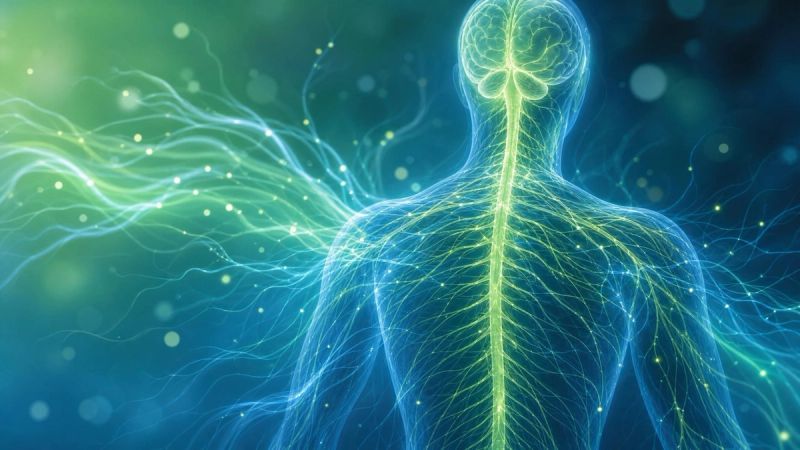
When something threatening happens, your nervous system moves into survival mode. Your heart rate climbs. Your muscles tense. Your breathing becomes shallow. Your digestion slows. Your brain prioritises escape, defence, or freezing over ordinary functions like sleep, appetite, or rational thought. This is supposed to be temporary. In a healthy system, once the danger passes, the body gradually returns to baseline.
Trauma occurs when that return to baseline doesn't fully happen. The alarm system stays switched on, or it switches on too easily afterwards. A sound, a smell, a tone of voice, a stretch of road, a crowded room, a particular time of day — ordinary things become signals of threat. The body reacts as if the danger is still present, even when the mind knows it isn't.
This can show up in ways that don't obviously look like trauma. Insomnia that comes out of nowhere. Irritability that surprises you. A sense of detachment from people you love. Difficulty concentrating at work. A constant low-level dread that you can't quite name. These are not signs that you're broken. They are signs that your nervous system is still doing the job it was asked to do, long after the job should have finished.
"Trauma is not the story of something that happened back then. It's the current imprint of that experience inside you."
>
— Dr. Bessel van der Kolk, psychiatrist and trauma researcher
This is why two people can go through the same event and respond very differently. One person walks away shaken and recovers. Another develops lasting symptoms. Neither is right or wrong. Their nervous systems simply processed the event differently, based on genetics, past experiences, support available at the time, and even sleep quality in the days that followed.

What Trauma Actually Isn't
In Ireland, there's a particular pressure to minimise distress. "Sure it could be worse." "Plenty of people have it harder." "You'll be grand if you just keep busy." These phrases are usually meant kindly, but they can make it harder to name what you're experiencing. They can also leave you believing that trauma requires a catastrophic event to be valid.
It doesn't.
Trauma is not weakness. It is not a character flaw. It is not attention-seeking. It is not the same as ordinary stress, sadness, or a bad week. Stress is a response to pressure. Trauma is a response to threat — real or perceived — that the nervous system could not fully process.
Trauma is also not automatically post-traumatic stress disorder. PTSD is a specific clinical diagnosis with a defined set of symptoms that persist for more than a month and cause significant disruption to daily life. Many people experience trauma without developing PTSD. That doesn't mean their experience wasn't real or doesn't deserve support.
And trauma is not something you can simply think your way out of. You cannot reason yourself out of a body that has learned to be afraid. Understanding helps, but healing usually requires working with the nervous system directly — through safety, connection, and often professional support.
It is also not a label that defines you forever. Having trauma does not mean you are damaged. It means you survived something that was, at some point, too much to process. That is a very different thing.

The Main Types of Trauma
Not all trauma looks the same. Understanding the different forms can help you recognise your own experience without forcing it into a category that doesn't fit.
Acute trauma refers to a single overwhelming event. A car crash. A violent assault. A sudden bereavement. A medical emergency. A house fire. The event is bounded in time, but its effects can be long-lasting. Someone who has experienced acute trauma may have vivid memories, avoidance of reminders, and a heightened startle response.
Chronic trauma happens when distress is repeated or prolonged over months or years. Living with long-term illness, enduring ongoing bullying, surviving domestic abuse, working in a relentlessly unsafe environment, or growing up in a household where you were never safe all fall into this category. The nervous system learns that threat is not an exception — it is the environment.
Complex trauma, sometimes called C-PTSD, typically results from repeated interpersonal harm, especially during childhood. It can affect your sense of self, your ability to trust others, your emotional regulation, and your relationships. It is increasingly recognised in Ireland, though the term is not always used in routine HSE settings. People with complex trauma often struggle with shame, identity, and a persistent feeling that something is wrong with them, even when they can't name what.
Secondary or vicarious trauma affects people who are repeatedly exposed to other people's trauma. Healthcare workers, Gardaí, social workers, therapists, paramedics, and journalists can all experience this. You don't have to be the direct victim to be affected. Hearing traumatic stories, witnessing suffering, and working in high-stress environments can leave their own mark.

Why Your Body Remembers
One of the most confusing things about trauma is how physical it can feel. Your chest tightens for no clear reason. You feel nauseous in certain rooms. You wake at 3am with your heart racing. Your shoulders never seem to relax. These are not imagined symptoms. They are the body doing what it learned to do to keep you alive.
When a threat is detected, the brain's threat centre — the amygdala — fires before the thinking brain, the prefrontal cortex, can catch up. This is why you might react to a trigger before you even understand what's wrong. Your body is running old survival software.
The nervous system also has something called a "window of tolerance." Inside that window, you can think clearly, feel your emotions, and respond to the world in a measured way. Trauma can shrink that window. You might swing between hyperarousal — anxiety, anger, panic, racing thoughts — and hypoarousal — numbness, shutdown, dissociation, feeling unreal or distant from yourself.
These responses are not failures of willpower. They are biological adaptations. When escape or fighting back wasn't possible, the nervous system did the best it could. Freezing, going numb, or "checking out" were survival strategies. The difficulty comes when those strategies keep firing long after the danger has passed.
This is why gentle, body-based approaches can be so useful in trauma therapy. Talking matters, but it often needs to be paired with helping the body feel safe again. Breathing techniques, grounding exercises, movement, and therapies such as EMDR all work, in part, by communicating safety directly to the nervous system.

Frequently Asked Questions
Can something be traumatic if nobody else thinks it was?
Yes. Trauma is subjective. If an event overwhelmed your capacity to cope at that time, it was traumatic for you. Other people's opinions don't change your nervous system's response. What matters is not how the event looks from the outside, but how your body and mind responded to it.
What's the difference between trauma and PTSD?
Trauma is the experience and its lingering impact. PTSD is a clinical diagnosis that involves specific symptoms — such as intrusive memories, avoidance, negative changes in mood and cognition, and heightened reactivity — lasting more than a month and significantly affecting daily life. You can have trauma without PTSD.
Can trauma show up years after the event?
Yes. Sometimes symptoms appear immediately. Other times they lie dormant and surface during another stressful period, a major life change, or even a seemingly minor reminder. The nervous system doesn't operate on a tidy timeline. Something that seemed manageable at twenty can resurface with force at forty.

For a complete overview of trauma, PTSD, and recovery options in Ireland, see our complete guide to trauma therapy in Ireland. You may also find our guide to PTSD symptoms in adults helpful.
You're Allowed to Name It
If you've been telling yourself that what happened "wasn't bad enough" to count, this is your permission to stop measuring. Trauma isn't a competition. It isn't reserved for the worst thing that ever happened to anyone. It is simply what happens when an experience overwhelms your ability to process it, and your body carries the residue.
Understanding what trauma actually is — and what it isn't — is a first step. It doesn't mean you have to relive anything or explain yourself to anyone. It just means you can stop blaming yourself for reactions that were never your fault.
You don't have to figure it out alone. At Feel Better Therapy, our trauma-informed therapists work with people across Ireland using evidence-based approaches including EMDR, trauma-focused CBT, and somatic techniques. If your body is still responding to something your mind wants to move on from, our trauma therapy services can help you find a way through.
Get matched with a Feel Better Therapy therapist when you're ready. You don't need to have everything figured out before you start.
This article is for informational purposes only and does not constitute medical advice. If you are in crisis, please contact Samaritans Ireland on 116 123 or Pieta House on 1800 247 247.