Hangxiety: Why the Fear Arrives the Morning After

That 4am dread after drinking isn't guilt or weakness. It's a chemical rebound — and in Ireland it's the clearest sign that drink and anxiety are feeding each other.
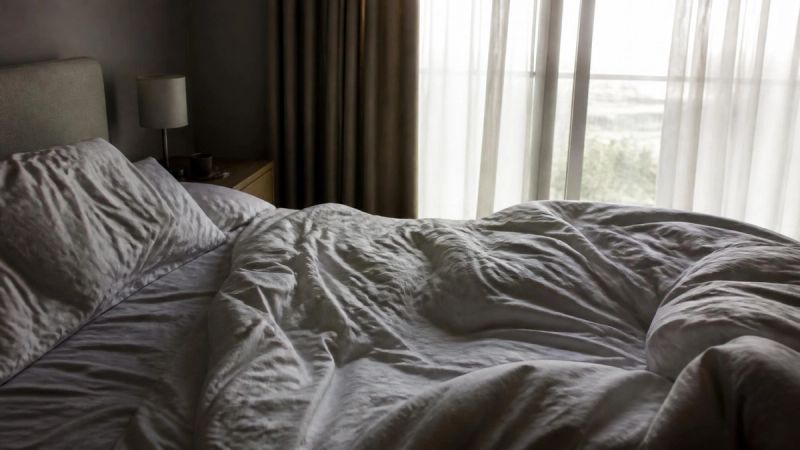
You wake at 4am and the dread is already there. Not the headache, not the thirst — the sense that something is wrong, that you said something, that people noticed, that a decision is waiting for you.
You lie there and replay the night. By seven you've decided you're a fraud, a bad friend, or worse. By nine you're fairly sure you're fine, and slightly embarrassed about the morning.
That's hangxiety. It has a name because so many people described the same thing, and it has a mechanism because it isn't in your head in the way you think it is.
What It Actually Is
A hangover isn't only dehydration and a headache. The mood part has its own course, and it can outlast the physical part by a day.
The telling detail is in the research: the anxiety is worst for people who are anxious to begin with. A study led by Beth Marsh at UCL, published in Personality and Individual Differences, followed 97 social drinkers — 50 who drank as usual at a social gathering and 47 who stayed sober. Among the shyer participants, anxiety rose the day after drinking. The people who most expected drink to smooth the way socially were the ones who paid most for it afterwards.
The lead author, Celia Morgan, put the consequence plainly: "These findings also suggest that hangxiety in turn might be linked to people's chance of developing a problem with alcohol."
That's the sentence worth sitting with. Not because a hangover means you have a problem, but because the remedy most people reach for is the thing that caused it.
The Brake and the Rebound
Dr Rory Coyne, a postdoctoral researcher in the Department of Health Psychology at RCSI, explains the chemistry in a way that makes immediate sense:
"It's like a brake pedal that keeps your thoughts, emotions, and nervous system from going too fast. When you drink alcohol, that brake is pressed down hard, and brain activity slows down. This causes the initial feelings of relaxation, reduced anxiety, and lower inhibitions."
That's the first hour or two — the reason a drink works.
Then: "As the alcohol wears off, we tend to experience an opposite, rebound effect with an increase in excitatory activity, partly due to changes in another neurotransmitter called glutamate. This can lead to an increased stress response in our bodies, which can result in a lot of the symptoms of what we might call hangxiety."
Read that again as a loop. The brain presses the brake, compensates by pressing the accelerator, and the accelerator stays down for a while after the drink is gone. Your nervous system is left running faster than it started, with nothing to slow it down. That's why your heart is going at 4am and why a small worry feels like evidence.
The Irish Version
Ireland has a specific relationship with this, and the survey data shows it.
The Drinkaware Barometer 2025 found that three in ten Irish adults who drink say they do so to cope. Among 18 to 24 year olds, coping motives are twice as high, at 56 per cent. One in five said they drink "to cheer themselves up when they are in a bad mood or stressed", and 18 per cent said they drink "to forget about problems".
And the pattern is intensifying at population level. The Healthy Ireland Survey 2024 found people drinking in the past year rose from 70 to 73 per cent, while the proportion classed as binge drinkers — six or more standard drinks on a typical occasion — rose from 24 to 28 per cent.
Prof Bobby Smyth, consultant psychiatrist and vice chair of Alcohol Action Ireland, names the cultural machinery behind it:
"Society seems to encourage drinking more when you're feeling bad, to drown your sorrows. So some of that colloquial narrative that we have in Ireland is quite unhelpful. It tricks us into thinking that it's our friend when, particularly when you have mood struggles, it's really your enemy, unfortunately."
The pub isn't the problem here — isolation is. But the language matters, because "a cure for the fear" is a marketing slogan that happens to be chemically backwards.
Why the Cure Makes It Worse
If drink relieves anxiety for two hours and creates it for twelve, the only rational move is to drink again — and that's how a coping pattern installs itself without anyone deciding to have one.
This is the part men in particular tend to miss, because the relief is felt and the cost is attributed elsewhere: to tiredness, to a busy week, to the news, to the argument with his partner. The 4am hour is put down to stress. The drink is put down to the stress as well. Nothing points at the drink, which was the actual cause of both.
There's a second trap. Alcohol fragments sleep. You go under faster and sleep worse, particularly in the second half of the night — which is precisely when the adrenaline of the rebound peaks. So you're awake, anxious, and now also exhausted, which makes tomorrow's anxiety worse and tomorrow night's drink more attractive.
The Two-Day Shape
It helps to know the curve, because most people judge themselves at the wrong point on it.
Hour 0–3: relief. The brake is on.
Hour 6–18: the rebound. Heart rate up, mood down, dread, self-criticism, catastrophising. This is the 4am hour and the flat Sunday.
Day 2: residual. Sleep debt, low patience, a shorter fuse, and a strong inclination to conclude something is wrong with you rather than with the drink.
Judging your mental health on day two of a hangover is like judging your fitness while carrying a fridge. The measurement is real; the conditions aren't yours.
What Actually Helps the Morning After
No cures, because there isn't one. But some things shorten the worst of it.
Water and food, early. Not because it's magic, but because low blood sugar and dehydration both amplify the physical sensations that the anxious brain reads as evidence.
No hair of the dog. It works for about ninety minutes and resets the whole curve from the top. That's the loop, in miniature.
Get outside and walk. Daylight and gentle movement measurably help the rebound; sitting in a dark room replaying the night does the opposite.
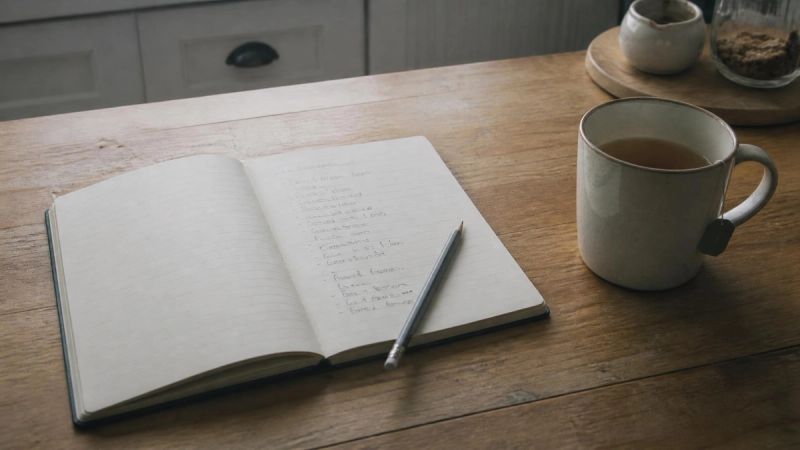
Write the 4am thoughts down. On paper they're usually a short list. In your head they're infinite. Writing them collapses the difference.
Tell someone. Not the whole night — just "I've a dose of the fear". Naming it as a chemical event rather than a character verdict takes about half its power.
When It Has Stopped Being a Hangover
A hangover is an event. A pattern is a system, and it deserves a different response.
Ask yourself honestly:
- Do you now drink partly because of how you'll feel the next day without it?
- Are the hangovers getting worse while the amount stays the same?
- Have you started planning around the recovery rather than the night?
- Do you dread social events where you can't drink?
- Is the anxiety now most days, not just the day after?
If several of those are true, the useful question isn't "am I an alcoholic" — it's "what has this become, and what would help". Those are answerable, and a GP or a therapist can help answer them.
If you're drinking heavily and regularly and thinking about stopping, don't stop abruptly on your own. Withdrawal can be dangerous for people who are dependent on alcohol and needs to be managed with medical support. That's not caution for its own sake — it's the one part of this that can genuinely injure you.
If You Need Help Now
HSE Drugs and Alcohol Helpline — 1800 459 459, Monday to Friday, 9.30am–5.30pm. For you, or for someone you're worried about. Samaritans — 116 123, free, 24 hours a day. Text About It — 50808, free, 24-hour text support. Pieta — 1800 247 247, free, 24 hours. Emergency — 112 or 999, or your nearest emergency department.
Frequently Asked Questions
Is hangxiety real or am I just ashamed of drinking?
Both can be true, and the shame usually isn't the cause. The anxiety has a documented mechanism — a rebound in nervous system activity as alcohol leaves the body — and it's strongest in people who are already anxious.
Why is it worse at 4am?
Alcohol's sedative effect has worn off, the excitatory rebound is at its peak, and there's no daytime distraction. Blood sugar is also low, which the anxious brain reads as danger.
Does one drink cause it?
For most people, no. The effect scales with amount, and with how anxious you were before you started.
Do I have a problem if I get this every time?
Not necessarily — but if you're drinking to manage the next-day feeling, or the anxiety is spreading into ordinary days, that's worth taking to a GP or therapist rather than settling alone.
Will cutting down help the anxiety?
For a great many people it's the single fastest change available. The relief is often noticed within two to three weeks of drinking less, which is one of the reasons a dry month is such a useful experiment.
Related Articles
- Depression and Alcohol in Ireland: The Quiet Loop
- Men's Mental Health in Ireland: Why the Silence Isn't Personal
- Sleep and Anxiety: Why the Night Makes Everything Worse
This article is for informational and emotional support only and does not constitute medical advice. If you are in crisis or having thoughts of suicide, contact Samaritans on 116 123 (free, 24/7), Text About It on 50808 (free, 24/7) or Pieta on 1800 247 247 (free, 24/7), or use 112 or 999 or attend your nearest emergency department.
If the morning after has started to cost more than the night out, you can get matched with a therapist and work out what's actually driving it.