Bipolar Depression: Why It Isn't Ordinary Depression

Bipolar depression looks like depression but needs different treatment. Why it gets missed for years and what actually helps in Ireland.
You've been treated for depression three times now. The first course of tablets helped a bit. The second did less. The third left you wired, sleeping badly and talking too much, and when you mentioned it, nobody seemed very interested. So you did what most people do: you stopped going back, and you started describing yourself as someone who "gets low."
If that sequence sounds familiar, the thing worth knowing is that repeated depression that doesn't behave the way depression usually behaves is one of the main ways bipolar disorder announces itself. Not with a dramatic high. With a low that keeps coming back and a treatment that keeps half-working.
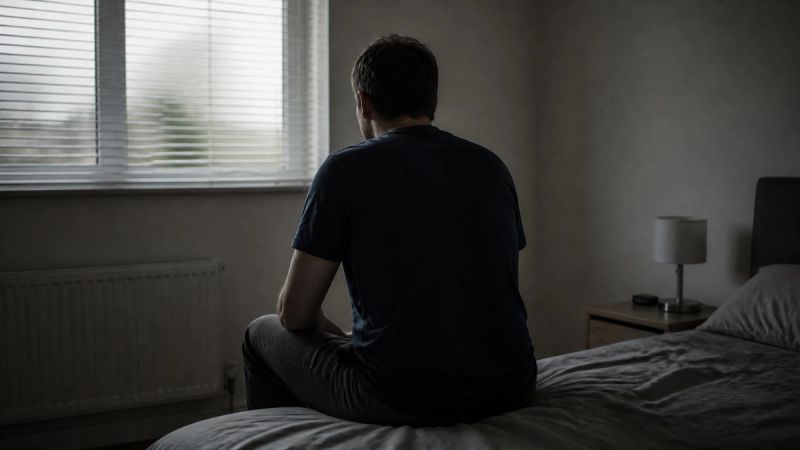
What Bipolar Depression Actually Feels Like
Most of it is indistinguishable from ordinary depression. Low mood, loss of interest, no energy, difficulty concentrating, feelings of guilt or worthlessness, sleep and appetite changes. The HSE lists the same symptoms for the depressive phase of bipolar disorder that it lists for depression itself, because at the level of how you feel, they largely overlap.
There are differences, though they're tendencies rather than rules. Dr Rebecca Lowe, a registrar in psychiatry at St Patrick's Hospital in Dublin, writing in the Hospital Doctor of Ireland, notes that people in bipolar depression are more likely to sleep excessively rather than lie awake, and to have mood that shifts more within a day. The low can arrive abruptly and lift abruptly, rather than easing in and out.
What people often describe is a heaviness that's physical as well as emotional. Not sadness with a reason attached, but a body that won't cooperate, a mind moving through wet cement, and a flatness where feeling used to be.

Why It Gets Missed
Sean Lonergan, a cognitive behavioural therapist at St Patrick's Mental Health Services, makes the point that explains most of this. "Although mania or hypomania are the defining characteristics of BPAD," he writes, "throughout the course of the illness, depressive symptoms are more common than manic symptoms."
Read that again, because it reverses what most people assume. Bipolar disorder is defined by the highs and dominated by the lows. People with the condition spend far more time depressed than elevated, and they seek help in the depressed phase, because that's the part that hurts.
So the appointment happens when you're low. You describe low. You get treated for low. The hypomanic fortnight three years ago, which felt like a good patch rather than an episode, never comes up, because who reports feeling great to a doctor?
Lonergan also notes that this delay isn't unusual. He cites a large retrospective study that found an average of eight years between a person's first mood episode and a diagnosis.

The Detail That Changes the Treatment
There's one question that does more work than any symptom checklist: what happened when you took an antidepressant?
The HSE is explicit that antidepressants used on their own can trigger a manic episode in someone with bipolar disorder. That's not a reason to fear medication, and it's certainly not a reason to stop anything you're taking. It's a reason to tell your GP if a course of antidepressants made you agitated, sleepless, unusually energetic or unusually expansive instead of settling you.
If that happened, saying so can change the diagnosis from unipolar depression to bipolar disorder, and with it the treatment. It's information, not a confession.
Practical phrasing helps, because "the tablets made me a bit odd" gets filed away. Try: I was on this for six weeks, I stopped sleeping, I felt I could take on three projects at once, and two people told me I wasn't myself. Specifics, dates and other people's observations carry more weight than how you summarise the experience now.

How Often Depression Turns Out to Be Bipolar
More often than most people expect. Lowe notes that for early-onset depression, a significant proportion, "as many as 25% according to some experts," will later be reclassified as bipolar illness.
That figure isn't a prediction about any individual, and it doesn't mean a quarter of people with depression have bipolar disorder. It means that if you've had depression since your teens or twenties, and it keeps returning, and treatment keeps behaving oddly, then a bipolar assessment is a reasonable thing to ask for rather than an overreaction.

The Mixed State, Where the Real Risk Sits
Sometimes depression doesn't stay flat. In a mixed state, the despair arrives with agitation, restlessness and racing thoughts still running. The engine is going and there's nowhere to put it.
This is the combination clinicians worry about most, because the person has the hopelessness of depression without the slowdown that usually protects them from acting on it. The HSE is direct that people with bipolar disorder have an increased risk of suicide, and mixed states are part of why that's true.
If you're having thoughts of ending your life, that isn't something to bring to an appointment next month. Tell someone today. Samaritans is on 116 123, free, any hour. Text About It is on 50808, free and 24/7. If you're in immediate danger, call 112 or 999.

Why This Depression Is Treated Differently
The treatment logic differs because the goal isn't only lifting this episode. It's preventing the next swing in either direction.
Mood stabilisers are the foundation, and the HSE describes lithium and certain anticonvulsants and antipsychotics in that role. Antidepressants may still be used, but not as the only treatment, because of the switching risk. This has a practical consequence people aren't warned about: mood stabilisers often take longer to work than antidepressants do, so the relief can feel slower in coming.
That's also why the psychological side matters. The HSE lists CBT, family therapy and talk therapy as part of standard care, describing a typical course of around 16 sessions over six to nine months. Therapy doesn't lift an episode on its own, but it addresses the things medication can't: the shame of a fourth episode, the fear of the next one, the routines that keep sleep steady, and the relationships that have taken the strain.

Living Through an Episode
When you're in it, the useful moves are smaller than the advice suggests.
Protect sleep first, because lost sleep destabilises mood in both directions. Keep one or two anchors in the day that you'll do even badly: a shower, a short walk, a phone call with the one person who doesn't require you to perform. Drop everything that isn't essential rather than everything at once, because total withdrawal deepens the low.
Tell someone what's happening. Depression convinces you that saying it out loud would burden people, and that conviction is a symptom, not a fact.
And if you have a plan from a well period, follow it rather than renegotiating it while low. The whole point of writing it down in advance is that the version of you in the episode is not a reliable judge of what you need. That's what Wellness Recovery Action Planning is for, and the HSE lists it as part of treatment.

Getting Help in Ireland
Start with your GP, and if you're already under a Community Mental Health Team, contact your key worker when things change. Bring the medication history: what you took, what happened, and when.
Shine, on 01 860 1610, Monday to Friday, 9am to 5pm, supports people with bipolar disorder and their families, and Aware's support line is 1800 80 48 48, seven days a week, 10am to 10pm. Neither needs a referral. St Patrick's Mental Health Services also runs a Bipolar Education Programme for people with a diagnosis, which is worth asking about.
Frequently Asked Questions
Is bipolar depression worse than ordinary depression?
Not necessarily worse, but it's more recurrent and it carries different risks, including the possibility of switching into mania if it's treated with antidepressants alone. Severity varies enormously between people.
Can bipolar depression be treated without medication?
Mood stabilisers are the foundation of treatment for bipolar disorder, and therapy works alongside them rather than instead of them. Anyone offering to treat bipolar depression with therapy alone is overselling what therapy can do.
Why do I feel worse in the mornings?
A pattern of waking early and feeling at your worst then is common in depression. In bipolar depression the pattern can also run the other way, with oversleeping and a mood that lifts as the day goes on. Either is worth describing to your GP.
Does a depression diagnosis mean I can't have bipolar disorder?
No. A depression diagnosis is often the first step, and it can sit on your record for years before a bipolar assessment happens. If you've had periods of unusually high energy or very little sleep, say so.
If you've been treated for depression more than once and something about it has never quite added up, that's worth a proper conversation. You can get matched with a therapist to work through the pattern, and to prepare for the assessment conversation with your GP rather than walking into it cold.
Related Articles
- Bipolar Disorder in Ireland: What It Actually Is
- Am I Bipolar? Why an Assessment Is the Only Answer
- Antidepressants vs Therapy: What Works for What
This article is for informational purposes only and does not constitute medical advice. It is not a substitute for assessment by a GP or psychiatrist. If you are in crisis, contact Samaritans on 116 123 (free, 24/7), Text About It on 50808 (free, 24/7), or emergency services on 112 or 999. Aware's support line is 1800 80 48 48, seven days a week, 10am to 10pm. Shine can be reached on 01 860 1610, Monday to Friday, 9am to 5pm.