Bipolar Disorder and Work: Disclosure, Accommodations and Staying Well

What Irish law says about disclosing bipolar disorder at work, what reasonable accommodation looks like, and how to protect your sleep and stability on the job.
Sunday evening, and the dread has already started. Not because the job is bad, necessarily, but because the job has a shape that doesn't fit the illness: an early start, a long week, a manager who notices everything and understands nothing, and the growing certainty that the one thing keeping you well, which is a predictable night's sleep, is the one thing the roster won't give you.
Work is where bipolar disorder gets expensive. Not just financially, though that too, but in the quiet calculation people make every week about whether to say something, ask for something, or keep absorbing the cost.
What Work Actually Asks of You
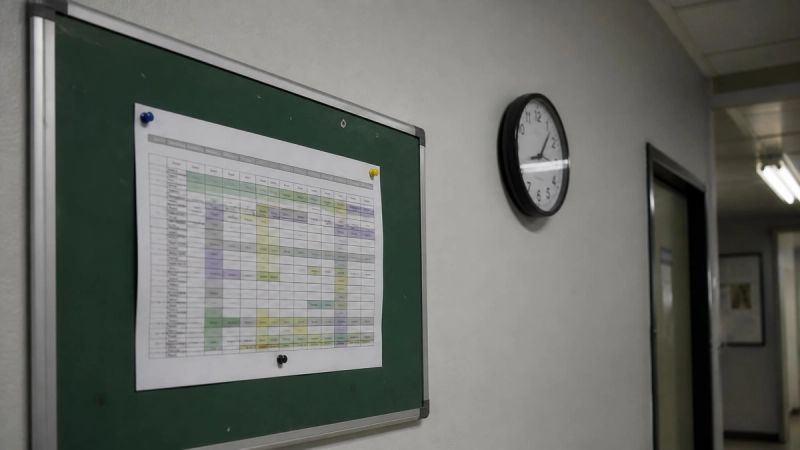
Most jobs are built on assumptions that happen to be hostile to bipolar disorder: that you'll sleep at consistent times, absorb stress without a ceiling, and perform at a steady output.
Shift work, on-call rotas, long commutes, overnight travel and deadline culture all interfere with sleep, and sleep is the lever that most reliably predicts an episode. That's not an excuse for poor performance. It's a design mismatch, and it's worth naming accurately because it's the basis on which accommodations get requested.
There's also the insight problem. During a high, work can feel like the best it's ever been: ideas, output, charm. Colleagues may be impressed right up to the point where something breaks. During a low, the same person can barely answer email. Neither state is a fair test of what someone can do.

The Numbers on Disability and Employment in Ireland
The gap is measurable. Census 2022 found that 34% of people aged 15 and over with a long-lasting condition or difficulty were at work, compared with 56% of the population overall. The unemployment rate for that group was 13%, against 8% generally.
Those figures cover all conditions and difficulties, not bipolar disorder specifically, so treat them as a measure of the terrain rather than of this illness. What they show is that having a health condition in Ireland still correlates strongly with being out of work, which is why the disclosure question carries so much weight.

Disclosure: Your Rights and Your Choice
Here's the part most people don't know. Under the Employment Equality Acts 1998 to 2015, there is no obligation on you to tell an employer that you have a disability, including bipolar disorder.
The Irish Human Rights and Equality Commission is explicit on the trade-off, though: an employer can't provide reasonable accommodation unless they've been made aware of the disability.
So disclosure isn't a moral question, it's a practical one. If you need nothing adjusted, you may never need to say anything. If you need a change to hours, tasks or workload, you'll need to give your employer enough information to act on, which doesn't mean handing over your full medical history.
A middle path exists and is widely used: disclose the functional need rather than the diagnosis. "I have a health condition that affects my sleep and occasionally needs flexibility around appointments" tells an employer what they need to know. It's honest without being a full clinical disclosure.

What Reasonable Accommodation Actually Looks Like
Under the same Acts, employers must take appropriate measures to enable a person with a disability to access employment, participate and advance, and undertake training, unless the measures would impose a disproportionate burden.
In practice, the listed categories are practical: adapting premises and equipment, changing patterns of working time, and distributing tasks differently. For bipolar disorder, that usually means things like a consistent shift pattern rather than rotating ones, later starts, time off for appointments and blood tests, compressed hours, or reduced workload during a recovery period.
Two protections matter. Decisions must be made case by case, on your particular circumstances, not by policy shorthand. And an employer who thinks a request is too costly must still formally assess the options and be able to show that assessment, rather than refusing on instinct.

Asking for It: What Works
Timing and framing do most of the work.
Ask before you're in crisis, if you can. A request made calmly at the start of a quarter reads as competence; the same request made in the middle of a collapse reads as an emergency.
Think about who you're asking, too. In a small organisation it's usually the owner or your line manager, and it's worth going to them directly rather than routing through a process that doesn't exist. In a larger employer, HR can tell you what the formal route is, but the person whose goodwill you actually need is the one who sets your rota. Ask both, in that order, and keep it consistent so nobody is caught out.
Be specific and forward-looking: not "I need support", but "I need a fixed shift pattern rather than rotating, and I can do the same hours". Naming the adjustment you want, and showing it's workable, moves the conversation from sympathy to logistics.
Put it in writing afterwards. A short email summarising what was agreed is not aggression; it's a record, and it protects both sides if managers change.

Staying Well in a Job That Won't Bend
Some jobs can't be made sleep-friendly. If that's yours, the honest options are a plan or a move, and pretending otherwise is how people end up unwell.
Within a job that can't change, the protections are narrower but real: keep the wake time fixed even on late nights, treat consecutive early shifts as a red flag rather than a chore, protect the time off rather than spending it recovering, and tell one trusted person at work what a change looks like in you. If your role involves driving or operating machinery, agree in advance what happens on a bad week, because that's not a conversation to have in the moment.
Watch for the work-specific early signs. Taking on extra projects at speed, volunteering for everything, working late with unusual enthusiasm, or a sudden intolerance for colleagues are all worth noticing, because they're often visible at work before they're visible at home.

If You're Struggling Now
You don't have to resign to recover. Sick leave exists for this, and in Ireland your GP can certify you while you stabilise. The mistake people make is waiting until performance has collapsed, which makes the return harder and the conversation worse.
St Patrick's Mental Health Services has written guidance on returning to work after a mental health difficulty, and the useful points are unglamorous: plan the return before you go out, consider a phased return rather than a cliff edge, and decide in advance what you'll say to colleagues.

If You Manage Someone
The most useful shift is from solving to supporting, and it's the one employers themselves report as liberating.
Sorcha Lowry of See Change put the manager's difficulty plainly in The Irish Times: "What we hear from employers and managers is fear and frustration around not knowing what to say or how to support someone that they've noticed is struggling." And the consequence of saying nothing: "When it is not named, it is much harder to put the right supports in place."
You don't need to be a clinician to be a decent manager here. Notice, ask, and adjust what's adjustable: the hours, the deadline, the travel. That's most of it.
Two habits make the difference. Ask about the task, not the diagnosis: "what would make this week workable" is a better question than "what's wrong with you". And write down what you agreed, because managers change and the accommodation shouldn't disappear with them.
Frequently Asked Questions
Do I have to tell my employer I have bipolar disorder?
No. There's no legal obligation to disclose a disability under the Employment Equality Acts. But an employer can only provide reasonable accommodation if they know about the disability, so the decision depends on whether you need adjustments.
Can my employer ask about my mental health?
An employer isn't entitled to ask whether you've had a mental health difficulty. If you request accommodation, they may seek a medical or occupational assessment relevant to your needs, and should consult you about it.
What if my request for accommodation is refused?
An employer can refuse only where the measures would impose a disproportionate burden, and must be able to demonstrate they properly assessed the options. If that hasn't happened, the Irish Human Rights and Equality Commission has information on your rights, and complaints about employment equality are handled by the Workplace Relations Commission.
Will disclosing affect my career?
That's the fear, and it's not irrational. The honest answer is that it depends on the organisation: some handle it well and some don't. Disclosing narrowly, to the person who needs the information, and asking for a specific adjustment rather than describing a diagnosis, tends to work better than a broad announcement.
Work is easier when the plan exists before the crisis. If you'd like help thinking through what to ask for, or how to handle the conversation with your manager, you can get matched with a therapist and work on it there.
Related Articles
- Living With Bipolar Disorder: The First Year After Diagnosis
- Medication and Therapy: What Each One Actually Does
- Bipolar Disorder in Ireland: What It Actually Is
This article is for informational purposes only and does not constitute legal or medical advice. For your specific circumstances, seek advice from the Irish Human Rights and Equality Commission, the Workplace Relations Commission, or a solicitor. If you are in crisis, contact Samaritans on 116 123 (free, 24/7), Text About It on 50808 (free, 24/7), or emergency services on 112 or 999.