Therapy for Bipolar Disorder in Ireland: What It Adds to Medical Treatment

What therapy actually adds when you already have medication for bipolar disorder, what the HSE funds, how to find a qualified therapist, and what to expect.
You're taking the tablets, attending the clinic, and doing the thing you're supposed to do. And still something isn't quite working. The episodes are further apart, maybe, but the life around them hasn't changed: the job you no longer trust yourself in, the relationship that survived a bad year, the version of you that everyone remembers and you'd rather not discuss.
That's the gap therapy fills, and it's worth being precise about what it can and can't do, because this is where a lot of people either expect too much from it or dismiss it as the optional part.

What Therapy Adds That Medication Can't
Medication manages the biology. It reduces how often episodes happen and how severe they get. It cannot teach you to notice an early warning sign, repair a relationship, or help you stop believing the things depression tells you about yourself.
Two things medication reliably can't touch are insight and aftermath.
Insight is the ability to see your own state accurately, which is precisely what erodes during an episode. Therapy builds the routines, the record-keeping and the outside perspective that compensate. Aftermath is everything left over once the episode ends: debt, apologies, a reputation, a fear of the next one. That's relational and psychological work, and no blood level addresses it.
Kay Redfield Jamison, professor of psychiatry at Johns Hopkins School of Medicine, who has lived with bipolar disorder and written about it for decades, described the limits of the high itself to The Irish Times in 2019: "What comes in a manic state are often fragments that need to be worked on later."
That's a fair description of what therapy is for. The episode produces material; the work afterwards is making something of it.

What the Evidence Says Works
The HSE lists psychological treatment as part of standard care for bipolar disorder, describing CBT, family therapy and talk therapy, with a typical course of around 16 sessions over six to nine months. It also lists Wellness Recovery Action Planning, which is a structured way of writing down your triggers, early signs and crisis plan.
St Patrick's Mental Health Services describes the same range slightly differently, naming cognitive behavioural therapy, family-focused treatment and interpersonal and social rhythm therapy as approaches that can be effective, noting they help a person "develop behaviours and daily routines which can protect them from experiencing severe or prolonged symptoms."
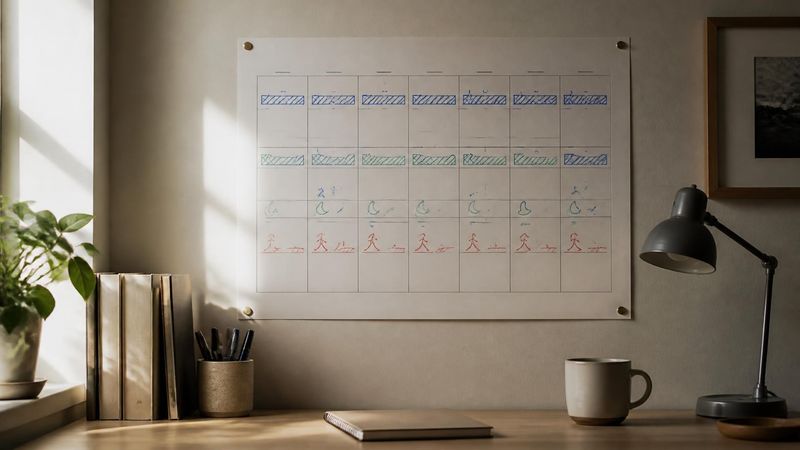
The common thread across all of them is routine and rhythm: sleep, meals, activity, social contact. That's not a soft add-on. Sleep disruption is both a symptom and a trigger, so a therapy that stabilises daily rhythm is doing pharmacological-adjacent work.
Why It Has to Be Bipolar-Specific
Generic counselling can be kind and useless at the same time. If a therapist doesn't understand episode patterns, they may treat a hypomanic upswing as progress and a mixed state as ordinary agitation.
Bipolar-specific work tends to include three things. Psychoeducation about the illness itself, because understanding the pattern is what makes it manageable. A focus on sleep and routine rather than only on feelings. And work with whoever lives with you, because family-focused therapy exists for a reason: the household is part of the treatment environment.
If you're booking therapy, ask directly what experience the therapist has with bipolar disorder specifically. A good one will answer without offence.

What a Course of Therapy Actually Looks Like
Expect an assessment first, then goals. Not vague ones like "feel better", but specific ones: notice warning signs within two days rather than two weeks, hold a sleep schedule through a work crisis, decide how to talk to your employer.
The HSE's description of around 16 sessions over six to nine months is a useful planning assumption, because it means you should spend the first session deciding what you're going to use the time for. It also means the ending is part of the design, and a good therapist will start preparing for it before the last session.
Therapy for bipolar disorder is usually alongside medication, not instead of it. If a therapist suggests you reduce or stop medication, that's outside their role and a reason to leave.
A session itself rarely looks dramatic. Much of the hour goes on reviewing the week: sleep, energy, what you did differently, what you avoided. Then a piece of work on whatever is live, whether that's a decision, a relationship, or a belief that keeps returning. If you leave wondering whether anything happened, that's common in the early weeks; the pattern only becomes visible across sessions.

Finding Someone Actually Qualified
Ireland doesn't have a single simple register, so check accreditation rather than taking a title at face value.
Counsellors and psychotherapists are generally accredited through bodies such as the Irish Association for Counselling and Psychotherapy or the Irish Council for Psychotherapy. Psychologists are usually accredited with the Psychological Society of Ireland. Accredited practitioners are bound by a code of ethics and a complaints procedure, which matters if something goes wrong.
Ask three questions before booking: what training do you have in bipolar disorder, what's your accreditation, and how do you work with the psychiatrist or GP involved in my care. The third question is the one that separates a therapist who understands this illness from one who doesn't.
Two red flags are worth naming. A therapist who offers to manage your medication, or to advise on it, is working outside their scope. And a therapist who describes bipolar disorder as purely a response to your history, with no biological component, is contradicting the clinical consensus and will struggle to help you plan around episodes.

What It Costs, and How to Ask
Cost varies widely and it's the reason many people never start. Fees are set by practitioners, not by any national schedule, so there's no single figure to quote.
What is worth doing is asking, plainly, before the first session: what's the fee, is there a reduced rate, and how many sessions are we planning. Most practitioners would rather have that conversation at the start than discover three months in that you can't continue.
If you're attending a Community Mental Health Team, ask what psychological input is available through the public system, because it varies by area and it isn't always offered unless requested. It's a fair question to put to your key worker directly, and worth asking early rather than after a difficult month.
When Therapy Isn't the Answer
Therapy can't manage an acute episode. If sleep has collapsed, if agitation is building, if spending has escalated, or if someone is expressing beliefs that suggest psychosis, that's medical and it needs a GP or the Community Mental Health Team, with 112 or 999 for immediate danger.
The same applies to severe depression with thoughts of suicide. Samaritans is 116 123, free, 24 hours a day, and Text About It is 50808.
It's also worth being honest about fit. If you've done six sessions and nothing is shifting, that's information: either the modality, the goals or the therapist needs to change. Persevering out of politeness wastes the one resource you're paying for.

What to Bring to the First Session
Bring the practical things: your medication and doses, roughly when episodes happened, what your sleep looks like, and who else is involved in your care. If you have a mood diary, bring it.
Then bring the thing that's actually bothering you, which is rarely the diagnosis. It's usually a decision about work, a relationship that hasn't recovered, or the fear of what happens next.
In Ireland, about eight in 10 people who have attended counselling or psychotherapy say they'd recommend it to someone who might benefit, according to the IACP's General Public Survey carried out by Ipsos B&A in November 2025. That's a reasonable signal that the hour is usually worth something, even when it's hard to describe what changed.
If you've been managing this with medication alone and it's working, that's a legitimate choice. If it isn't quite enough, or you're carrying something the tablets were never going to fix, you can get matched with a therapist and decide from there.
Frequently Asked Questions
Can therapy replace medication for bipolar disorder?
No. Medication remains the foundation of treatment for bipolar disorder, and therapy works alongside it. Any therapist who suggests otherwise is outside their competence.
How many sessions will I need?
The HSE describes a typical course of around 16 sessions over six to nine months. Some people need a shorter focused piece of work; others return for another course later.
Is CBT the only therapy that works for bipolar disorder?
No. The HSE and St Patrick's Mental Health Services both name several approaches, including CBT, family therapy, family-focused treatment and interpersonal and social rhythm therapy. The fit matters as much as the label.
Does therapy help during an episode?
It's least useful in an acute episode and most useful before and after one. If you're acutely unwell, contact your GP or Community Mental Health Team rather than waiting for a session.
Related Articles
- Medication and Therapy: What Each One Actually Does
- Living With Bipolar Disorder: The First Year After Diagnosis
- Bipolar Disorder in Ireland: What It Actually Is
This article is for informational purposes only and does not constitute medical advice. It is not a substitute for assessment by a GP or psychiatrist, and nothing here should be used to start, stop or change any medication. If you are in crisis, contact Samaritans on 116 123 (free, 24/7), Text About It on 50808 (free, 24/7), or emergency services on 112 or 999.