C-PTSD: When Trauma Happens Again and Again

Learn what complex PTSD (C-PTSD) is, how it differs from PTSD, and what treatments are available in Ireland. Get matched with a trauma therapist.
Ciara is 28 and grew up in Cork. From the outside, her childhood looked ordinary. School, GAA matches, family birthdays. But inside the house, the atmosphere was unpredictable. One day her father was funny and warm; the next, he was volatile, sarcastic, and impossible to please. Her mother tried to keep the peace, which usually meant Ciara learned to stay quiet, stay helpful, and never need too much.
Now, as an adult, Ciara notices patterns she cannot explain. She apologises constantly at work. She picks friends and partners who need fixing, then feels exhausted and resentful. When someone raises their voice, even slightly, her chest tightens and she feels like a child again. She has been told she has anxiety, and that is true. But the word that keeps surfacing in therapy is different: complex PTSD.
If Ciara’s story feels close to home, you are not alone. Complex PTSD, often called C-PTSD, develops when trauma is repeated, prolonged, or inescapable. Research led by Hyland and colleagues, the first nationally representative study of its kind in the Republic of Ireland, found that approximately one in eight Irish adults meets diagnostic requirements for PTSD or complex PTSD. That means in an average Irish workplace, classroom, or bus, several people around you may be carrying something similar. Most have never named it. Many have been told they are just anxious, sensitive, or difficult.
The difference between the two matters, because the right support depends on understanding which one you are dealing with.

What C-PTSD Actually Is
Complex PTSD is a psychological response to trauma that happens repeatedly over time, especially when the trauma occurs in a context where escape is difficult. It is now formally recognised in the World Health Organisation’s International Classification of Diseases (ICD-11) as a distinct condition related to, but separate from, standard PTSD.
Where PTSD often follows a single identifiable event, C-PTSD tends to follow experiences such as ongoing childhood neglect or abuse, domestic violence, trafficking, repeated assault, long-term bullying, or living through war or displacement. The trauma is not just something that happened. It is something that shaped the environment you had to survive in.
C-PTSD includes the core symptoms of PTSD — flashbacks, nightmares, avoidance, and hypervigilance — but it also involves deeper changes in how you see yourself, how you manage emotions, and how you relate to other people.
How C-PTSD Differs from PTSD
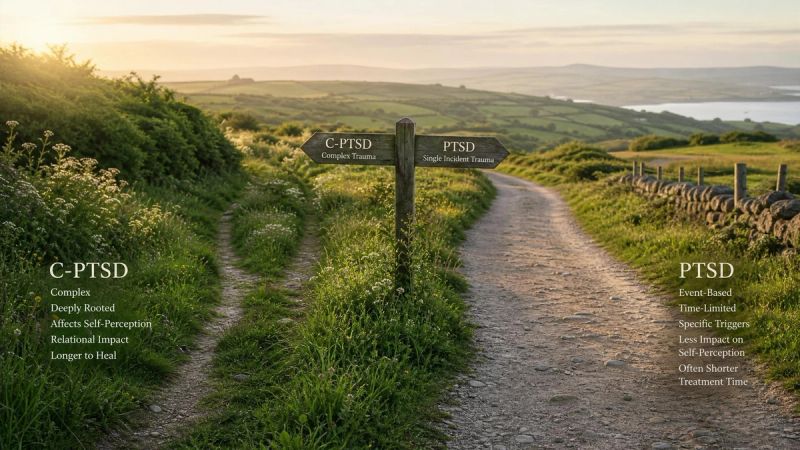
It can be helpful to think of PTSD as the body and brain reacting to a memory of danger. C-PTSD is that, plus the impact of having your identity and relationships shaped by danger over a long period.
PTSD is often linked to a specific incident: a car crash, an assault, a sudden loss. The symptoms centre around reliving that event and trying to avoid reminders of it. C-PTSD, on the other hand, is linked to trauma that happened again and again. The nervous system never gets a chance to settle. The world becomes a place you must manage, please, or survive rather than trust.
This means people with C-PTSD often struggle with emotional regulation, a persistent sense of shame or worthlessness, difficulty trusting others, and patterns of relationships that repeat the dynamics of the original trauma. These symptoms are not character flaws. They are adaptations to an environment that was unsafe for a long time.
Common Signs of C-PTSD
C-PTSD does not always look dramatic from the outside. Many people live with it for years without realising it has a name. The signs can include:
- Emotional flashbacks. You might not see a clear image of the past, but you suddenly feel overwhelming fear, shame, or despair, often in response to something small.
- Chronic shame or guilt. A deep sense that you are bad, broken, or undeserving of care.
- People-pleasing and hyper-independence. You either work hard to keep others happy or refuse to need anyone at all.
- Difficulty with relationships. Attracting or staying in relationships that feel familiar but harmful, or pulling away when someone gets close.
- Dissociation. Feeling numb, spaced out, or disconnected from your body or surroundings.
- Hypervigilance. Always scanning for danger, tone shifts, or signs that someone is about to turn on you.
- A harsh inner critic. A relentless internal voice that blames you for everything.
These patterns developed for a reason. They helped you survive. The problem is that they often keep running long after the danger has passed.

What Causes C-PTSD?
C-PTSD is not caused by being weak or sensitive. It is caused by experiences that overwhelm your capacity to cope, especially when they happen repeatedly and involve a betrayal of trust or a loss of safety.
Common causes include:
- Childhood emotional, physical, or sexual abuse
- Chronic neglect or inconsistent caregiving
- Domestic abuse or coercive control
- Long-term bullying at school or in the workplace
- Trafficking or exploitation
- Repeated medical trauma
- War, displacement, or living as a refugee
- Captivity or imprisonment
The key factor is repetition. A single frightening experience can cause PTSD. Ongoing experiences, especially during childhood when the brain and identity are still developing, are more likely to lead to C-PTSD.
"Recovery can take place only within the context of relationships; it cannot occur in isolation." — Dr. Judith Herman, psychiatrist, Harvard Medical School, and author of Trauma and Recovery
This quote captures something important about healing from C-PTSD. The damage was relational, and the repair often needs to be relational too.

Treatment That Actually Helps
There is no one-size-fits-all treatment for C-PTSD, but several approaches are effective. Because C-PTSD affects identity, relationships, and emotional regulation as well as traumatic memories, therapy often needs to be phased and paced.
Stabilisation and safety
Before processing traumatic memories, many therapists focus on helping you feel safer in the present. This includes grounding techniques, emotion regulation skills, and building a sense of trust in the therapeutic relationship. This phase is not a delay. It is the groundwork that makes later trauma processing safer and more effective. Rushing into trauma processing before you feel stable can sometimes make things worse.
Trauma-focused therapies
Once there is a foundation of safety, therapies such as EMDR, trauma-focused CBT, and schema therapy can help process memories and shift unhelpful beliefs. For more on EMDR, see our guide to EMDR therapy in Ireland.
Somatic and body-based approaches
Because C-PTSD is stored in the body as well as the mind, approaches such as somatic experiencing or sensorimotor psychotherapy can help release tension and restore a sense of safety in your own body.
Relational therapy
Given that C-PTSD affects relationships, the therapeutic relationship itself can become a place to practise trust, boundaries, and new ways of relating. This is one reason why finding a therapist you feel safe with matters so much.
The HSE recognises that trauma-focused psychological therapies are a key part of treating PTSD and related conditions. If you are unsure whether your symptoms match C-PTSD, our article on PTSD symptoms in adults may help you understand the overlap.

Finding C-PTSD Support in Ireland
If you think you might have C-PTSD, the first step is often to speak with your GP. They can rule out physical causes, discuss your options, and refer you to HSE mental health services if appropriate.
For private therapy, look for a therapist who is accredited with a recognised body such as the Irish Association for Counselling and Psychotherapy (IACP) and who has specific training in trauma and complex trauma. Not every therapist works with C-PTSD, so it is worth asking directly about their experience.
At Feel Better Therapy, we match clients with therapists who have the right training and approach for their situation. You can learn more about trauma therapy or get started here to find a therapist who understands C-PTSD.
Frequently Asked Questions
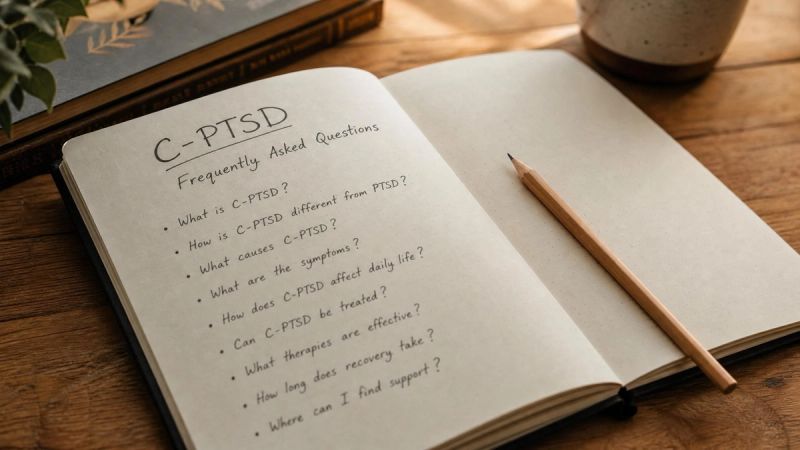
Is C-PTSD a real diagnosis?
Yes. Complex PTSD is recognised in the WHO’s ICD-11. It is not yet a separate diagnosis in the DSM-5, but many clinicians and researchers treat it as a distinct and important condition.
Can you have C-PTSD without remembering the trauma clearly?
Yes. Some people have clear memories, while others have fragmented memories, gaps, or a sense that something was wrong without being able to name exactly what happened. Both are valid.
How is C-PTSD treated in Ireland?
Treatment usually involves trauma-informed therapy. This may include stabilisation work, EMDR, trauma-focused CBT, schema therapy, or somatic approaches, depending on the therapist and your needs.
Can C-PTSD get better?
Yes. Recovery is often gradual, but many people find that their symptoms become more manageable, their relationships improve, and their sense of self becomes more stable over time.
Is C-PTSD the same as borderline personality disorder?
No, although they can share some features such as emotional intensity and relationship difficulties. They are different conditions and require different approaches. A qualified clinician can help clarify what is going on for you.
For a complete overview of trauma, PTSD, and recovery options in Ireland, see our complete guide to trauma therapy in Ireland. You may also find our guide to childhood trauma and adult mental health helpful.

You Deserve Support That Fits You
Living with C-PTSD can feel like carrying an invisible weight. You might have spent years blaming yourself for being "too sensitive," "too needy," or "too much." But the truth is that your reactions made sense in the context of what you survived. They were strategies, not flaws.
Healing does not mean pretending the past did not happen. It means learning to feel safe enough in the present that the past no longer controls your relationships, your body, and your sense of who you are. That is possible, and you do not have to do it alone.
If you are ready to talk to someone who understands complex trauma, you can learn more about trauma therapy at Feel Better Therapy or get started here to find the right therapist for you.
This article is for informational purposes only and does not constitute medical advice. If you are in crisis, please contact Samaritans Ireland at 116 123 or Pieta House at 1800 247 247.