Money Worries During Separation in Ireland: Managing the Practical Stress

Money is one of the biggest stresses of separation in Ireland. What actually changes, what the courts can decide, and where to get free help with debt and budgeting.
There's a particular moment that comes a few weeks into a separation, usually at a kitchen table with a bank statement in front of you. One income is now paying for what two incomes used to cover, or the mortgage is going out of an account that's about to close, or you're doing the sum in your head and it doesn't work no matter which way you run it.
The fear that arrives with that sum is different from other kinds of worry. It's not abstract. It has numbers in it, and deadlines, and consequences that can land on your children. It also tends to arrive at the worst possible time, while you're grieving and possibly not sleeping, which is exactly when you're least able to make careful decisions about money.
This isn't a chapter anyone prepares for. Most people build a life on the assumption that the finances stay roughly as they are, and separation breaks that assumption without warning. What follows isn't financial advice, and it won't produce a plan for your specific circumstances. But it will tell you what actually changes, what the law can decide, and where the free help is, so the problem stops being a shape in the dark.
Why Money Feels Different After Separation
Money worries during separation carry a charge that ordinary financial stress doesn't, because three things arrive at once.
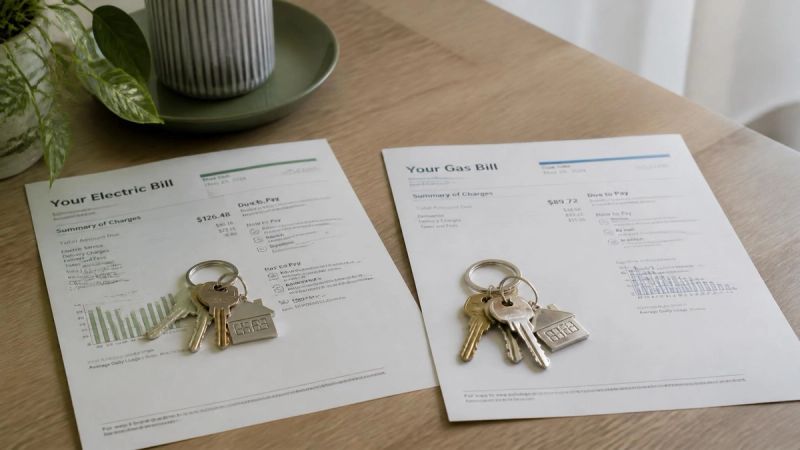
The first is sudden scarcity. Two households cost more than one. Rent or a second mortgage, another set of utility bills, another car, more travel to keep children in two homes. Even a couple who were comfortable can find themselves stretched, and a couple who were already tight can find themselves in real trouble. This is the part that shocks people most: the same salary that was fine last year is suddenly not fine.
The second is uncertainty that drags on. You may not know for months what your income will be, whether the house will be sold, or what maintenance will look like. Living with that open question is exhausting in a way that a bad but known situation isn't.
The third is shame, which is the least discussed and does the most damage. Many people in financial difficulty after a separation go quiet about it. They don't tell friends, they don't ring the helplines, and they don't ask the questions that would help them, because they feel they should be managing better.
What the Irish Numbers Actually Show
It's worth knowing that this isn't a personal failure happening invisibly to you alone. The pattern shows up clearly in national data.
The CSO's Survey on Income and Living Conditions for 2025 put the national at-risk-of-poverty rate at 12.6%, up from 11.7% the year before, with the poverty threshold at €19,060. More telling for separated families: households made up of one adult with children had the highest consistent poverty rate of any household type, at 13.4%.
That category isn't exclusively separated parents, since it also includes people who never married. But it describes the shape a great many separated families end up in, especially where one parent is the main carer, and it tells you something important: the financial shock of running a household alone is common enough to move national statistics.
The Decisions That Actually Shape Your Money
Much of the financial stress of separation comes from not knowing what can be decided, by whom, and when. The broad shape is clearer than most people expect.
Under Irish law, when a court is dealing with a judicial separation or a divorce, it can make orders about money and property. According to Citizens Information and Courts.ie, the main ones are maintenance, a property adjustment order dealing with the family home and other property, and a pension adjustment order dealing with retirement benefits. The court is required to make proper provision for both spouses and any dependent children, and it looks at each person's income and assets, the standard of living the family had, accommodation needs and the arrangements for children.
If you and your spouse can agree the terms, a judge will consider your agreement as part of the court order. That matters practically, because an agreed settlement is usually cheaper, faster and less corrosive than a contested one.
The family home deserves its own mention because it causes more anxiety than anything else. There's no single answer. Depending on the circumstances, one person may stay, the home may be sold and the proceeds divided, or ownership may be adjusted. What you can rely on is that the decision is meant to be made with reference to housing need and the children's welfare, not simply to whoever can afford the better solicitor.

Mediation, and Why It Saves Money
Irish law pushes couples towards mediation before court. The Mediation Act 2017 requires that couples be offered mediation as an alternative to court proceedings, and a solicitor lodging a court application has to include a declaration confirming you've been told about it.
The financial argument for mediation is straightforward. A mediated agreement about maintenance, the house and pensions costs a fraction of a contested hearing, and it tends to hold up better because both people shaped it. The Family Mediation Service, run by the Legal Aid Board, is free. You can ring 066 947 1000 or email info@legalaidboard.ie. Private mediators charge varying fees, and the Mediators' Institute of Ireland lists accredited practitioners.
This doesn't apply if there's a safety concern. Where there's a history of coercive control or violence, mediation may not be appropriate, and you should tell your solicitor so they can advise on the alternatives.

The Shame That Stops People Getting Help
Gwen Harris has worked with the Money Advice and Budgeting Service for the best part of three decades. Speaking to the Irish Times in 2026, the MABS regional manager for north Dublin described how the reasons people fall into debt change over the years while the emotional response doesn't, and named the feeling directly: "The emotional guilt. The shame."
Her wider point is worth taking seriously. She notes that "everyone in this country has debt" in one form or another, from utility bills to mortgages, and that financial hardship follows ordinary life events. She lists family separation among the things that push people into difficulty, alongside unemployment, illness and even the arrival of a baby.
The practical implication is uncomfortable but freeing. If shame has been keeping you from asking for help, the help is still there, it's free, and the people providing it have seen this many times before.

Where to Get Free Help With Money
MABS, the Money Advice and Budgeting Service, offers free, confidential and independent advice on debt and budgeting. The national helpline is 0818 07 2000, Monday to Friday from 9am to 8pm, and there are around 60 offices nationwide where you can sit down with an adviser. Their budget tool is available online, and they will deal with creditors on your behalf where it helps.
Citizens Information explains the welfare entitlements that many people miss in the first year, including supports for lone parents. Their phone service is 0818 07 4000, Monday to Friday from 9am to 8pm.
The Family Mediation Service is free, as above, and can deal with the financial questions alongside the parenting ones.
Legal aid is available through the Legal Aid Board for people who qualify on a means test, and it's worth checking whether you do before assuming you can't afford a solicitor. FLAC, the Free Legal Advice Centres, also provides basic legal information.

What Actually Helps When You're Drowning in Numbers
Get the numbers in one place before you decide anything. Gather the accounts, the mortgage statement, the payslips, the bills. Anxiety thrives on vagueness, and a set of figures on paper is less frightening than the version in your head at 3am.
Don't sign anything in the first month. Separation often brings pressure to agree quickly, sometimes from the other person, sometimes from your own wish to make the pain stop. Big financial decisions made in that state are frequently regretted.
Separate the urgent from the important. An unpaid bill is urgent this week. A pension adjustment is important this year. Treating everything as urgent is how people exhaust themselves without protecting their long-term position.
Tell one person the truth. Money problems grow in silence. Saying the actual figure out loud to a friend, a MABS adviser or your solicitor reduces the power it has over you.
Appoint one person to lead on the paperwork. If you're the one who always handled money, and now you're not, say so plainly and ask for help. If you never handled it, learn the basics now, even if it's uncomfortable.
Watch what the stress is doing to you. Financial strain and mental health are linked, and it's common for money worry to show up as sleeplessness, irritability or a low mood that won't shift. If that's happening for more than a couple of weeks, it's worth talking to your GP rather than waiting for the paperwork to clear.

Frequently Asked Questions
Will I lose the house in a separation?
Not automatically. The family home is dealt with as part of the settlement or court order, and housing need is one of the factors considered. Some people stay, some sell and divide the proceeds, and some have ownership adjusted. A solicitor or mediator can tell you how the principles apply to your situation.
Do we have to go to court to sort out money?
No. Many couples reach agreement through mediation or negotiation, and a court can then make that agreement an order. Court is usually the fallback when agreement isn't possible.
Can I get free help if I can't afford a solicitor?
You may qualify for legal aid, which is means tested. Separately, MABS gives free and independent debt and budgeting advice on 0818 07 2000, and Citizens Information on 0818 07 4000 can explain entitlements. Neither replaces legal advice, but both are free and confidential.
Does money stress go away once the finances are settled?
Often it eases considerably, because uncertainty is the hardest part. But the strain of the separation period can leave a mark, and it's common to need support with anxiety or low mood even after the figures are sorted.

Closing
The financial side of separation is genuinely hard, and the fact that it's hard isn't evidence you're handling it badly. Two households cost more than one, the decisions often take months, and nobody hands you a map.
What helps is treating it as a set of concrete questions answered one at a time, by people who do this for a living, most of them for free. If the worry has worn you down, you can get matched with a therapist who understands what separation does to sleep, mood and confidence.
You can read more about the practical side in our guides to separation and divorce in Ireland and co-parenting after separation.
Related Articles
- Separation vs Divorce in Ireland: What's the Difference and What It Means for You
- Co-Parenting After Separation: Practical Ground Rules
- What Separation Actually Does to You: The Grief, Shock and Loneliness Nobody Warns You About
This article is for informational purposes only and does not constitute legal, financial or medical advice. For advice on your own circumstances, speak to a solicitor, a MABS adviser or Citizens Information. If money worries are affecting your mental health, speak to your GP. If you are in crisis or having thoughts of ending your life, contact Samaritans on 116 123 (free, anytime) or go to your nearest emergency department.