Fathers' Mental Health: Holding It Together

Fathers are expected to be the steady one. What the Irish research says about paternal depression, why it's missed, and what helps when you're the one holding it together.
There's a job description fathers rarely hear read aloud: be present, be patient, be the steady one, don't fall apart.
Most men take it on without noticing. Then a baby arrives, or a separation happens, or money gets tight, and the man discovers that the role was never designed with his own wellbeing in it. He is the support, not the person supported. And when he does struggle, the systems around him tend to look straight past him.
What the Numbers Actually Say
Estimates of paternal perinatal depression vary, mostly because it's barely measured. The often-quoted figure is that around one in 10 fathers is affected — and researchers generally add that the true number is probably higher, because men don't present.
Irish research puts it higher still. A study by Philpott and Corcoran found 28 per cent of new fathers scoring above the threshold for depression on the Edinburgh Postnatal Depression Scale, with 12 per cent above the stricter cut-off. A more recent Irish survey of fathers and co-parents at an urban obstetric hospital found 33 per cent screening positive at the lower threshold and 17.4 per cent at the higher one.
Those are not small numbers, and they exist alongside a much better-known figure: about one in five mothers in Ireland experiences mental health distress in the year after a birth. When a mother is depressed, it's a red flag for the father too.
Prof Sinéad McGilloway, founder director of the Centre for Mental Health and Community Research at Maynooth University, doesn't soften the gap: "Fathers' mental health in this [perinatal] period is unrecognised, under treated, undiagnosed and a lot of men are unsupported."
Why Fathers Get Missed
Three structural reasons, none of them the man's fault.
Screening is aimed at mothers. Appointments, questionnaires and check-ups in the perinatal period are built around the woman and baby. A father can go through the whole thing without anyone asking how he is.
The tools are built for mothers. McGilloway points out that even the language is wrong: "The term postnatal depression is problematic for me, because it is so universally associated with women." And the presentation differs — she notes that "men seem to have additional things going on, like escape behaviour, irritability and indecisiveness."
Escape behaviour. Working later. Volunteering for the night feed so there's an excuse to be awake alone. Going to the gym for two hours. Those are symptoms wearing the costume of coping.
The shame is specific. A 2021 Bournemouth University study was titled, from a participant's own words, "What kind of man gets depressed after having a baby?" That sentence is the barrier, and it lives inside the man rather than in the service.
The Provider Pressure
Ask fathers what frightens them and money comes first, then time, then the fear of getting it wrong.
Fin McKenna-Fox, a health and wellness consultant from Monaghan and a father of three, described the identity shift in the Irish Times: "In the flip of a switch I lost the whole identity of who I was." And the way the attention redistributes: "So much of the focus was on supporting my wife through that massive transition."
He also names the thing that many fathers of his generation were never taught — that being at home with your children is parenting, not minding: "I am not babysitting the kids. I am rearing my children."
That pressure is real and it's also not equally distributed across the country's fathers. A man on a fixed shift pattern with no flexibility is carrying something different from a man with parental leave and a supportive employer. Policy matters here, and Ireland's is better than it was: two weeks' paternity leave within the first six months, plus nine weeks of parent's leave for each parent within the child's first two years, both supported by a weekly payment of €299 where the PRSI conditions are met.
Two weeks is not a lot of time to adjust to becoming a father. It's also more than many men take — and the reasons men don't take it are worth naming, because they're the same reasons men don't seek help anywhere else. Taking parent's leave can read as a commitment problem. It can be unpaid beyond the benefit. In small firms and on sites, the man who takes his full entitlement is noticed, and not always kindly.
So a father does the arithmetic: two weeks off against the risk of being seen as less reliable for the next five years. Most men do that sum quietly and choose the job. Then they wonder, months later, why the first year felt like something happening to them rather than something they were part of.
The Separation Version
Fatherhood after a separation is its own load, and it's the one men most often carry silently.
The role doesn't stop; the contact changes shape. A man goes from seeing his children daily to a schedule, and the identity that came with "dad in the house" doesn't survive the move. Add legal process, money pressure, a house that's quiet in a way it never was, and the loss of the shared friends — and the ingredients for depression are all present without anyone naming it.
If that's where you are, two guides in this series are directly relevant: anger, the only emotion men are allowed, and men's loneliness for what happens when the daily contact goes. Neither is a substitute for support, and neither is framed as advice about your family law situation.
What It Does to Children
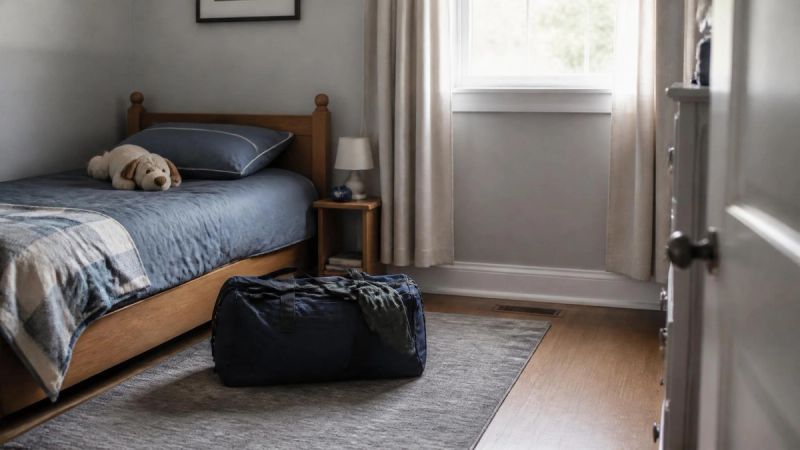
This is the part men usually can't hear while they're struggling: children read the mood of the house, not the words.
A father who is present but numb is not invisible to a child. Neither is one who is irritable. That's not a reason to feel guilty — guilt is useless here — it's a reason to treat your own state as part of your parenting rather than a private matter.
McGilloway's framing is the one to keep: "We need both parents well to do the job because we know parenting is hard." Not one parent well and the other managing. Both.
What Helps
Tell the GP, and start with the body. "I'm not sleeping, I'm short with the kids, I've no interest in anything" is a completely normal opening. You don't need to arrive with the word depression.
Use the leave you're entitled to. Paternity leave, parent's leave, and any flexible arrangements your employer offers aren't favours to be negotiated apologetically. They're the mechanism by which a father gets to be present without collapsing.
Get specific about the escape behaviour. If you're working late to avoid the house, say that to someone. Naming it out loud is usually the moment it stops being invisible.
Take the therapy. Therapy for fathers isn't a reward for coping badly — it's a place to work on the thing underneath the irritability. Our guide to what therapy looks like for men covers how the first session actually goes.
Ask for targeted support. Dedicated perinatal mental health support for fathers is thin in Ireland, but it's growing — from hospital perinatal mental health teams where they exist, through your GP, and through services being developed specifically for dads, such as the therapeutic service From Lads to Dads has been building. If you're in the perinatal period, ask your partner's maternity team what's available for you as well.
Find one other father who'll tell the truth. Not a parenting forum. One man, in person, who will say the first year nearly broke him too.

If You're the One Holding It Together
Holding it together and being silent are not the same job, and every man in this series was taught to confuse them.
The version of strength that works looks like this: you notice you're not right, you say so to one person, and you get help before the house notices for you. That's not a lower standard. It's the only one that lasts past the first year.

If You Need Help Today
Samaritans — 116 123, free, 24 hours a day. Text About It — 50808, free, 24-hour text support. Pieta — 1800 247 247, free, 24 hours. Emergency — 112 or 999, or your nearest emergency department.
Frequently Asked Questions
Can fathers get postnatal depression?
Yes. Irish research has found between 28 and 33 per cent of new fathers scoring above the threshold for depression on standard screening, depending on the study and cut-off.
Why wasn't I asked how I was?
Perinatal screening in Ireland is built around the mother and baby. Fathers are rarely screened, and the tools used are designed for mothers.
Is it different from depression at any other time?
The symptoms overlap, but men in the perinatal period often show escape behaviour, irritability and indecisiveness rather than classic sadness.
What leave am I entitled to?
Two weeks' paternity leave within six months of the birth, and nine weeks of parent's leave for each parent within the first two years, with a weekly payment of €299 where PRSI conditions are met.
Related Articles
- Men's Mental Health in Ireland: Why the Silence Isn't Personal
- Anger: The Only Emotion Men Are Allowed
- Men's Loneliness: The Friendship Problem Nobody Names
This article is for informational and emotional support only and does not constitute medical advice. If you are in crisis or having thoughts of suicide, contact Samaritans on 116 123 (free, 24/7), Text About It on 50808 (free, 24/7) or Pieta on 1800 247 247 (free, 24/7), or use 112 or 999 or attend your nearest emergency department.
If you're holding a lot and saying nothing about it, you can get matched with a therapist and start with the part you haven't told anyone.