Supporting a Partner With Bipolar Disorder

What being a partner to someone with bipolar disorder actually involves, how to tell a bad day from an episode, and how to protect your own wellbeing.
You've learned to read a room the moment you walk into it. The dishes done and the radio on might mean a good evening, or it might mean the start of something that ends with a conversation you'll both regret at 2am. You've stopped asking "are you okay?" because the answer is always yes, and you've started wondering whether the person you love is in there somewhere, or whether you're now living with the illness instead of the person.
Being a partner to someone with bipolar disorder is a real role with real skills attached, and almost nobody hands you the manual. This is an attempt at one, written on the assumption that you love them and that you're tired.

What Being a Partner Actually Involves
Bipolar disorder affects around one in 50 adults in Ireland, according to St Patrick's Mental Health Services. That's a large number of households, and most of them are managing without any formal support.
The role splits into three parts, and confusing them is where couples get into trouble.
First, you're a partner: someone who shares a life, a bed, a mortgage and a sense of humour. Second, you're sometimes an observer: the person best placed to notice a change before it's obvious. Third, you're occasionally a coordinator: the one who rings the GP, rearranges the week, and holds things together.
The first role is the one that gets lost. It's also the one that keeps the relationship alive, so it's worth protecting deliberately, even when the week has been entirely about the illness.

Telling a Bad Day From an Episode
This is the hardest skill and the one that matters most.
Everyone has bad days. An episode is different in duration and in kind: it lasts days or weeks, it changes sleep, and it changes how they think rather than only how they feel. A partner who can distinguish the two is worth more than any checklist, because the response is completely different in each case.
Sean Lonergan of the Bipolar Education Programme at St Patrick's Mental Health Services makes the point that this judgement needs time. It's best to assess over days rather than in the moment, and keeping a simple record of significant events, such as responses to a new medication or the triggers that preceded an episode, gives you both something more reliable than memory.
What you're looking for is a pattern change, not a mood. Sleeping four hours and feeling fantastic for three nights running is a pattern. Being irritable after a bad day at work is a mood.

The Conversation to Have While They're Well
Lonergan is direct about the most useful thing a partner can do: "Discuss with the person how they want you to approach it with them when they are unwell, and how best you can support them when they are unwell."
That conversation is worth having properly, once, on a good day, and written down. What should you say if you notice they're not sleeping? Who do they want contacted, and at what point? Do they want you to cancel things on their behalf, or would that feel like a loss of control? What did they find helpful last time, and what made it worse?
Agree the words in advance, because in the middle of an episode neither of you will invent good ones. Something as simple as "I've noticed you've slept four hours for three nights, can we ring the GP" is easier to hear than "you're getting manic again", which sounds like an accusation even when it isn't.
What Helps During a High
Your instinct will be to argue with the plan, the spending or the certainty. It won't work, because the conviction isn't a belief you can reason with; it's a symptom.
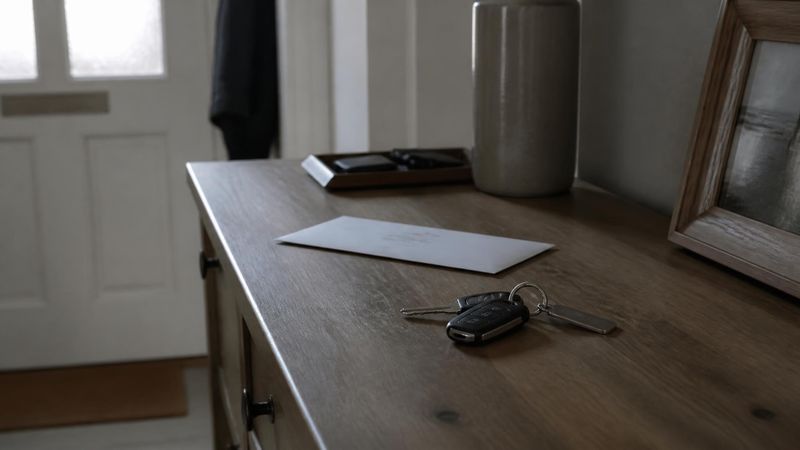
What does help is reducing the stakes. Protect sleep where you can. Keep the week boring. Delay big decisions rather than debating them: "let's not decide that until Thursday" buys time without confrontation. Take the car keys if driving has become risky, and expect to be unpopular for it.
Keep spending contained practically rather than morally. Removing a card, agreeing a limit in advance, or asking a trusted third party to hold something is more effective than a lecture about money, and it saves the relationship from becoming a courtroom.
If they're not sleeping, increasingly agitated, or saying things that suggest they've lost touch with reality, that's medical, not relational. Ring the GP or the Community Mental Health Team, and use 112 or 999 if there's immediate danger.

What Helps During a Low
The low asks something different of you: patience without pressure.
Depression removes the ability to start things. Suggestions become another item on a list they can't complete, so a stream of ideas to cheer them up can make things worse. What tends to help is presence, low-demand company, and one small practical thing rather than a programme: a walk, a meal, sitting in the same room.
Don't take the withdrawal personally, and don't stop inviting them either. The invitation matters even when it's declined.
Watch for the mixed state, which is the one that worries clinicians most. If the despair is combined with agitation, restlessness and racing thoughts, the risk is higher than in a flat low. That's the point to involve their team rather than waiting for it to pass.
Boundaries: Love Is Not the Same as Managing
There's a version of support that quietly becomes control, and it damages both people. You can't be their medication, their therapist and their early warning system. You're not the one who decides whether they take their tablets, and if you take that on, you'll both end up resenting it.
What you're entitled to is honesty about what you can live with. That might mean being clear about money, about driving, about how much you can do in a bad month. Stating a limit isn't a betrayal. Unstated limits turn into resentment, and resentment is what ends relationships, not the illness.

Looking After Yourself
Carer stress is well documented and under-acknowledged. When a partner has a long-term condition, the person doing the noticing carries a low, constant load that doesn't announce itself as stress until it's already heavy.
You're also not unusual. Census 2022 counted 299,128 people in Ireland providing regular unpaid care, 6% of the population, and 86,972 of them were providing 43 or more hours a week. Most of that care happens inside families, without a title or a rota.
Keep one or two things that are yours: a friend who isn't briefed on the illness, a sport, a Tuesday night. Sleep matters for you too, not just for them. Tell someone what's happening at home, because secrecy is what turns a hard situation into an isolated one.
Shine supports families and partners as well as people with the diagnosis, on 01 860 1610, Monday to Friday, 9am to 5pm. St Patrick's runs a free family information series, and Aware's line is 1800 80 48 48, seven days a week, 10am to 10pm. If it's your own mental health that's slipping, that's a reason to see your GP rather than a reason to feel guilty.

When to Call for Help
Call for help when sleep collapses for several nights, when spending or risk-taking escalates, when agitation is building, or when they express strange beliefs or hear things others don't. Contact the GP or Community Mental Health Team, and use 112 or 999 if there's immediate danger to them or anyone else.
Call for help for yourself too, if you're having thoughts of harming yourself. Samaritans is on 116 123, free, 24 hours a day, and Text About It is on 50808. Your distress isn't secondary to theirs.
Frequently Asked Questions
Should I tell my partner I think they're becoming manic?
Yes, but choose timing and words carefully. Early, calmly, and based on observable facts is far more effective than raising it at the peak, and an agreed phrase from a well period gives you both a way in.
Am I responsible if my partner stops taking their medication?
No. You can support, remind and raise concerns, but their treatment is theirs. What you can do is tell their team what you've observed, and set limits for yourself.
Can couples therapy help when one partner has bipolar disorder?
It can. Family-focused therapy is part of standard treatment for bipolar disorder, and couples work can help with communication, boundaries and the aftermath of episodes.
What if my partner refuses help?
You can't force treatment unless there's an immediate risk. You can keep the door open, stay in touch with their GP about what you're seeing, and get support for yourself in the meantime.
Supporting someone through this is easier with your own support in place. If you'd like a space that's about you rather than about managing them, you can get matched with a therapist and start there.
Related Articles
- Living With Bipolar Disorder: The First Year After Diagnosis
- Medication and Therapy: What Each One Actually Does
- Bipolar Disorder in Ireland: What It Actually Is
This article is for informational purposes only and does not constitute medical advice. It is not a substitute for assessment by a GP or psychiatrist. If you are in crisis, contact Samaritans on 116 123 (free, 24/7), Text About It on 50808 (free, 24/7), or emergency services on 112 or 999. Aware's support line is 1800 80 48 48, seven days a week, 10am to 10pm. Shine can be reached on 01 860 1610, Monday to Friday, 9am to 5pm.