Preparing for Your First Online Couples Therapy Session: A Practical Guide

Feeling anxious about starting relationship counselling? Discover our comprehensive guide on how to prepare emotionally, logistically, and technically for your first online couples therapy session in Ireland.
Making the decision to begin couples therapy is a profoundly courageous act. It requires both partners to acknowledge that their relationship is currently struggling, to set aside their egos, and to admit that they need external, professional help to navigate their most intimate connection. However, once the initial relief of finally booking the appointment washes over you, a new wave of intense anxiety often takes its place. The days and hours leading up to your very first session can be fraught with nervous anticipation. You may find yourself wondering what exactly the therapist will ask, whether you will be blamed for the relationship's failings, how your partner will react under pressure, and how the entire process will actually unfold through a computer screen in your own home.
In traditional face-to-face therapy, the physical act of travelling to a clinic, sitting in a quiet waiting room, and flipping through a magazine offers a built-in transition period—a physical commute that allows you to mentally prepare for the emotional work ahead. With online couples therapy, that physical transition is entirely eliminated. You might go from answering a stressful work email or putting a toddler to bed straight into a deep, vulnerable exploration of your marriage in a matter of seconds. Therefore, intentionally creating your own psychological and logistical "waiting room" is absolutely essential for a successful virtual experience. This comprehensive guide is designed to completely demystify the intake process. We will walk you through exactly how to prepare your physical space, how to optimise your technology, how to mentally frame the upcoming therapeutic journey, and precisely what to expect during that pivotal first hour with your new online relationship counsellor.
The Psychological Preparation: Leaving the Courtroom Behind
The most common misconception couples hold before entering their first therapy session is that they are walking into a courtroom. Partners often unconsciously spend the week leading up to the appointment silently building a meticulous legal case against one another. They gather mental evidence of past transgressions, rehearse their opening arguments, and mentally prepare to present their grievances to the therapist, whom they view as an impartial judge whose job it is to declare a winner and a loser, or to definitively state who is the "toxic" one in the relationship.
If you enter your first session with this adversarial mindset, the therapy will be fundamentally stunted before it even begins. An effective, ethically trained couples therapist is not a judge, a referee, or a detective seeking to uncover the objective truth of an argument that happened three weeks ago. Instead, the therapist acts as a compassionate, neutral investigator of the dynamic between you.
To prepare psychologically for your first session, it is vital to undergo a profound mental shift. You must consciously move away from a "me versus you" mentality and towards an "us versus the cycle" mentality.
- Abandoning the "Identified Patient" Myth: In many struggling relationships, there is an unspoken agreement that one person is the "problem" (the identified patient) and the other is the "victim." Perhaps one partner works too much, or one partner has a volatile temper. While individual accountability is crucial, a couples therapist views the relationship itself as the client. They will look at how Partner A's withdrawal triggers Partner B's anxiety, which in turn causes Partner A to withdraw further. Both of you are co-creating the dynamic, and both of you hold the key to changing it.
- Embracing Vulnerability over Defensiveness: Your therapist expects you to be nervous, frustrated, and perhaps deeply sad. What they ask of you is not perfection, but honesty. Prepare yourself to speak about your own feelings of loneliness, fear, or inadequacy, rather than simply listing your partner's faults.
- Managing Expectations of Immediate Relief: The first session is rarely the session where a massive, magical breakthrough occurs that suddenly resolves years of complex conflict. The first session is primarily an information-gathering exercise. It is the laying of the foundation. Expect to feel a sense of relief that the process has started, but also expect to feel emotionally tired.
"The bravest thing you can do in your first couples therapy session is to drop the armour of being 'right.' The goal is not to win the argument; the goal is to win back the relationship. If you spend the hour trying to convince the therapist that your partner is the villain, you are wasting your time and your money. The true work begins when you are both willing to look at the space between you and ask, 'How are we both polluting the water we have to drink?'"
If you are worried that your partner is too defensive to engage in this kind of vulnerable work, or if you are concerned about your own ability to communicate without becoming enraged, we highly recommend reading our detailed guide on Breaking the Cycle: How Online Therapy Helps Irish Couples Improve Communication prior to your appointment.

Designing Your Domestic "Therapy Container"
One of the greatest benefits of online therapy is the unparalleled convenience of receiving support from home. However, this convenience also presents a unique challenge: your home is filled with distractions, triggers, and the mundane realities of daily domestic life. To ensure your session is effective, you must intentionally curate a physical and temporal "container" that signals to your brain that serious, focused work is about to happen.
The environment you choose for your online session deeply impacts the quality of the therapeutic work. You cannot expect to have a profound, vulnerable conversation about the future of your marriage while simultaneously keeping one eye on a boiling pot of pasta or listening out for the washing machine to finish its spin cycle.
Choosing the Right Space
- Avoid the Bedroom if Possible: While the bedroom offers privacy, it is psychologically associated with rest, sleep, and physical intimacy. Bringing intense relationship conflict and heavy emotional processing into your primary space of rest can severely disrupt your sleep hygiene and associate the room with anxiety.
- The Kitchen Table or Home Office: A neutral, well-lit space like a home office, a quiet dining room, or a structured living room setting is ideal. Sitting upright at a table, rather than slouching on a soft sofa, naturally encourages a more alert, engaged, and psychologically present posture.
- Eliminating Intrusions: This is absolutely critical. You must ensure that you will not be interrupted for the entire 50-to-60-minute duration. This means arranging reliable childcare if you have young children. In the context of Irish homes, where walls in semi-detached houses or apartments can sometimes be thin, you may want to play a white noise machine or soft instrumental music in the hallway to ensure absolute acoustic privacy from older children or housemates.
- Managing Pets: While your dog or cat might be a wonderful source of comfort, they can also be highly distracting. A dog barking at the postman mid-breakthrough can entirely derail the momentum of a session. It is usually best to secure pets in a different room for the hour.
The Technical Setup: Eradicating Digital Friction
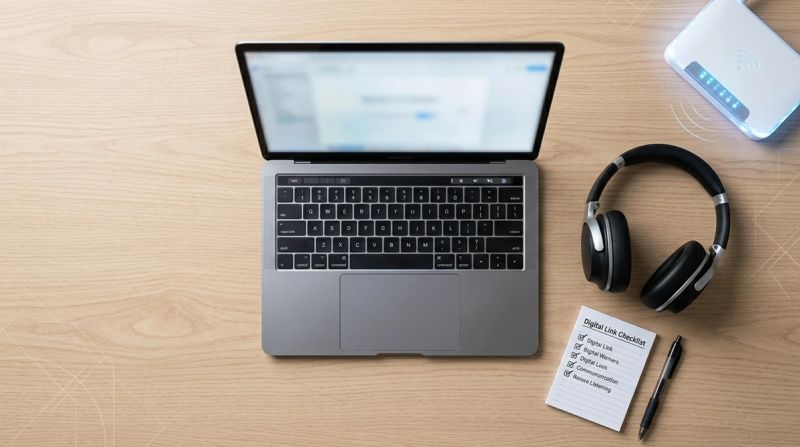
Nothing spikes anxiety quite like a failing internet connection just as you are about to delve into a deeply sensitive topic. Technical friction can completely ruin the therapeutic alliance and momentum. Taking ten minutes the day before your session to optimize your digital setup is an act of care for your relationship.
In Ireland, broadband speeds can vary wildly depending on whether you live in a dense urban centre like Dublin or Cork, or in a more rural location in the West of Ireland.
One Device or Two? The Logistics of Screen Sharing
Couples often wonder whether they should squeeze onto the same sofa and share a single laptop, or log into the session from two separate devices in different rooms. The answer depends entirely on the current emotional climate of your relationship.
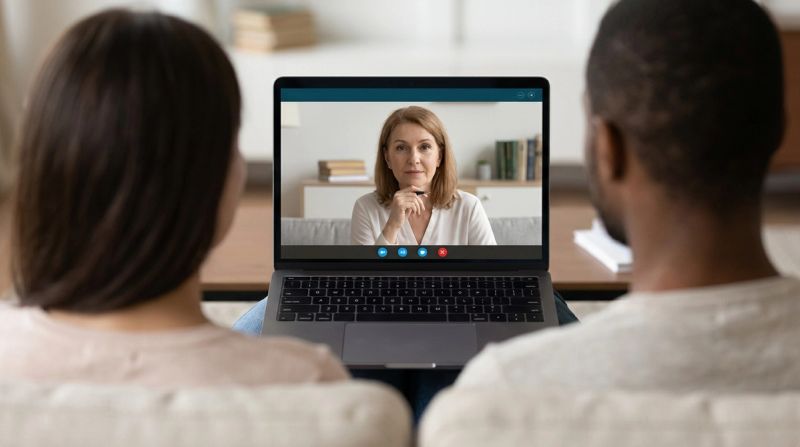
- Sharing a Single Device: If you are seeking therapy for proactive reasons, such as pre-marital counselling, or if your conflict is relatively mild and you generally feel safe in each other's physical presence, sharing a device is excellent. It allows the therapist to see your physical proximity, your body language toward one another, and how you naturally interact in a shared space. Make sure the webcam is positioned far enough back so the therapist can clearly see both of your upper bodies, not just your faces.
- Using Separate Devices (The "Virtual Buffer"): If your relationship is currently highly volatile, if you are prone to explosive shouting matches, or if you are dealing with the immediate, raw aftermath of a profound betrayal, logging in from separate devices in different rooms of the house is often a superior strategy. This creates a powerful "virtual buffer." It lowers the physiological temperature, prevents physical intimidation, and allows both highly reactive partners to feel completely physically safe while discussing traumatic issues.
Audio and Visual Optimization
Regardless of whether you share a device, ensure your setup is optimized. Do not rely on a smartphone propped up against a coffee cup; the screen is too small, and the camera angle is often unflattering and unstable, which is distracting for both you and the therapist. Use a laptop or a desktop computer. Ensure you are sitting in a well-lit area with a light source in front of you, not behind you (which would turn you into a dark silhouette). Finally, close every single other application, tab, and notification on your computer to ensure maximum bandwidth and zero distracting pop-ups during your session.
If you are still wondering if this digital format can truly facilitate a deep, meaningful connection compared to sitting in a clinic, we strongly encourage you to review the clinical data in our foundational article, Does Online Couples Therapy Actually Work? Evidence and Outcomes in Ireland.
What Actually Happens in Session One? The Clinical Intake
The anxiety leading up to the first session is almost always worse than the session itself. Knowing the standard structure of a clinical intake can significantly alleviate this anticipatory dread. The first session is uniquely structured; it will likely feel different from subsequent sessions because the therapist has a specific clinical agenda to fulfill.
1. The Administrative and Ethical Framework
Your therapist will likely begin by briefly reviewing the logistical framework of the therapy. This includes confirming your consent, discussing their specific cancellation policies, and, most importantly, clearly defining the absolute limits of clinical confidentiality. They will explain their "No Secrets" policy. In couples therapy, the therapist cannot hold a significant secret for one partner (such as an ongoing, undisclosed affair or a hidden financial crisis) while pretending to treat the couple as a cohesive unit. Establishing this rule immediately creates a baseline of absolute transparency and trust. You can read more about the financial and administrative aspects of engaging in therapy in our guide, Transparent Fees: How Much Does Online Couples Therapy Cost in Ireland?.
2. The Oral History of the Relationship
You will almost certainly be asked, "How did you two meet?" or "Tell me about the early days of your relationship." This is not small talk; it is a critical clinical assessment tool. The therapist is listening closely to how you tell the story. Do you smile and finish each other's sentences, recalling the past with fondness? Or has the current resentment metastasized backward, causing you to view even your early, happy memories with cynicism and bitterness? Remembering how you fell in love is often the first step in reminding yourselves why the relationship is worth fighting to save.
3. Defining the Presenting Problem
The therapist will gently transition to the present by asking a variation of, "What brings you to therapy at this specific time?" They will give each partner dedicated, uninterrupted time to explain their perspective on the core issues. This is where you practice the non-defensive listening you prepared for. The therapist is observing how you frame the problem, how you react when your partner is speaking, and the specific negative cycles you naturally fall into.
4. Establishing Shared Goals
Finally, the therapist will ask, "If this therapy is wildly successful, what will your relationship look like six months from now?" This forces the couple to look past the immediate pain and actively design a shared vision for the future. You are setting the GPS coordinates for the therapeutic journey ahead.
The "Vulnerability Hangover": Managing the Post-Session Aftermath
Perhaps the most overlooked aspect of preparing for online couples therapy is planning for the immediate aftermath. When you engage in a 50-minute conversation about your deepest fears, your profound resentments, and your most painful relationship failures, you are expending a massive amount of psychological and emotional energy.
When the video call ends and the laptop is closed, you will likely experience a "vulnerability hangover." You may feel emotionally raw, incredibly exhausted, highly sensitive, or suddenly awkward around your partner.

Because you are doing this work online, you do not have the 30-minute car ride home to naturally decompress and transition back into normal life. If you immediately stand up from the kitchen table and start angrily arguing about whose turn it is to empty the dishwasher, you risk undoing the delicate emotional work that just occurred.
You must proactively design a "commute replacement."
- Agree on a Cooling-Off Period: Before the session even begins, explicitly agree with your partner that you will take 15 to 30 minutes of independent, quiet time immediately after the laptop closes. Go for a brief walk around your estate, read a book in a separate room, or simply sit quietly with a cup of tea. Allow your nervous system to fully return to baseline before re-engaging with each other or your household duties.
- Do Not "Therapize" Each Other: Resist the intense urge to immediately dissect the session or weaponise the therapist's words against your partner ("See, the therapist agreed with me that you are avoidant!"). The insights gained in therapy need time to digest. Save the deep analysis for your next scheduled session.
- Plan a Gentle Reconnection: After your independent cooling-off period, plan a low-stakes, gentle way to reconnect. This could be cooking a simple dinner together, watching an episode of a lighthearted television show, or simply acknowledging, "That was really hard work, but I'm glad we are doing this."

Conclusion: Stepping Into the Arena Together
Preparing for your first online couples therapy session is about far more than just testing your webcam and finding a quiet room. It is about actively setting a profound intention for the future of your marriage. By leaving your adversarial defensiveness at the virtual door, optimising your physical and technical environment, and preparing yourselves for the emotional exhaustion of deep vulnerability, you are laying an incredibly strong, resilient foundation for the clinical work ahead.
The anticipation of the first session is a heavy burden, but the moment you log on and begin the hard, honest work of unpacking your dynamic with a skilled, compassionate professional, you take the first definitive step out of gridlock and toward genuine healing. You are no longer silently suffering in isolation; you are actively, collaboratively building a roadmap back to one another.
To ensure you have a complete understanding of the entire virtual therapy landscape, to explore the different methodologies our expert clinicians utilise, and to understand how to maintain momentum after this crucial first step, please navigate back to our comprehensive central directory: The Ultimate Guide to Online Couples Counselling in Ireland: Rebuilding Connection from Home.
Take a deep breath, test your internet connection, and log in. The hardest step is almost over.