Does Online Couples Therapy Actually Work? Evidence and Outcomes in Ireland

Wondering if virtual relationship counselling is effective? We explore the evidence, psychological benefits, and real-world outcomes of online couples therapy in Ireland.
When a relationship reaches a point of significant friction or emotional disconnect, the decision to finally seek professional help is often accompanied by a multitude of questions, anxieties, and logistical hurdles. For generations, the traditional image of relationship counselling involved two people sitting awkwardly on a therapist’s sofa, navigating intense emotional vulnerability in an unfamiliar, clinical setting. However, the landscape of mental health and relationship support has evolved dramatically over the last few years. Today, online couples therapy is rapidly becoming the preferred modality for partners across Ireland who are seeking to rebuild, repair, or enhance their connection. Yet, a fundamental question remains for those considering this digital route: does online couples therapy actually work as effectively as sitting in the same physical room as a professional?
The short, evidence-based answer is a resounding yes. The transition of relationship counselling to a virtual environment has not diluted its clinical potency. In many surprising and well-documented ways, the digital format offers unique psychological and logistical advantages that can actually accelerate the healing process. This comprehensive guide will explore the robust clinical evidence supporting virtual relationship support, delve deeply into the psychological dynamics of the online therapeutic alliance, and explain exactly why connecting through a screen might be the most effective way to reconnect with your partner in the real world.
Understanding the Initial Skepticism and Hesitation
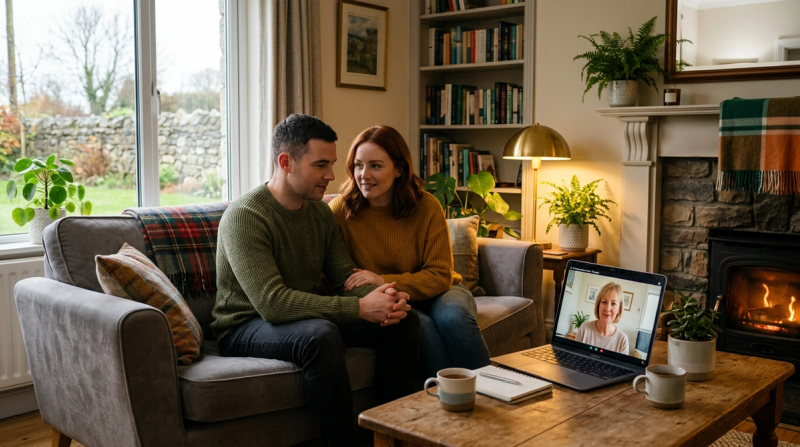
It is entirely natural and completely valid to feel sceptical about the efficacy of online couples therapy before you begin. Romantic relationships are deeply visceral, physical, and emotional experiences. When communication breaks down, it often feels as though an impenetrable, invisible wall has been erected between two people who once felt intimately connected. The immediate assumption is that introducing a physical barrier—a digital screen—between the couple and the therapist might only serve to exacerbate that sense of distance and isolation. Couples frequently worry that an online therapist will not be able to "read the room," missing subtle shifts in body language, unspoken tensions, or the heavy silences that often speak volumes during a relationship crisis.
Furthermore, there is a pervasive, lingering misconception that online therapy is somehow a "lite" version of the real thing—a convenient alternative, perhaps, but ultimately inferior to traditional face-to-face interaction. This skepticism is rooted in our fundamental human need for physical presence and proximity during moments of profound emotional distress. When we are hurting, we naturally seek the physical presence of a healer. However, as the clinical data and the lived experiences of thousands of couples in Ireland and globally now demonstrate, this skepticism is largely unfounded. The therapeutic process relies far more on the skill, empathy, and training of the practitioner, alongside the willingness of the couple to engage, than it does on shared physical geography.
"The therapeutic alliance—the collaborative, trusting, and empathetic relationship between the client and the therapist—is consistently identified by psychological researchers as the single most significant predictor of successful therapeutic outcomes. Extensive research has now conclusively shown that this alliance can be established, nurtured, and maintained just as powerfully through a secure, high-quality video connection as it can in a traditional clinical setting."
The Evidence Base: What the Clinical Research Confirms
The efficacy of online therapy is not merely anecdotal or based on the subjective opinions of practitioners; it is heavily supported by rigorous academic and clinical research. Prior to the global events that forced a massive shift to telehealth, digital care was already gaining significant traction in academic circles. However, the enforced transition provided an unprecedented opportunity to study the clinical outcomes of virtual couples counselling on a massive, global scale. The results have consistently surprised researchers who initially shared the public's skepticism regarding virtual care.
When comparing couples who engaged in traditional face-to-face therapy with those who participated via secure video conferencing, peer-reviewed studies repeatedly show no statistically significant difference in relationship satisfaction outcomes. Both groups experience similar, lasting reductions in relationship distress, profound improvements in communication patterns, and enhanced emotional intimacy. Specifically, therapeutic modalities that are highly structured, goal-oriented, and evidence-based translate exceptionally well to the digital realm.
- Emotionally Focused Therapy (EFT): Widely considered the gold standard for couples work, EFT focuses on identifying and restructuring negative interaction cycles and fostering secure emotional attachment between partners. Therapists have found that the structured nature of EFT, which involves tracking cycles of conflict and gently guiding partners toward vulnerable emotional disclosures, is highly adaptable to online delivery.
- The Gottman Method: This highly practical, research-based approach involves specific assessments and interventions designed to increase respect, affection, and closeness while breaking through gridlocked conflict. Because it relies heavily on teaching concrete skills and guiding couples through specific communication exercises, it functions seamlessly over a video connection where partners can look at each other while being guided by the therapist on screen.
- Cognitive Behavioural Therapy (CBT) for Couples: This approach addresses the negative thought patterns and reactive behaviours that contribute to relationship dysfunction. The educational, skills-based, and goal-oriented components of CBT are perfectly suited to the structured environment of an online session.
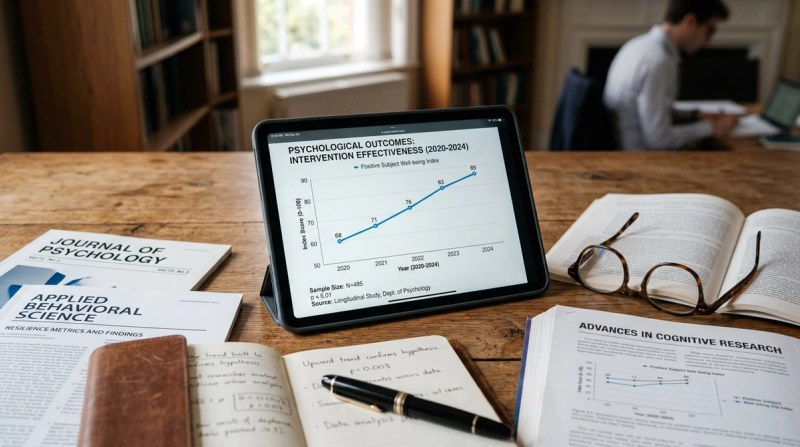
The overwhelming consensus from the research indicates that as long as the audio and video quality are sufficient to allow for clear, uninterrupted communication, the medium itself does not dilute the impact of these proven therapeutic interventions. The ultimate success of the therapy hinges entirely on the dedication of the couple and the expertise of the counsellor. If you are interested in exploring how one of these specific frameworks operates in a digital setting, we highly recommend you read our guide on Emotionally Focused Therapy (EFT) Online: Reconnecting with Your Partner.
The "Home Turf" Advantage: Psychological Safety in Familiar Surroundings
Perhaps one of the most profound and unexpected benefits of online couples therapy is the psychological advantage of remaining in your own home during the session. Traditional therapy requires a couple—who may already be in a state of high tension, active conflict, or icy silence—to travel together, navigate traffic on the M50 or narrow country roads, find parking, and sit in an unfamiliar, often sterile waiting room. This logistical stress often heightens anxiety, defensive posturing, and irritability before the therapeutic hour even begins.
When you engage in online therapy, you are operating from your "home turf." This familiar environment provides a baseline of psychological safety and comfort that is incredibly difficult to replicate in a clinical office setting, yielding several distinct advantages for the therapeutic process.
- Regulated Nervous Systems: When individuals feel physically comfortable and secure in their environment, their autonomic nervous systems are much more likely to remain regulated. This physiological calmness translates directly into reduced emotional defensiveness, allowing partners to open up, access their deeper feelings, and engage with difficult, painful topics far more readily than they would in an unfamiliar setting.
- Contextual Insight for the Therapist: Conducting therapy in the home provides the counsellor with invaluable, authentic context. They see the couple in their natural habitat—the very environment where their daily lives and conflicts typically unfold. This can offer subtle, unspoken clues about their dynamic, their stressors, and their lifestyle that might remain entirely hidden in a clinical consulting room.
- Immediate Post-Session Integration: When an in-person session ends, the couple must immediately transition back into the stressful reality of commuting, often jarring the delicate emotional work that just took place and sometimes leading to a post-therapy argument in the car. With online therapy, the session concludes, the laptop is closed, and the couple is instantly in a space where they can gently process what was discussed, perhaps having a quiet cup of tea together to solidify the breakthroughs achieved during the hour.
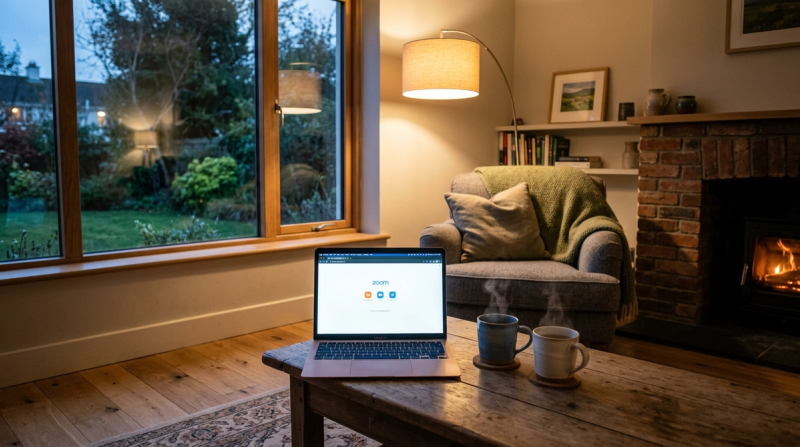
To ensure you are maximizing this "home turf" advantage and setting up your physical space for success, it is highly beneficial to read our guide on Preparing for Your First Online Couples Therapy Session: A Practical Guide.
The Screen as a Buffer: De-escalating High-Conflict Dynamics
For couples experiencing high levels of conflict, volatility, or intense emotional reactivity, sitting in a small, enclosed room with a therapist and their partner can sometimes feel overwhelmingly intense and claustrophobic. The physical proximity can act as an emotional pressure cooker, leading to rapid escalation, shouting, or an overwhelming, panicked desire to flee the room entirely. When the brain's amygdala detects a threat (even an emotional one), the "fight or flight" response makes rational communication nearly impossible.
In these highly charged, specific scenarios, the digital screen serves a remarkably constructive psychological purpose. It acts as a subtle, natural buffer that helps to modulate emotional intensity and prevent arguments from spiralling rapidly out of control. The virtual environment introduces a slight degree of physical separation that can be incredibly regulating for highly reactive nervous systems.
"The screen provides a protective, psychological boundary. Partners frequently report feeling less physically intimidated or emotionally overwhelmed when interacting through a virtual platform. This perceived safety allows them to remain seated, stay engaged in the difficult therapeutic process, and actually hear what the other person is saying without immediately launching into a defensive counter-attack or shutting down completely."
Furthermore, online platforms offer the therapist unique tools for managing session dynamics. A skilled online counsellor knows how to use the structure of the video call to ensure turn-taking, prevent aggressive interruptions, and maintain a calm, focused environment. The slightly more formal nature of interacting through a screen often encourages individuals to naturally moderate their tone and behave with a slightly higher degree of restraint. If constant arguing is your primary concern, you can explore how this buffer helps in our detailed article, Breaking the Cycle: How Online Therapy Helps Irish Couples Improve Communication.

Overcoming Logistical Barriers: The Reality of Modern Irish Life
Beyond the complex psychological benefits, the sheer logistical convenience of online therapy cannot be overstated, particularly within the context of modern, demanding Irish life. For a vast number of couples, the primary barrier to getting professional help is not a lack of desire or commitment to the relationship, but a severe lack of time, energy, and accessibility.
Coordinating the schedules of two busy adults to find a mutual hour during the standard working week is challenging enough. When you add the requirement to commute across a busy city centre in rush hour traffic, or to travel significant distances from rural areas in counties like Kerry, Donegal, or Mayo just to reach a qualified specialist, the logistics rapidly become an insurmountable obstacle. Online therapy entirely eradicates these geographical and temporal barriers.
- Unprecedented Accessibility to Specialists: You are no longer limited to the general counsellors who happen to practice within a twenty-minute drive of your home. If your relationship requires a highly trained specialist in infidelity recovery, neurodiversity in couples, or a certified EFT practitioner, online therapy grants you access to the best, most qualified professionals across the entire country of Ireland. This ensures you get the precise clinical expertise your unique relationship needs. You can learn more about how these specific, advanced methodologies work by reading Emotionally Focused Therapy (EFT) Online: Reconnecting with Your Partner.
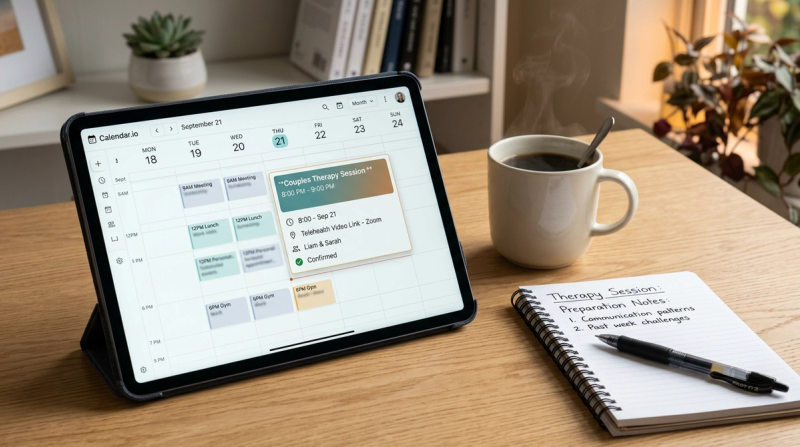
- Childcare and Convenience: For parents of young children, finding, booking, and paying for a reliable babysitter every single week adds significant stress and a recurring financial burden to the therapeutic process. Online therapy allows couples to schedule sessions in the evening after the children are safely asleep in bed, making consistent, long-term attendance vastly more feasible for modern families.
- Consistency is the Catalyst for Change: The effectiveness of any psychological therapy is heavily reliant on momentum and consistency. Missed appointments due to bad weather, late meetings at work, mild illness, or transit delays severely hinder therapeutic progress. Online therapy ensures a significantly higher attendance rate, keeping the therapeutic momentum strong and leading to faster, more sustainable results.
When Online Couples Therapy Might Not Be the Right Fit
While the benefits are extensive and the evidence of efficacy is strong, it is ethically vital to acknowledge that online therapy is not a universal panacea. There are specific, severe circumstances where the virtual modality is contraindicated and inappropriate. Ethical, highly trained practitioners will always conduct a thorough initial assessment to ensure the virtual environment is safe, constructive, and clinically appropriate for both individuals.
Online couples therapy is generally not recommended, and alternative face-to-face or individual crisis support should be sought, in cases involving:
- Active Domestic Violence or Coercive Control: If there is any ongoing physical violence, profound intimidation, severe emotional abuse, or a fear for physical safety within the home, online couples therapy is strictly contraindicated. In these dangerous situations, individuals need separate, secure, and often in-person support to ensure their immediate physical and psychological safety.
- Severe Psychiatric Crisis: If one or both partners are experiencing a severe, acute mental health crisis, active psychosis, severe substance dependency, or are at immediate risk of self-harm or suicide, specialized, face-to-face psychiatric intervention and urgent crisis management are absolutely required.
- Active, Undisclosed Affairs: Couples therapy requires a baseline of honesty and commitment to function effectively. If one partner is currently engaged in a secret, ongoing affair that they are unwilling to disclose or end, the therapeutic process will be fundamentally blocked and ultimately unhelpful, regardless of whether it happens online or in person. However, if the affair has been disclosed and the mutual goal is recovery, online therapy can be an incredibly safe space for this painful work. For a deeper look at this delicate topic, read Healing After Infidelity: Can Online Couples Therapy Save Your Relationship?
Conclusion: Taking the First Proactive Step Toward Reconnection
So, does online couples therapy actually work? The comprehensive clinical evidence, the widespread psychological benefits of the "home turf advantage," and the countless success stories of couples across Ireland unequivocally confirm that it does. It is not a lesser alternative or a compromise; for many modern relationships, it is a superior, highly effective modality that completely removes the friction of logistics while providing a safe, comfortable, and regulated environment for profound emotional transformation.
If your relationship is currently struggling beneath the heavy weight of poor communication, unresolved historical conflict, or a painful sense of emotional distance, you do not need to wait until you can perfectly align your busy schedules to drive to a clinic. The professional, empathetic help you need is available right now, from the privacy and comfort of your own living room. By embracing the flexibility and safety of the virtual format, you are taking a powerful, proactive step toward breaking destructive cycles and rebuilding a secure, loving, and lasting connection with your partner.
To explore all the aspects of virtual relationship support, from detailed cost breakdowns to what to expect in your first session, please return to our master guide: The Ultimate Guide to Online Couples Counselling in Ireland: Rebuilding Connection from Home.