How to Start Trauma Therapy Online in Ireland

A practical guide to starting trauma therapy online in Ireland: how it works, what you need, and how to get matched with a therapist.
Orla is 38 and lives in Cork. Between work and two young children, she barely has time to sit down, let alone travel to a therapist's office. For months she has known she needs help with the aftermath of a difficult experience. The idea of driving across the city for an appointment feels impossible. But opening her laptop from the kitchen table? That feels like something she could manage.
She is not sure what online trauma therapy looks like. Will it be as good as in-person care? Will she need special technology? Will she have to relive everything in the first session? The questions keep her stuck, even though part of her is ready.
If Orla's hesitation sounds familiar, you are far from alone. According to Aware's 2024 national survey, more than half of people in Ireland reported experiencing depression, and four in ten experienced anxiety. The demand for mental health support is significant, and the HSE's Telehealth Roadmap 2024-2027 recognises that online and remote care have become essential parts of how Ireland delivers healthcare. Online trauma therapy is not a lesser version of therapy. For many people, it is the option that finally makes help possible.
What Online Trauma Therapy Actually Looks Like
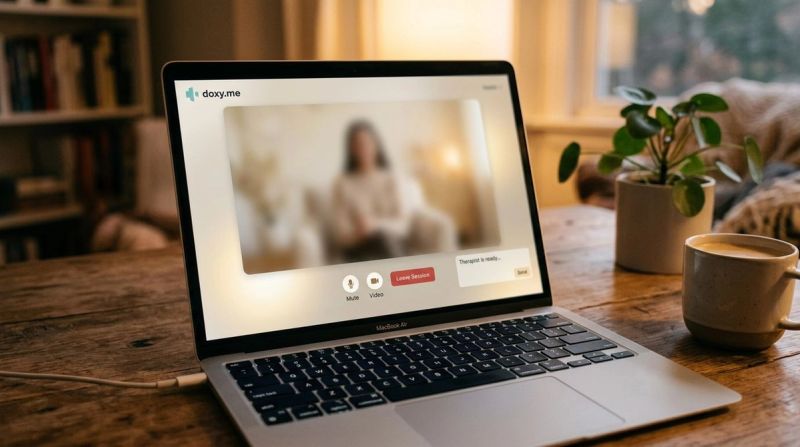
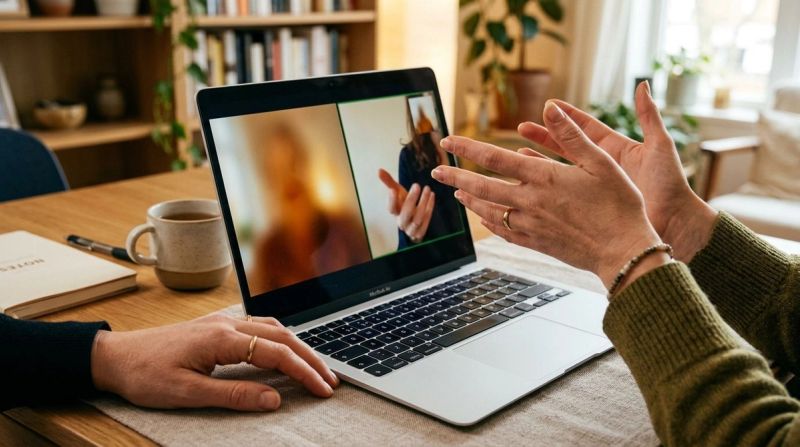
Online trauma therapy is simply therapy delivered through a secure video call, phone call, or sometimes messaging platform. You meet with a qualified therapist in real time, from wherever you feel comfortable and safe. The conversation is confidential, structured, and led by the same accredited professionals who work in clinics.
The sessions themselves follow the same shape as in-person therapy. You and your therapist talk about what you are experiencing, explore how past events are affecting you now, and work together on ways to feel safer and more in control. Trauma-focused approaches such as EMDR and trauma-focused CBT can also be delivered online, though some therapists may prefer certain methods for in-person work.
Sessions usually last 50 to 60 minutes and are typically scheduled weekly, especially at the beginning. You will receive a secure link before each appointment, and you simply click it at the agreed time. There is no need to download complicated software or create multiple accounts.
You do not need a fancy setup. A quiet room, a stable internet connection, and a device with a camera and microphone are usually enough. Many people use their phone, tablet, or laptop.
Is Online Therapy as Effective as In-Person?
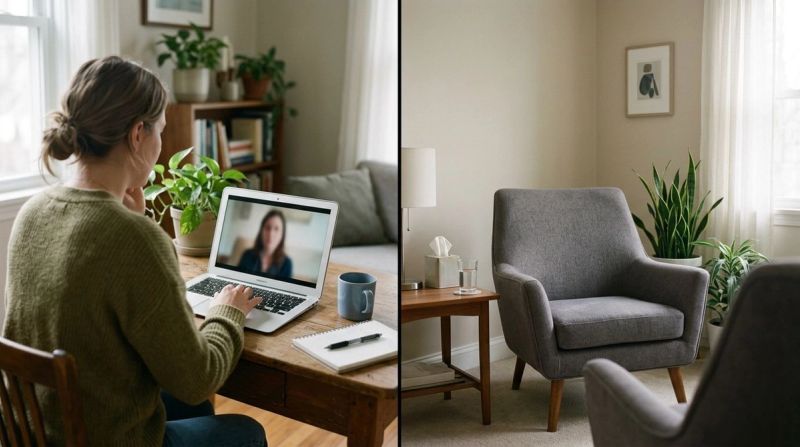
Research increasingly shows that online therapy can be just as effective as face-to-face therapy for many mental health difficulties, including PTSD, anxiety, and depression. The key factor is not whether you are in the same room. It is whether you feel safe enough to be honest and whether the therapist is skilled and experienced in the work you need.
"The therapy relationship accounts for why clients improve (or fail to improve) as much as the specific treatment method." — Dr. John C. Norcross, clinical psychologist and psychotherapy researcher
That is encouraging. It means the most important choice is not the platform. It is the therapist. Online therapy allows you to choose from a wider pool of professionals across Ireland, rather than being limited to whoever happens to practice nearby.

When Online Therapy Might Not Be the Best Fit
Online therapy works well for most people, but it is not the right choice for everyone. If you are in immediate danger, experiencing severe crisis, or need more intensive support than weekly sessions can provide, you may need in-person or emergency services first.
Some people also find it harder to feel connected through a screen. If that is true for you, it does not mean therapy will not work. It just means you might prefer to start face-to-face, or to try a few online sessions to see how it feels. The right format is the one that helps you show up consistently and honestly.
How to Choose an Online Trauma Therapist in Ireland
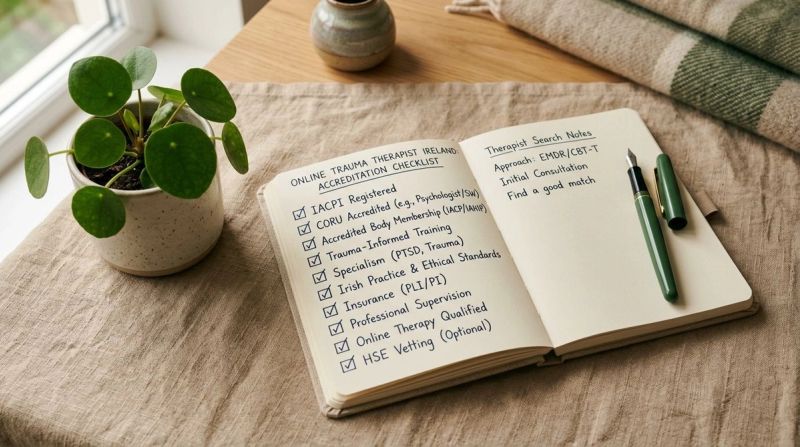
Finding the right therapist takes a little homework. Here are the things worth checking:
- Accreditation. Look for registration with a recognised body such as the IACP, IAHIP, PSI, or CORU. Accreditation means the therapist has met specific training and ethical standards.
- Trauma experience. Not every therapist specialises in trauma. Ask whether they have experience with PTSD, complex trauma, childhood trauma, or whatever feels most relevant to you.
- Approach. Some therapists use EMDR, others use somatic therapy, trauma-focused CBT, or psychodynamic approaches. It is fine to ask what they offer and why.
- Online experience. Working with trauma online requires specific skills. A therapist who is comfortable and experienced with remote sessions can help you feel safer.
- Practical fit. Consider cost, session times, and whether they offer a brief consultation before you commit. You can read more about fees and insurance in our guide to trauma therapy costs in Ireland.
Trust your gut. A good therapist will answer your questions without pressure and will respect that choosing help is a big step.
What You Need to Get Started
Starting online trauma therapy does not require much. A few practical steps can make the first session easier:
- Find a private space. You want somewhere you will not be interrupted or overheard. Some people use a bedroom, a car, or a quiet corner of the house.
- Test your tech. Check your camera, microphone, and internet connection before the session. If something goes wrong, your therapist will understand.
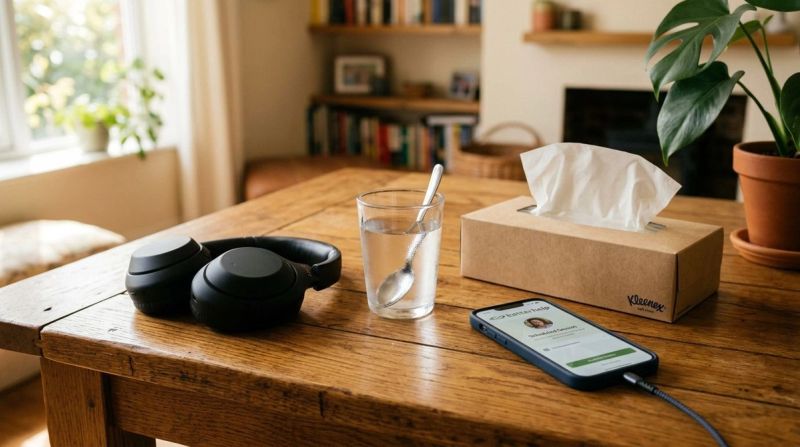
- Use headphones. They add privacy and help you feel more immersed in the conversation.
- Have water and tissues nearby. Therapy can bring up strong emotions. Simple comforts help.
- Give yourself transition time. Do not rush straight from a meeting into a session if you can help it. Even five minutes to breathe can help you arrive more fully.
If you are nervous, that is completely normal. Most people feel apprehensive before starting therapy. The nerves usually settle once the conversation begins. It can help to write down a few notes beforehand about what you want to discuss, though you do not have to use them.
What Happens in Your First Session
The first session is usually about getting to know each other. Your therapist will ask what brought you to therapy, what you are struggling with, and what you hope to change. They will also explain how they work, what confidentiality means, and what you can expect from the process.
You do not have to tell everything in the first session. You are allowed to go at your own pace. A trauma-informed therapist will not push you to share details before you are ready. Their job is to help you feel safe enough to do the work over time.
By the end of the first session, you should have a sense of whether you can work with this person. It is okay to try more than one therapist before deciding. The right fit matters.
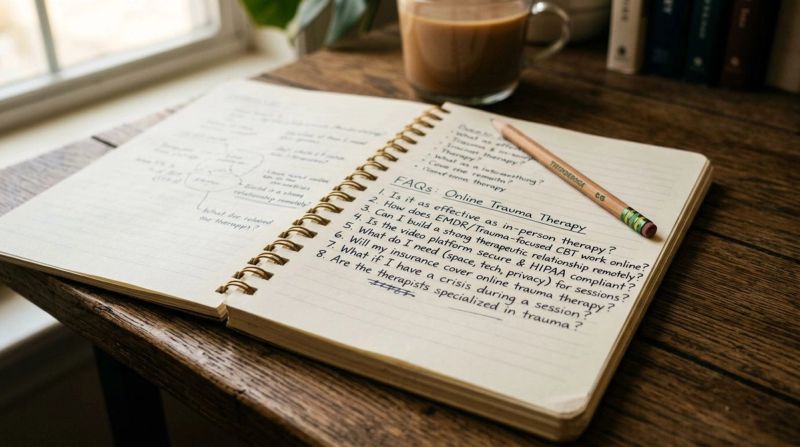
Frequently Asked Questions
Is online trauma therapy available everywhere in Ireland?
Yes. As long as you have internet or phone access, you can work with a therapist based anywhere in Ireland. This is especially helpful if you live in a rural area, have limited transport, or cannot easily leave home because of caring responsibilities, work, or health.
Do I need a referral from my GP?
For private online therapy, no. You can contact a therapist or a matching service directly. For HSE or some insurance-funded services, a GP referral may be required, so check the specific route you are using.
What if I do not feel comfortable on video?
Some therapists offer phone-only sessions. You can ask about this when you first make contact. The goal is to find a format that feels manageable for you.
How long does online trauma therapy take?
It varies from person to person. Some people notice changes within a few sessions. Others benefit from longer-term support over several months. Your therapist should discuss this with you during your first session and review progress as you go. There is no fixed timeline for healing.
Is online therapy private and secure?
Reputable therapists use secure, encrypted platforms designed for healthcare. You can ask what platform they use and how they protect your information.
For a complete overview of trauma, PTSD, and recovery options in Ireland, see our complete guide to trauma therapy in Ireland. You may also find our guide to trauma therapy costs and insurance in Ireland helpful.

Taking the First Step Is Enough
Starting trauma therapy online can feel like a huge step, especially if you have spent a long time managing on your own. You do not need to have everything figured out. You do not need to know exactly what to say. You just need to be willing to begin.
Online therapy removes some of the practical barriers that keep people from getting help. It lets you access trauma-informed support from your own home, on a schedule that fits your life, with a therapist who has the right experience for you.
At Feel Better Therapy, we can help you get matched with a therapist who fits your needs. You can learn more about trauma therapy or take the first step here.
This article is for informational purposes only and does not constitute medical advice. If you are in crisis, please contact Samaritans Ireland at 116 123 or Pieta House at 1800 247 247.