Trauma and the Body: Why You Can't Just Think Your Way Out

Discover why trauma lives in the body, the physical symptoms it can cause, and how somatic therapy in Ireland can help you heal.
Aoife is 42 and works in a Galway pharmacy. She is organised, reliable, and good at staying calm when everything around her is busy. But lately her body has been doing things she cannot explain. Her shoulders tighten into a knot by mid-morning. Her stomach churns before meetings she has done a hundred times. She wakes at 3 a.m. with her heart hammering, and no amount of slow breathing seems to slow it down.
She has been to her GP twice. Blood tests came back normal. The doctor was kind and suggested stress. Aoife smiled, said she would try to relax, and went back to work. But deep down she knows it is not just stress. Something older is moving through her body, something that talks louder than her thoughts.
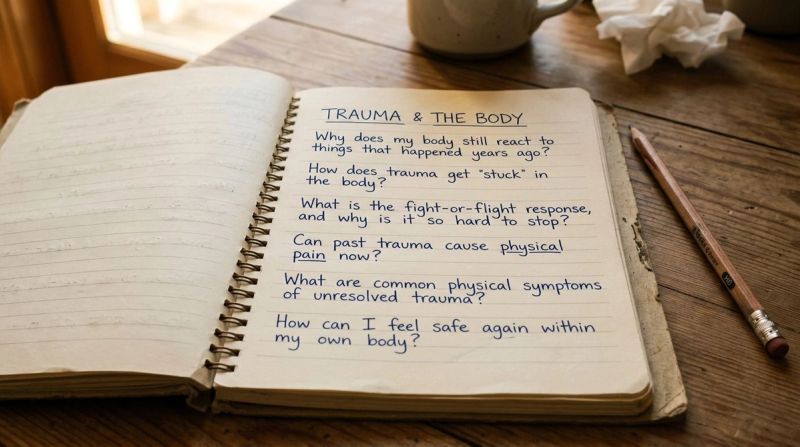
If Aoife's experience feels familiar, you are not alone. Trauma does not only live in memories. It lives in the nervous system, the muscles, the gut, and the breath. Irish research, including the PRIME study on chronic pain prevalence, has found that around 30% of adults in Ireland live with chronic pain, and trauma and psychological distress are increasingly recognised as major contributing factors. You cannot always think your way out of a body that has learned to stay alert.

Why the Body Remembers What the Mind Can't
When something overwhelming happens, the thinking part of the brain can go offline. The survival parts take over. Heart rate spikes, muscles tense, breathing becomes shallow. This is the fight-or-flight response, and it is designed to keep you alive. But when trauma is repeated, prolonged, or unprocessed, the body can stay stuck in a state of high alert long after the danger has passed.
This is why you can understand perfectly well that you are safe and still feel unsafe. The body is not responding to the present moment. It is responding to a past threat that was never fully discharged. That unfinished survival energy can show up as tension, pain, digestive problems, sleep disruption, or a persistent sense of dread.
"The body keeps the score: if the memory of trauma is encoded in the viscera, in distressing emotions and in the body, you have to deal with the body." — Dr. Bessel van der Kolk, psychiatrist and trauma researcher
That quote is at the heart of somatic approaches to trauma. Talking can be enormously helpful, but for many people it is not enough on its own. The body needs to be part of the conversation.

How Trauma Affects the Nervous System
Your nervous system is constantly scanning for safety and danger. This happens below conscious thought, through a process called neuroception. When it detects threat, the sympathetic nervous system triggers fight-or-flight. When the threat feels inescapable, the dorsal vagal branch may activate freeze or shutdown.
Trauma can narrow what therapists call your "window of tolerance" — the range of arousal in which you feel calm, focused, and present. A nervous system shaped by trauma may move quickly into hyperarousal (anxiety, panic, tension) or hypoarousal (numbness, dissociation, fatigue). Everyday events that feel neutral to someone else can register as threatening.
This is not something you can usually override by deciding to feel differently. It is biology, and biology responds to safety, pacing, and repeated corrective experiences. That is why healing trauma often requires working with the body directly, not only the mind.

Common Somatic Symptoms of Trauma
Trauma-related symptoms are not "all in your head." They are real physiological responses to real experiences. Common ways trauma shows up in the body include:
- Chronic muscle tension, especially in the neck, shoulders, jaw, or back
- Digestive problems such as IBS, nausea, or a nervous stomach
- Sleep disruption, including insomnia, nightmares, or waking with a start
- A racing heart or chest tightness that seems to come from nowhere
- Fatigue that rest does not fix
- Dizziness, dissociation, or feeling "not quite here"
- Chronic pain with no clear medical cause
- Startle responses that feel exaggerated or embarrassing
- Temperature changes, such as sudden chills or flushing
- Shallow or restricted breathing, even when you are not aware of it
These symptoms are not weakness. They are the body's best attempt to manage an experience that was too much to process at the time. Understanding them as survival responses, rather than random failures, can be the first step toward real relief.

What Actually Helps the Body Heal
Healing trauma in the body is not about forcing relaxation or pretending everything is fine. It is about helping the nervous system learn, slowly and safely, that the danger has passed. That learning happens through experience, not just insight.
Several approaches are particularly helpful:
- Somatic therapy focuses on body awareness, tension release, and tracking physical sensations in a safe, supported way.
- EMDR uses bilateral stimulation to help the brain reprocess traumatic memories, which often reduces associated body symptoms.
- Trauma-focused CBT combines talking therapy with practical techniques for managing bodily arousal.
- Breathwork and grounding can help regulate the nervous system in the moment, though they work best as part of a broader plan.
- Yoga, tai chi, and gentle movement can rebuild a sense of safety in the body over time.
- Havening Techniques, Sensorimotor Psychotherapy, and Somatic Experiencing are additional body-based modalities offered by some therapists in Ireland.
Progress is usually gradual. The goal is not to erase the past. It is to update the body's alarm system so it stops sounding when there is no fire. A good therapist will not push you past what your nervous system can handle. They will work with your body, not against it.

Somatic and Trauma Support in Ireland
If you recognise these patterns in yourself, you do not have to keep managing them alone. In Ireland, there are therapists who specialise in somatic and body-based trauma work, as well as EMDR and trauma-focused CBT. The IACP directory can help you find accredited practitioners, and your GP can discuss HSE options or referrals.
At Feel Better Therapy, we can match you with a therapist who understands how trauma lives in the body. You can learn more about trauma therapy or find out how to get started.
Online therapy has made specialist support more accessible across Ireland. Whether you are in a city or a rural area, you can work with someone who understands somatic approaches without needing to travel. For some people, being in their own home while doing body-based work feels safer, which can actually help the process.
Frequently Asked Questions
Can trauma really cause physical symptoms?
Yes. Trauma affects the nervous system, immune system, and stress hormones. Over time this can contribute to chronic pain, digestive issues, sleep problems, and other physical symptoms. These are real, not imagined.
Why doesn't talking therapy fix my body symptoms?
Talking therapy can help you understand your experiences, but the body also needs to process them. If your nervous system is still holding survival energy, you may need a body-based approach alongside talking therapy. Many people find the combination most effective.
What is somatic therapy like?
It varies, but somatic therapy usually involves noticing sensations, tension, and breath in a safe, guided way. A therapist might help you track what happens in your body when certain feelings arise, and support you to release or regulate that response. You are always in control of the pace.
How long does it take to feel better?
There is no fixed timeline. Some people notice shifts within weeks; for others it takes months. The important thing is that change is possible, especially with the right support and a pace that respects your nervous system.
Should I see a doctor first?
Yes. It is always worth ruling out medical causes for physical symptoms. Once that is done, exploring trauma as a contributing factor can be a helpful next step. Therapy and medical care can work alongside each other.
For a complete overview of trauma, PTSD, and recovery options in Ireland, see our complete guide to trauma therapy in Ireland. You may also find our guide to trauma and relationships helpful.

You Can Heal From the Bottom Up
Living with a body that feels like it is against you is exhausting. You might have spent years trying to reason your way out of symptoms that do not respond to reason. That does not mean you have failed. It means the problem was never only in your thoughts.
Healing from trauma often happens from the bottom up. When the body learns safety through repeated, gentle experience, the mind follows. The racing heart softens. The knot in the shoulders loosens. Sleep becomes possible again.
This is not about becoming someone new. It is about coming home to a body that has been waiting for you to notice it with kindness.
At Feel Better Therapy, we can match you with a therapist who understands trauma and the body. You can learn more about trauma therapy or get started here to find support that fits you.
This article is for informational purposes only and does not constitute medical advice. If you are in crisis, please contact Samaritans Ireland at 116 123 or Pieta House at 1800 247 247.