Trauma and Relationships: Why Closeness Feels Unsafe

Learn how trauma affects adult relationships, why closeness can feel unsafe, and how trauma-informed therapy in Ireland can help.
Conor is 29 and lives in Dublin with his partner of two years. They get on well. They laugh at the same shows, share a group of friends, and split the bills without much drama. But recently his partner said, casually, "I love you," and Conor felt something cold run through him. Not because he didn't feel the same. He did. But the words landed like a demand, a door opening he wasn't sure he wanted to walk through.
Since then, he has been pulling back. He stays later at work, scrolls on his phone in bed, and finds reasons to be busy when his partner wants to talk. He tells himself he needs space, but the truth is more confusing. The closer someone gets, the more his body braces for something bad to happen. He doesn't understand why wanting love and fearing it can exist in the same person at the same time.
If Conor's story feels familiar, you are not alone. A comprehensive study of Adverse Childhood Experiences in Northern Ireland, led by Queen's University Belfast and published in 2025, found that almost two-thirds of adults in Northern Ireland experienced at least one traumatic childhood event. For many, the impact does not show up in obvious ways. It shows up in relationships, where the deepest need for connection meets the oldest fear of being hurt.
Why Closeness Can Actually Feel Unsafe After Trauma
Trauma does not only live in memories. It lives in the nervous system, the body, and the learned expectations about other people. If your early experience taught you that closeness came with unpredictability, rejection, or harm, your brain may have filed intimacy under "dangerous." That filing system does not automatically update just because you are now an adult with adults around you.
This is why a loving partner can trigger the same physiological response as a threat. Your heart races, your chest tightens, or you feel an urge to shut down, withdraw, or pick a fight. It is not because the relationship is wrong. It is because your nervous system is reading closeness as a risk.
"Emotional connection is crucial to healing. In fact, trauma experts overwhelmingly agree that the best predictor of the impact of any trauma is not the severity of the event, but whether we can seek and take comfort from others." — Dr. Sue Johnson, clinical psychologist and founder of Emotionally Focused Therapy
That quote captures the painful loop many people find themselves in. Trauma can damage the very thing that would help heal it: safe connection with another person.
How Trauma Shows Up in Adult Relationships
Trauma affects relationships in ways that can be hard to name. You might blame your partner, yourself, or the relationship itself before you realise the pattern started long ago. Common signs include:
- Avoiding intimacy. You keep conversations light, dodge emotional topics, or feel suffocated when someone wants to be close.
- People-pleasing. You shape yourself around what your partner wants, hide your own needs, and become anxious at any sign of disapproval.
- Hypervigilance. You read every shift in tone, text, or body language as a warning that something is about to go wrong.
- Emotional shutdown. During conflict you go quiet, numb, or unable to explain what you feel. This is often a survival response, not a lack of care.
- Fear of abandonment. You need constant reassurance, feel rejected easily, or panic when your partner needs time alone.
- Repeating old patterns. You may find yourself drawn to partners who feel familiar, even when that familiarity is unhealthy.
These responses are not character flaws. They are the strategies a younger self developed to stay safe. The problem is that they now get in the way of the closeness you want.

Attachment, Trauma, and the Story You Learned About Love
Attachment theory helps explain why trauma so often shows up in relationships. Early experiences with caregivers shape what we expect from closeness. If a caregiver was sometimes loving and sometimes frightening, a child may grow into an adult who both craves and fears intimacy.
This is sometimes called disorganised or insecure attachment. It can leave you feeling that love is unreliable, that you have to earn it, or that it will inevitably be taken away. Even when you find someone steady, part of you may be waiting for the other shoe to drop.
The good news is that attachment patterns are not fixed. A secure, responsive relationship, including a therapeutic one, can gradually reshape what the nervous system expects. You do not have to relive your childhood to change the pattern. You need repeated experiences of safety, honesty, and being seen.
What Actually Helps When Trauma Affects Relationships
Healing relationship trauma is not about forcing yourself to be vulnerable before you are ready. It is about learning to notice your responses, understand where they come from, and try new behaviours in small, manageable steps.
Trauma-focused therapy can be a powerful starting point. Approaches such as trauma-focused CBT, EMDR, or somatic therapy help process the underlying memories so they stop hijacking the present. Couples therapy, especially Emotionally Focused Therapy, can help partners understand the cycle between them rather than blaming each other.
There are also practical steps that help:
- Name the pattern. Instead of "you always...", try "when you pull away, I feel abandoned, and I start to panic."
- Slow things down. You do not have to share everything at once. Vulnerability works best in small doses.
- Regulate first. If you are flooded, take a break before continuing the conversation. Twenty minutes can make a real difference.
- Ask for what you need. This can feel terrifying if you learned that needs were a burden. It is a skill that strengthens with practice.
- Choose safety. You cannot heal attachment wounds in a relationship that is currently unsafe. Safety comes first.

Finding Trauma and Relationship Support in Ireland
If trauma is affecting your relationships, you do not have to work through it alone. In Ireland, there are several routes to support. The Irish Association for Counselling and Psychotherapy (IACP) maintains a directory of accredited therapists, many of whom work with trauma and relationship issues. Your GP can also discuss options and refer you to HSE mental health services if appropriate.
For relationship-focused help, couples therapy is available both in person and online across Ireland. You can learn more about couples therapy at Feel Better Therapy or get started with an individual therapist who understands how trauma shows up in relationships.
Online therapy can be particularly useful if you live outside Dublin, Cork, or Galway, or if the idea of sitting in a waiting room feels overwhelming. What matters most is finding someone you feel safe with.
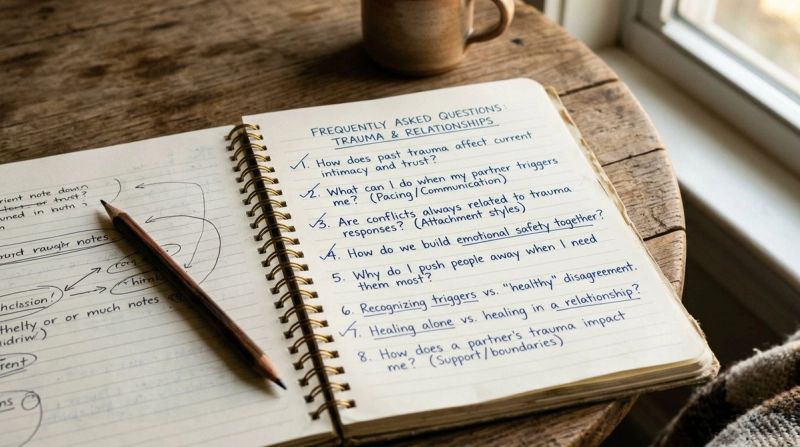
Frequently Asked Questions
Can trauma cause relationship problems even if the relationship is good?
Yes. A healthy relationship can actually make old trauma feel more visible, because safety gives your nervous system permission to let its guard down. When that happens, past fears can surface in the present. That does not mean the relationship is failing. It often means there is something here worth healing.
Is it fair to my partner if I bring trauma into the relationship?
Everyone brings something into relationships. Trauma is not a flaw you need to hide. What matters is taking responsibility for your own healing while being honest with your partner about what you need. A supportive partner will not expect you to be fixed. They will want to understand.
Can couples therapy help if only one partner has trauma?
Yes. Couples therapy can help both partners understand the patterns trauma creates and how to respond to each other differently. The goal is not to blame one person. It is to change the cycle between you.
How do I know if I am with the wrong person or just scared of closeness?
This is one of the hardest questions to untangle alone. A therapist can help you distinguish between genuine incompatibility and fear that comes from past wounds. Sometimes the answer is a bit of both.
What if my partner does not understand my trauma responses?
You cannot make someone understand overnight. You can share what you are learning about yourself, name your triggers, and ask for patience. If your partner is willing to learn with you, that is a strong sign. If they dismiss or minimise your experience, that is a different problem.
For a complete overview of trauma, PTSD, and recovery options in Ireland, see our complete guide to trauma therapy in Ireland. You may also find our guide to trauma and the body helpful.
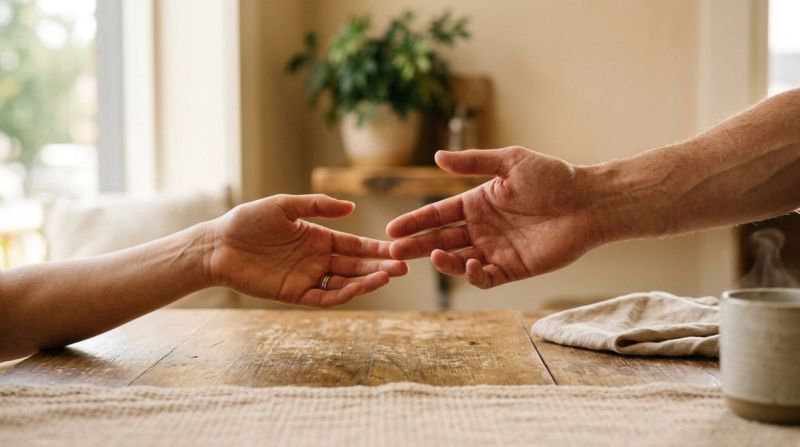
Closeness Is Still Possible
Living with trauma can make relationships feel like a minefield. You want to be close, but closeness sets off alarms. You want to trust, but trust feels naive. These contradictions are exhausting, and they can make you wonder if love is simply not for you.
It is. It just might need to be approached differently. Healing does not mean your past disappears. It means you stop living as though the past is still your only template for connection. With the right support, closeness can become something that soothes you instead of something you survive.
At Feel Better Therapy, we can match you with a therapist who understands trauma, attachment, and relationships. You can learn more about couples therapy or get started here to find the right support for you.
This article is for informational purposes only and does not constitute medical advice. If you are in crisis, please contact Samaritans Ireland at 116 123 or Pieta House at 1800 247 247.