What Is a Phobia? Signs, Symptoms and Types in Ireland

A phobia is more than fear. Learn the signs, common types and evidence-based treatments for phobias in Ireland, including CBT and exposure therapy.
Aoife had avoided the lift in her Dublin office block for three years. It was not that she minded the stairs. The problem was the lift itself: the sliding doors, the enclosed space, the moment they closed and she could not get out. By the time she reached the fourth floor, her heart was racing, her hands were damp and she was already planning how she would leave early if the afternoon meeting ran late.
She told herself everyone disliked small spaces. But not everyone changed jobs to avoid a building with lifts. Not everyone took the stairs in hotels, missed friends' apartments, or felt their chest tighten at the thought of a hospital appointment. Aoife's fear had stopped being inconvenient. It had started running parts of her life.
If that sounds familiar, you are not alone. Phobias are one of the most common anxiety-related conditions in Ireland, and they are also one of the most treatable. Understanding what a phobia actually is, and how it differs from ordinary fear, is the first step toward doing something about it.
What a Phobia Actually Is
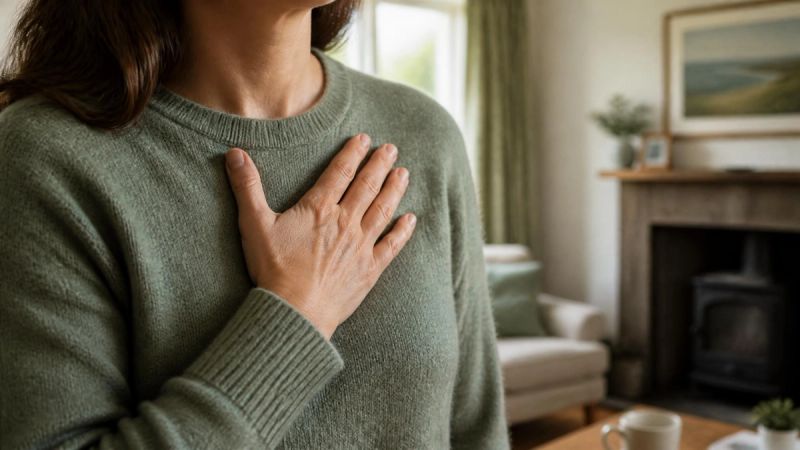
A phobia is an intense, persistent fear of a specific object, situation, activity or creature. The fear is out of proportion to the actual danger, but that does not mean it feels small. For someone with a phobia, the response can be immediate and overwhelming: a racing heart, shortness of breath, sweating, trembling, nausea, light-headedness or a sudden urge to escape.
This reaction is the body's fight-or-flight system doing what it evolved to do. The problem is that it has been triggered by something that is not truly dangerous. Once the alarm goes off, rational thinking becomes harder. You might know logically that a house spider cannot harm you, but your body responds as if it can. That gap between what you know and what you feel is one of the most frustrating parts of living with a phobia.
According to the HSE, specific phobias affect roughly one in ten people at some point in their lives. They can develop in childhood, adolescence or early adulthood, and they often continue for years if they are not addressed. Unlike general anxiety, which can feel diffuse, a phobia is usually tied to something specific: needles, flying, spiders, dogs, heights, blood, dentists, thunderstorms, vomit or enclosed spaces.
The key difference between a fear and a phobia is avoidance. Most people do not enjoy injections, but they can have one when they need to. Someone with trypanophobia, a fear of needles, may skip medical care entirely. That avoidance is what turns a fear into a problem. It shrinks a person's life, limits their health choices and reinforces the belief that the feared thing is genuinely dangerous.
Common Types of Phobias in Ireland
Phobias are usually grouped into two broad categories: specific phobias and complex phobias.
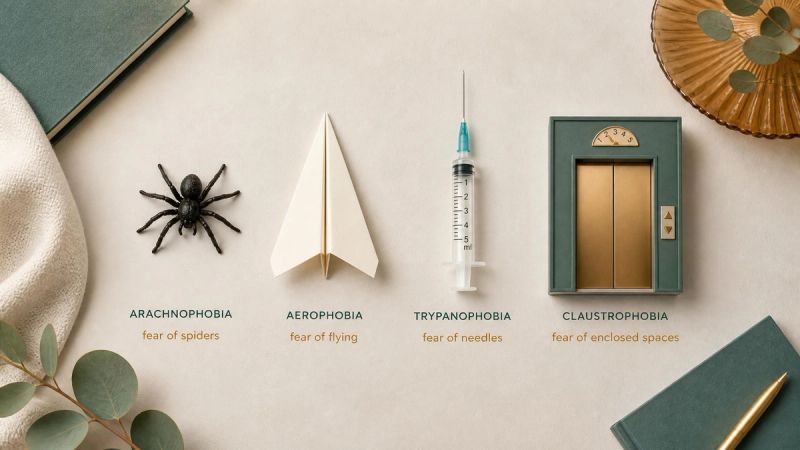
Specific phobias are fears of particular objects or situations. Some of the most common include:
- Agoraphobia — fear of open spaces, crowded places or situations where escape might be difficult. It is one of the highest-volume phobia searches in Ireland.
- Social phobia — an intense fear of social situations, being judged or embarrassed in public. It overlaps with social anxiety but can be more narrowly focused on specific settings like speaking, eating in front of others or using public toilets.
- Trypanophobia — fear of needles and injections. This can lead people to avoid vaccines, blood tests or medical treatment.
- Emetophobia — fear of vomiting or seeing others vomit. It can affect eating habits, travel, parenting and social life.
- Aerophobia — fear of flying. It can limit work travel and family holidays.
- Arachnophobia — fear of spiders. It is one of the most common animal phobias.
- Dental phobia — fear of dental visits, which can lead to serious oral health problems over time.
Complex phobias, such as agoraphobia and social phobia, tend to have a more disabling impact on daily life. They are also more likely to co-occur with other conditions like depression, generalised anxiety or panic disorder. That is one reason why a proper assessment matters: what looks like a single fear can sometimes be part of a wider pattern.

What Causes a Phobia?
Phobias do not have one single cause. They usually develop through a combination of factors.
A frightening experience is the most obvious trigger. A child who is bitten by a dog may develop a lifelong fear of dogs. A difficult flight, a choking episode or a traumatic medical procedure can plant the seed for a phobia. But not everyone who has a scary experience develops a phobia, and many people with phobias cannot remember a specific triggering event.
Learning also plays a role. Children sometimes pick up fears from parents, siblings or caregivers. If a parent visibly panics around spiders, a child may learn that spiders are dangerous. Cultural messages and media images reinforce this: films, news stories and social media can all shape what we learn to fear.
Genetics and temperament matter too. Some people are naturally more anxiety-prone. If anxiety runs in your family, you may be more likely to develop a phobia after a stressful experience. This is not a weakness or a character flaw. It is simply how the brain's threat system can become overactive.
Dr. Claire Hayes, clinical psychologist and former Director of Communications at the Psychological Society of Ireland, puts it this way:
"A phobia is not about being dramatic or overreacting. It is about a brain that has learned to respond as if something is dangerous, even when it is not. The good news is that brains can learn differently."
When Does Fear Become a Problem?
Not every fear needs treatment. Many people dislike rats, public speaking or tight spaces without it seriously affecting their lives. A phobia becomes a problem when the fear is persistent, excessive and gets in the way of normal living.
Ask yourself these questions:
- Do you go to great lengths to avoid the feared object or situation?
- Does the anticipation of it cause significant anxiety?
- Does it interfere with work, relationships, health or daily routines?
- Have you felt this way for six months or more?
- Do you recognise the fear is excessive, but feel unable to control it?
If you answer yes to several of these, it may be worth speaking to a mental health professional. Phobias are highly treatable, and early support can prevent them from becoming more entrenched.
It is also important to distinguish a phobia from a medical condition. Some symptoms, such as dizziness, chest pain or breathlessness, can have physical causes. A GP can rule these out before you begin psychological treatment. If you are unsure, start with your GP or a registered therapist.

What Actually Helps?
The most effective, evidence-based treatment for phobias is cognitive behavioural therapy, specifically a form called exposure therapy. This does not mean forcing someone to face their worst fear all at once. It means gradually and safely helping the nervous system learn that the feared situation is survivable.
A therapist trained in CBT will usually work with you to:
- Understand the pattern — identify the thoughts, physical sensations and behaviours that keep the phobia going.
- Build coping skills — learn techniques for managing anxiety, such as grounding, breathing and relaxation.
- Create a hierarchy — rank feared situations from least to most anxiety-provoking.
- Work through exposure gradually — start with the easier items and move up at a pace that feels manageable.
- Reduce avoidance — rebuild confidence by approaching, rather than running from, the feared situation.
Research consistently shows that exposure therapy is effective for specific phobias. The National Institute for Health and Care Excellence (NICE) recommends CBT, including exposure-based approaches, for anxiety disorders and phobias. Many people notice significant improvement within a relatively small number of sessions.
Exposure is not about "toughing it out." A good therapist will never push you beyond what you have agreed to. The goal is to help your nervous system update its threat assessment so that the feared situation becomes boring rather than terrifying. Over time, the panic response weakens and confidence grows.
In some cases, medication may help with the anxiety symptoms, particularly if the phobia is part of a broader anxiety or panic disorder. Medication is usually not the first-line treatment for a specific phobia on its own, but it can be useful alongside therapy. Your GP or psychiatrist can advise if this is appropriate for you.

Frequently Asked Questions
Are phobias common in Ireland?
Yes. Specific phobias are one of the most common mental health conditions, affecting around one in ten people at some point. Because many people do not seek help, the true number may be higher.
Can phobias go away on their own?
Sometimes. Children often outgrow fears. But adult phobias tend to persist without treatment, and avoidance usually makes them worse over time. The sooner you address a phobia, the easier it is to change.
Is a phobia the same as anxiety?
A phobia is a type of anxiety disorder, but it is more specific. Generalised anxiety involves worry about many things, while a phobia is focused on a particular object or situation.
What is exposure therapy?
Exposure therapy is a structured, gradual way of facing feared situations in a safe and controlled way. It helps the brain learn that the fear response is out of proportion to the actual risk.
Can online therapy help with phobias?
Yes. Online CBT can be effective for phobias, particularly when it includes structured exposure work and support from an accredited therapist. At Feel Better Therapy, sessions are matched to a therapist with relevant experience.
You Don't Have to Keep Avoiding It
A phobia can feel like a permanent part of who you are, especially if you have lived with it for years. But it is not a personality trait. It is a learned response, and learned responses can be unlearned. With the right support, most people can reduce their fear, expand their lives and stop arranging their days around avoidance.
If you think you might have a phobia, talking to a therapist is a sensible next step. You can explore CBT and exposure therapy through Feel Better Therapy and get matched with a therapist who understands anxiety and phobia treatment.
This article is for informational purposes only and does not constitute medical advice. If you are in crisis, please contact Samaritans Ireland at 116 123 or your GP.