Insomnia and Depression: How They Feed Each Other in Ireland

Insomnia and depression often occur together. Learn why they feed each other, how to tell them apart, and where to find CBT and therapy support in Ireland.
Mairead, a 41-year-old secondary-school teacher from Galway, used to fall asleep within minutes of her head hitting the pillow. That changed last winter. First came the 3 a.m. wake-ups. Then came the dread of bedtime itself. Within a few months she was exhausted during the day, irritable with her family, and quietly convinced that nothing would ever feel light again.
She did not think of herself as depressed at first. Depressed people sleep all day, she told herself. But Mairead was not sleeping all day. She was lying awake for hours, then dragging herself through lessons, then collapsing on the sofa at six in the evening unable to concentrate on anything except how tired she felt. The low mood crept in so gradually that she only named it once the insomnia became impossible to ignore.
If Mairead's story sounds familiar, you're not alone. Insomnia and depression are among the most common mental health difficulties seen by Irish GPs, and they rarely show up as separate problems. They tend to travel together, each making the other worse. Understanding how they connect is the first step toward feeling better.
It is important to say that this connection is not your fault. Many people assume they should be able to "snap out of it" with willpower, better discipline, or a stricter bedtime. In reality, insomnia and depression involve real changes in brain and body systems. Treating them with the right support is not weakness; it is practical self-care.
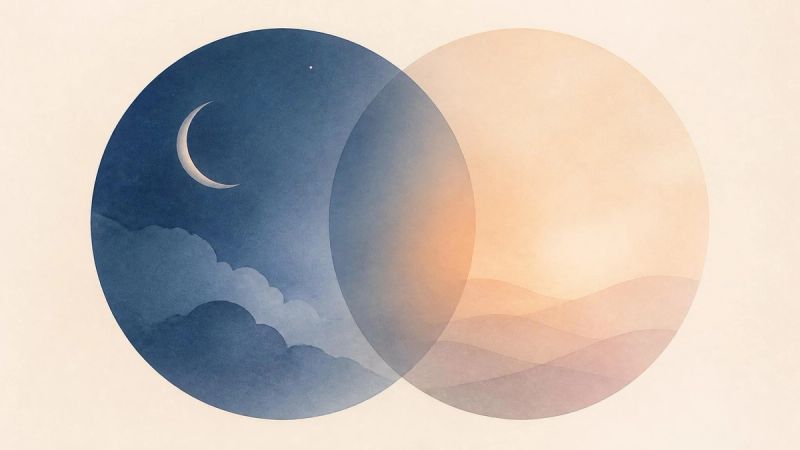
What Insomnia and Depression Actually Look Like Together
Insomnia means having trouble falling asleep, staying asleep, or waking too early and not being able to get back to sleep. Depression involves low mood, loss of interest in things you once enjoyed, fatigue, difficulty concentrating, and sometimes changes in appetite or weight. When both happen at once, the days can feel heavy and the nights can feel endless.
The overlap is striking. Research consistently shows that people with persistent insomnia are far more likely to develop depression than good sleepers, and people with depression very often struggle with sleep. The relationship is bidirectional: poor sleep predicts low mood, and low mood predicts poor sleep. It is not always clear which came first, and it usually does not matter for treatment.
The impact spills into daily life. Concentration slips, patience thins, and the motivation to exercise, cook, or meet friends fades. In Irish workplaces, where early starts and long commutes are common, a bad night's sleep can quickly become a week of coping. When that pattern continues, the world can start to feel smaller and greyer.
One large review found that non-depressed people with insomnia were roughly twice as likely to develop depression over the following months compared with people who slept well. For someone already prone to low mood, a run of bad nights can be the final push into a depressive episode. That is why treating insomnia early is not just about sleep — it can also be an important part of protecting mental health.
According to the Health Service Executive (HSE), insomnia is one of the most commonly reported sleep problems among adults in Ireland, with around one in three people affected by disrupted sleep at some point in their lives. When that disruption lasts for weeks or months, the risk of depression rises significantly. In GP surgeries across the country, sleep disturbance is often one of the first symptoms people mention when low mood has begun to take hold.

Why Sleep Loss Makes Low Mood Worse
Sleep is not a passive process. During the night the brain processes emotion, consolidates memory, restores energy, and resets stress systems. When sleep is cut short or fragmented, these systems do not get the reset they need.
The result is a brain that is more reactive to negative information, less able to solve problems, and less responsive to everyday pleasures. Minor setbacks feel bigger. Positive moments feel flat. Decision-making becomes harder, which can make work, parenting, and relationships feel overwhelming. Over time, this biochemical and emotional wear creates fertile ground for depression.
Sleep deprivation also weakens the prefrontal cortex, the part of the brain responsible for impulse control and perspective-taking. At the same time it amps up the amygdala, the brain's threat-detection centre. That combination makes it harder to regulate emotion and easier to spiral into worry or self-criticism. A poor night's sleep can make yesterday's awkward conversation feel like evidence of failure and tomorrow's meeting feel like a catastrophe waiting to happen.
Sleep and mood are regulated by overlapping brain circuits and neurotransmitters. Serotonin, which helps stabilise mood, also plays a role in sleep-wake timing. When serotonin signalling is disrupted, a person may feel both emotionally low and physically wired at night.
There is also evidence that sleep disruption increases inflammation in the body. Low-grade inflammation has been linked to both depression and fatigue, which may explain why people with chronic insomnia often describe a heavy, dragged-down feeling that rest alone does not fix.
Dr Breege Leddy, founder of the Insomnia Clinic, describes the cycle simply: "The more we worry about sleep, the more aroused we become, and the harder it is to sleep." That same hyperarousal keeps the mind scanning for threat, replaying worries, and imagining the worst. It is exhausting, and it is one reason insomnia can tip into depression if it is left untreated.
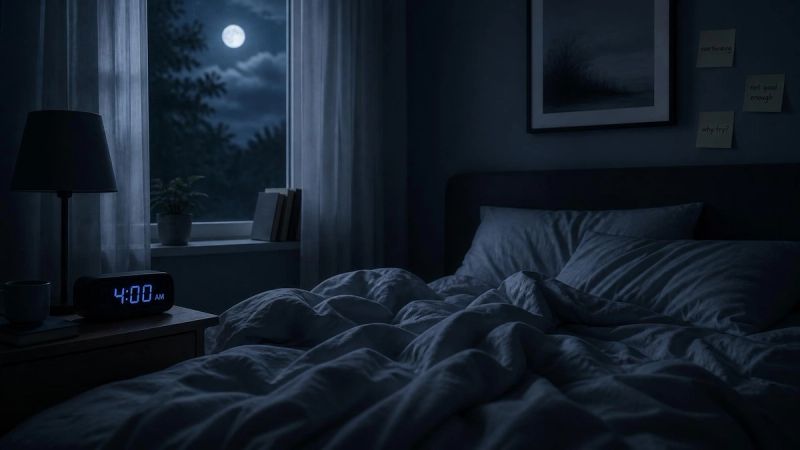
How Depression Disrupts Sleep
Depression can affect sleep in several ways. Some people find it hard to fall asleep because their mind races with self-criticism or rumination. Others wake repeatedly through the night, or wake hours too early and cannot return to sleep. A smaller number sleep far more than usual but still wake up unrefreshed.
Changes in sleep architecture are also involved. Depression is associated with reduced slow-wave sleep, more frequent awakenings, and alterations in REM sleep timing. This means even when a person with depression spends eight hours in bed, the sleep may not be restorative. The tiredness compounds the low mood, which in turn makes it harder to stick to routines that would help.
A particularly cruel feature of depression-related insomnia is early morning waking. A person may open their eyes at 4 a.m. and immediately be hit by a wave of negative thoughts that feel convincing in the dark but less certain in daylight. That circadian mismatch — waking when the world is still asleep — can intensify feelings of isolation and hopelessness.
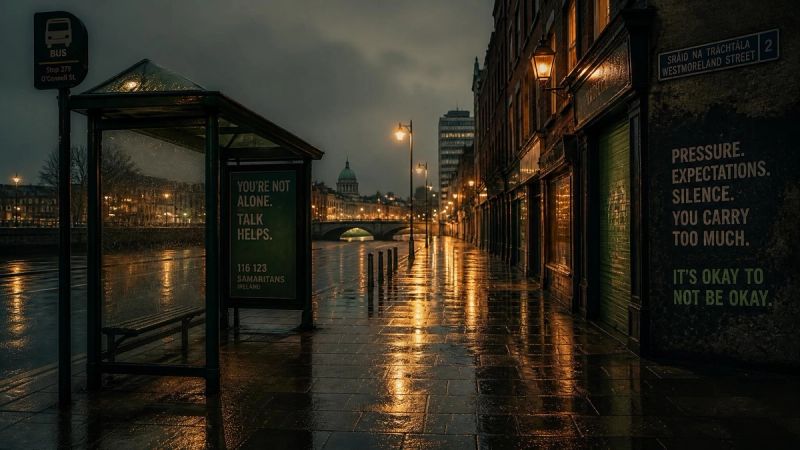
Why This Pattern Is So Common in Ireland
Irish life carries particular pressures that can disturb sleep and mood at the same time. Long commutes in Dublin, Cork, and Galway, high housing costs, demanding shift work in healthcare and hospitality, and the cultural tendency to keep going rather than complain all leave people depleted. The dark winter mornings can also reduce exposure to natural light, which affects both circadian rhythm and mood.
Many Irish people also face long waits for mental health appointments. While waiting, sleep often deteriorates further, which deepens low mood and makes it harder to engage with work, family, or treatment when it finally arrives. Recognising insomnia as a treatable part of depression, rather than a side effect to ignore, can shorten that suffering.
The HSE recommends that adults aim for seven to nine hours of sleep per night and advises seeking help when sleep problems persist. Despite this, sleep difficulties are still often normalised as "just stress" or "part of getting older." In reality, persistent insomnia is a warning sign worth taking seriously, especially when mood is also low.

Telling Insomnia and Depression Apart
They overlap, but they are not the same condition. Insomnia is primarily a sleep disorder. Depression is primarily a mood disorder. One useful way to tell them apart is to ask what came first and what persists even when the other improves.
If low mood lifted but sleep stayed broken, insomnia is likely a separate problem that needs its own treatment. If sleep improved but low mood, hopelessness, and loss of interest remained, depression is probably the core issue. In many cases both need treatment at the same time.
A practical clue can be found in the daytime pattern. Depression often feels worse in the morning and may lift slightly as the day goes on. Insomnia-related fatigue, by contrast, may feel steadier or worsen after a particularly broken night. Neither pattern is definitive, but together they can help a clinician decide where to focus first.
It is also worth noting that some depression symptoms can look like tiredness. A person may say they feel sleepy when what they actually feel is emotionally flat or unmotivated. A careful assessment by a GP or mental health professional in Ireland can help clarify whether the primary diagnosis is depression, insomnia, or both.

What Actually Helps: Treatment Options in Ireland
The good news is that both conditions are treatable, and the same interventions often help both. The two most evidence-based approaches are cognitive behavioural therapy for insomnia (CBT-I) and cognitive behavioural therapy for depression (CBT). Sometimes they are delivered together, sometimes separately, and sometimes by the same therapist with training in both areas.
CBT-I targets the thoughts and behaviours that keep insomnia going. It includes sleep scheduling, stimulus control (retraining the bed-sleep connection), and techniques for reducing worry about sleep. Studies show that improving sleep with CBT-I can also reduce depression symptoms, even without a separate depression treatment. For people whose depression is partly driven by sleep deprivation, this can be transformative.
For depression, CBT helps people identify and change unhelpful thinking patterns, re-engage with meaningful activities, and develop coping skills. Because depression and insomnia share features like rumination and avoidance, CBT can indirectly improve sleep as mood lifts. Behavioural activation, a core part of CBT for depression, often restores a more regular daily rhythm, which supports better sleep.
In Ireland, these therapies are available through HSE mental health services, some GP practices, private psychologists and accredited psychotherapists, and online therapy providers. The IACP and PSI maintain directories of accredited professionals. Waiting lists vary by region, so some people choose private or online options for faster access.
A GP can also rule out physical contributors such as thyroid problems, chronic pain, sleep apnoea, or medication side effects. Treating an underlying physical condition sometimes resolves sleep problems quickly, which can then make mood work easier.
Dr Breege Leddy notes that CBT-I gives people "lifelong tools to manage and treat their insomnia." That sense of agency matters enormously when someone has felt trapped by both sleeplessness and low mood. Learning that sleep can improve, and that improvement is within your control, is itself a protective factor against depression.

Medication: What to Know
Sleeping tablets can offer short-term relief, but they are not recommended as a long-term solution for chronic insomnia. They can be habit-forming, may stop working over time, and do not address the underlying cycle that keeps insomnia going.
Antidepressants are sometimes prescribed when depression is the primary diagnosis, and some have sedating effects that can help sleep in the short term. However, medication decisions should always be made with a GP or psychiatrist, taking into account the person's full history, preferences, and any other conditions.
For many people, the most sustainable improvement comes from combining CBT-based therapy with careful sleep habits and, when appropriate, short-term medical support.

Practical Steps You Can Take Now
While waiting for professional support, there are evidence-based steps that can soften the insomnia-depression loop:
- Get up at the same time every day, even after a poor night's sleep. A fixed wake time anchors the body clock and makes sleepiness more predictable.
- Limit time in bed to actual sleep. Spending ten hours in bed when only sleeping six trains the brain to associate bed with wakefulness.
- Leave the bed if you cannot sleep. After about 20 minutes of wakefulness, get up, do something quiet in dim light, and return only when sleepy.
- Reduce rumination time. Schedule a ten-minute "worry period" earlier in the evening so difficult thoughts do not queue up at bedtime.
- Move during the day. Moderate physical activity, especially outdoors, improves both sleep quality and mood.
- Be cautious with naps. Long or late naps can make it harder to sleep at night.
- Cut back on alcohol and caffeine, particularly in the evening. Both can fragment sleep and worsen mood.
- Get morning light. Exposure to daylight within an hour of waking helps regulate melatonin and can lift mood over time.
- Notice small improvements. Recovery is rarely linear. A slightly shorter wake period or one better morning is progress worth noting.
These steps are helpful, but they are not a replacement for therapy if symptoms are severe or have lasted more than a few weeks.

Frequently Asked Questions
Can treating insomnia really improve depression?
Yes. A landmark study published in JAMA Psychiatry found that older adults with insomnia who received CBT-I were significantly less likely to develop depression over the following year compared with those who received sleep education alone. The protective effect was strongest in people whose insomnia was most severe. When sleep becomes reliable again, the brain's emotion regulation systems recover, negative thinking softens, and motivation tends to return.
How do I know whether I have insomnia, depression, or both?
The only way to know for certain is to be assessed by a GP or mental health professional. That said, a useful question is what would remain if the other problem improved. If your mood lifted but your sleep stayed broken, insomnia is likely a core issue. If your sleep improved but low mood, hopelessness, and loss of interest remained, depression is probably the primary concern. Many people have both, and treating both together usually works best.
What should I expect from CBT-I or CBT in Ireland?
Therapy is usually structured and time-limited. For insomnia, CBT-I typically runs for four to eight sessions and includes keeping a sleep diary, setting a consistent wake time, limiting time in bed, and learning techniques to manage nighttime worry. For depression, CBT usually involves identifying unhelpful thought patterns, re-engaging with meaningful activities, and developing coping skills. Many Irish therapists accredited with the IACP or PSI offer both approaches, either in person or online.

When to Seek Help
It is time to speak to a GP or mental health professional if:
- Sleep problems occur on more than three nights a week for over three months.
- Low mood, loss of interest, or hopelessness are present most days.
- Sleep difficulties are affecting work, relationships, or parenting.
- You are relying on alcohol, over-the-counter sleep aids, or sedating medication to cope.
- You have thoughts of harming yourself.
If you are in crisis, you can contact the Samaritans Ireland at 116 123, text 087 260 9090, or call Pieta House at 1800 247 247. These services are free and available 24 hours a day.
Related Articles
- Sleep & Insomnia in Ireland: A Complete Guide
- What Is Insomnia? Signs, Symptoms and Causes in Ireland
- Sleep Anxiety: When Worry Keeps You Awake
- Chronic Insomnia: When Sleeplessness Won't Go Away
Living with both insomnia and depression can feel like you're running on empty while carrying a weight you never asked for. It is not a character flaw, and it is not something you have to figure out alone. With the right support — whether that's CBT, CBT-I, or a combination of therapies — sleep and mood can improve together.
Many people find that treating sleep first gives them the energy and clarity to engage with depression therapy more fully. Others find that once depression lifts, sleep naturally improves. There is no single correct order. The key is to address both rather than assuming one will disappear once the other is treated.
If you would like to speak with someone, you can learn more about depression therapy at Feel Better Therapy or get matched with a therapist who understands both sleep and mood difficulties.
This article is for informational purposes only and does not constitute medical advice. If you are in crisis, please contact Samaritans Ireland at 116 123 or Pieta House at 1800 247 247.