Divorce and Separation in Ireland: A Complete Guide to Coping, Co-Parenting and Rebuilding

A complete guide to separation and divorce in Ireland: the legal routes, the emotional impact, money, children, co-parenting and rebuilding, with Irish supports.
Nobody plans for this. You get married, or you build a life with someone, and the working assumption is that it continues. Then one day you're looking up what "judicial separation" means, or sitting in a solicitor's office being asked questions you can't answer, or explaining to a child why there are two of everything now.
The strange thing about separation in Ireland is how common it is and how little most people know about it until it happens to them. The legal vocabulary is unfamiliar. The emotional side is rarely discussed honestly. And the practical questions, about money, housing, schools and who has the children on Tuesday, arrive all at once, usually while you're least able to think clearly.
This guide is here to change that. It covers what the different legal routes actually mean, what separation does to you emotionally, how money and children are handled, and what rebuilding looks like afterwards. It won't replace advice from a solicitor or a therapist, but it should make the whole thing less of a fog.
What Separation and Divorce Actually Mean in Ireland
The words get used interchangeably in conversation, but they describe different legal situations with different consequences. Getting clear on them early removes a surprising amount of stress.
Separating describes how you live. You're apart, whether informally or with a formal agreement.
A separation agreement is a negotiated deal between you and your spouse about money, property and children. It's usually drafted with legal advice, and it doesn't need a court to approve the terms, but it doesn't end the marriage either.
Judicial separation is a court decree that allows you to live apart with court-ordered arrangements. The marriage isn't dissolved, so neither of you can remarry.
Divorce is a court decree that dissolves the marriage. Once granted, both of you are free to remarry.
Citizens Information states the central distinction plainly: divorce dissolves the marriage, while a separation agreement or judicial separation does not. That single fact shapes everything from your status on official forms to your inheritance rights and your ability to remarry later.
For a full comparison of the three routes, including what each one does and doesn't change, read separation versus divorce in Ireland.

What It Actually Does to You Emotionally
Here's the part that surprises people most: the emotional impact is often bigger than the legal one, and it lasts longer.
Separation behaves like grief, because it is grief. You're losing a relationship, a shared future, daily company, and often a set of friendships and a version of yourself. As with bereavement, it doesn't move in a straight line. You can be functional on Monday and flattened by a song on Thursday.
It's also common to feel contradictory things at once. Relief that the arguing stopped, and guilt for feeling relieved. Anger at your ex, and longing for them. Confidence that you did the right thing, and terror that you've ruined everything. None of that means you're unstable. It means you're in the middle of a large change.
Loneliness deserves its own mention, because it's the least discussed and most persistent part. Losing a partner can mean losing your main company, your routine, and your social position as half of a couple.
There's also the performance of it. Many people hold it together at work, answer questions about their weekend lightly, and then fall apart in the car park. That gap between the public version and the private one is exhausting, and it's one reason people describe the first year as a period of constant low-level fatigue rather than dramatic sadness. If you can tell one colleague, or one manager, that you're going through something, the week usually gets easier.
What helps is naming it. Our guide to what separation actually does to you covers the grief, shock and loneliness in detail. If anxiety is what's keeping you awake, anxiety during divorce explains why your mind won't switch off. And if the sadness has settled in and won't lift, low mood after separation covers when it's more than a normal reaction.
If any of that is severely affecting you, or you're having thoughts of harming yourself, contact Samaritans on 116 123 at any time, or go to your nearest emergency department.

The Legal Side, Without the Jargon
Irish family law operates on a principle you should know: when a court deals with a judicial separation or divorce, it must make proper provision for both spouses and any dependent children. Courts.ie explains that the judge considers each person's income and assets, the standard of living the family had, accommodation needs, and the arrangements for children.
In practice that means the court can make orders about maintenance, property, and pensions. A property adjustment order deals with the family home and other property. A pension adjustment order deals with retirement benefits. Maintenance covers ongoing financial support.
Three practical points worth holding onto. First, if you and your spouse can agree terms, a judge will consider your agreement as part of the court order, which is usually cheaper and faster than a contest. Second, legal advice early is worth the money, because positions harden quickly. Third, if you can't afford a private solicitor, legal aid through the Legal Aid Board is means tested, and FLAC provides basic legal information.
One area where people get caught out is the family home. There's no automatic answer. Depending on circumstances, one person may remain, the home may be sold and the proceeds divided, or ownership may be adjusted. What you can rely on is that housing need and children's welfare are central to how it's decided.
Money: The Stress Nobody Warns You About
Two households cost more than one. Rent or a second mortgage, another set of bills, more travel between homes. The same income that was comfortable last year can suddenly be stretched to breaking point, and the shame that comes with that keeps many people silent.
The CSO's Survey on Income and Living Conditions for 2025 found that households made up of one adult with children had the highest consistent poverty rate of any household type, at 13.4%, against a national at-risk-of-poverty rate of 12.6%. Running a household alone is a recognised financial risk, not a personal failing.
The free help is genuinely useful and genuinely free. MABS, the Money Advice and Budgeting Service, gives independent debt and budgeting advice on 0818 07 2000, Monday to Friday from 9am to 8pm, with offices around the country. Citizens Information on 0818 07 4000 can explain entitlements many people miss in the first year. Our guide to money worries during separation covers the practical ground, including what the courts can decide.

Children and Co-Parenting
Most parents' biggest fear is that the separation will damage their children. The evidence is more reassuring than the fear suggests, and more specific.
Research published by the ESRI in 2025, using Growing Up in Ireland data, found that 14% of children aged between nine months and five years were not living with their fathers full-time, rising to 18% by age nine. Roughly one child in six or seven in those age groups isn't living with both parents, which means schools, GPs and sports clubs deal with this every week.
What varies is the circumstances around the separation. Children tend to do better when routines are steady across both homes, when they're kept out of adult conflict, when they keep a relationship with both parents where it's safe, and when the adults around them are coping well enough to be emotionally available. They tend to do worse when conflict is ongoing, when they're used as messengers, or when a parent leans on them for emotional support.
Those are things a parent can influence, which is the hopeful part. Our guide to how divorce affects children covers what children understand at different ages and what to say. Co-parenting after separation sets out the practical ground rules, including the difference between guardianship, custody and access.
Rebuilding Afterwards
There's no tidy moment when you're "over it". What happens is subtler. You make a decision without checking whether it's fair to someone else. You stop narrating your day to an absent person. You notice you're looking forward to something.
The risk at this stage is that the separation becomes the whole story. Nuala Deering, a psychotherapist and couples counsellor at Relationships Ireland, described this pattern to the Irish Times, speaking about people still locked in conflict many years after a marriage ended: "It becomes his identity and part of who he is." Her point was that staying in the fight keeps the relationship alive in a strange way, and that the person hasn't faced the reality that the marriage is over.
The alternative isn't pretending it didn't happen. It's letting the separation be one chapter rather than the whole book. Our guide to rebuilding your identity after divorce covers that work in detail.
Dating again is its own decision, and there's no correct timeline. Dublin-based clinical psychotherapist Stephanie Regan, speaking to the Irish Times, offered a test worth remembering: "The best advice I can give people is to make sure you are ready and that you're not rushing, because you do have to be able for the let downs." If you're weighing it up, dating after separation covers the signs you're dating to escape rather than to connect.
What the Irish Numbers Show
It helps to know how ordinary your situation is.
Census 2022 recorded 249,059 people aged 15 and over in Ireland as separated or divorced, which was 6.1% of the population in that age group. Measured against people who had ever married, the CSO put the State's marital breakdown rate at 11.6%, and higher again in towns, at 16.2%.
The divorce rate itself has been rising. The CSO reports that Ireland's divorce rate was 0.9 per 1,000 people in 2024, up from 0.6 per 1,000 in 2014. Ireland and Malta had the joint lowest divorce rate in the EU27 among countries with available data, but the direction is clear.
Put simply: roughly one in nine people who have ever married in Ireland are now separated or divorced. Whatever awkwardness you feel at a wedding table or a school gate, you're in a very large group.

Mediation, and Why It's Usually the First Step
Irish law encourages mediation before court. The Mediation Act 2017 requires that couples be offered mediation as an alternative to court proceedings, and a solicitor lodging a court application must include a declaration confirming you've been told about it.
Mediation isn't about reconciling, and a mediator doesn't take sides or decide anything. You work through parenting, money, the family home and pensions together, and anything agreed can be drafted into an agreement. Unresolved issues can still go to court.
The Family Mediation Service, run by the Legal Aid Board, is free. You can ring 066 947 1000 or email info@legalaidboard.ie. Private mediators charge varying fees, and the Mediators' Institute of Ireland lists accredited practitioners.
There's an important exception. Where there's a history of domestic violence or coercive control, mediation may not be appropriate, and you should tell your solicitor so they can advise on alternatives.

Therapy: What It Is and What It Isn't
Therapy after separation is a structured conversation with someone trained to do it. It doesn't produce a settlement, and it isn't mediation. What it gives you is a regular hour to think out loud with someone who isn't involved, won't take sides, and won't be damaged by what you say.
Counsellor Tony Moore, based in County Laois, told the Irish Times what he tells clients at the start: "I emphasise that I do not contact anybody outside the session, and I don't take sides," adding that this "is often a client's biggest fear."
It's more common than people assume. The IACP's General Public Survey for 2025, carried out by Ipsos B&A with 1,005 Irish adults, found that one in three adults have been to see a counsellor or psychotherapist, and around 8 in 10 of those who attended would recommend it.
Our guide to therapy for divorce and separation covers the main approaches, how to check a therapist is properly accredited, what sessions cost, and the lower-cost routes.
Where to Get Help in Ireland
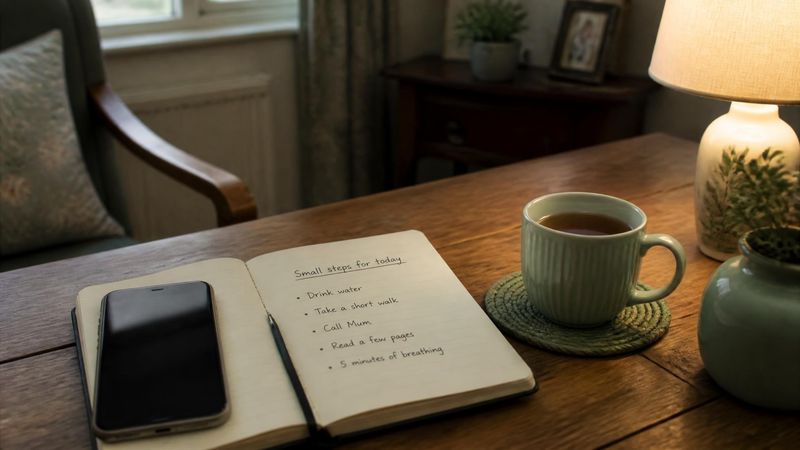
- Samaritans — 116 123, free, anytime, if you're in crisis.
- Family Mediation Service (Legal Aid Board) — 066 947 1000, free mediation.
- Citizens Information — 0818 07 4000, Monday to Friday 9am to 8pm, for legal and welfare information.
- MABS — 0818 07 2000, Monday to Friday 9am to 8pm, for free debt and budgeting advice.
- Your GP — the right first call if your sleep, mood or anxiety are affected, and a route to HSE mental health services.
- Legal Aid Board and FLAC — for legal advice if cost is a barrier.
Frequently Asked Questions
What's the difference between separation and divorce in Ireland?
Separation means living apart, whether informally or under a separation agreement or court decree. Divorce is a court decree that dissolves the marriage and allows both people to remarry. A separation agreement and a judicial separation do not.
Do we have to go to court?
Not necessarily. Many couples settle through negotiation or mediation, and the court can make that agreement an order. The law requires that mediation be offered before court proceedings. Court is the route when agreement isn't possible.
Who gets the family home?
There's no default answer. The home is dealt with as part of the settlement or court order, with housing need and children's welfare among the factors considered. Some people stay, some sell and divide the proceeds, some have ownership adjusted.
How long does the emotional side take?
It varies widely. Many people describe the first year as the most disorienting, with a real shift somewhere in the second. If you're still feeling entirely lost well beyond that, or your mood isn't improving, that's a reason to speak to your GP or a therapist.
Will the children be alright?
Most children adjust well, particularly when they're kept out of adult conflict, routines stay steady, and they keep a relationship with both parents where it's safe. The factors that make the biggest difference are largely within a parent's control.

Closing
Separation in Ireland involves three things at once: a legal process, a financial reckoning, and a grief. Most people are unprepared for all three, and nobody hands you a map.
What makes it manageable is taking them in some sort of order. Get clear on which legal route you're on. Get advice early, even if it's free advice. Protect your sleep and your mood while the paperwork grinds on. Keep the children out of the conflict. And let the emotional side have the time it needs rather than treating it as an inconvenience.
You don't have to do any of it alone. If you'd like support while you work through it, you can get matched with a therapist who understands what separation involves in Ireland.
If you're only reading one thing next, start with separation versus divorce in Ireland for the legal picture, or what separation actually does to you if it's the emotional side that's keeping you up.
Related Articles
- Separation vs Divorce in Ireland: What's the Difference and What It Means for You
- What Separation Actually Does to You: The Grief, Shock and Loneliness Nobody Warns You About
- Anxiety During Divorce: Why Your Mind Won't Switch Off
- Co-Parenting After Separation: Practical Ground Rules
- How Divorce Affects Children in Ireland
- Therapy for Divorce and Separation in Ireland
- Loneliness After a Breakup in Ireland
- Self-Esteem After a Breakup in Ireland
This article is for informational purposes only and does not constitute legal, financial or medical advice. For advice on your own circumstances, speak to a solicitor or a mediator. If you're concerned about your mental health, speak to your GP. If you are in crisis or having thoughts of ending your life, contact Samaritans on 116 123 (free, anytime) or go to your nearest emergency department.